

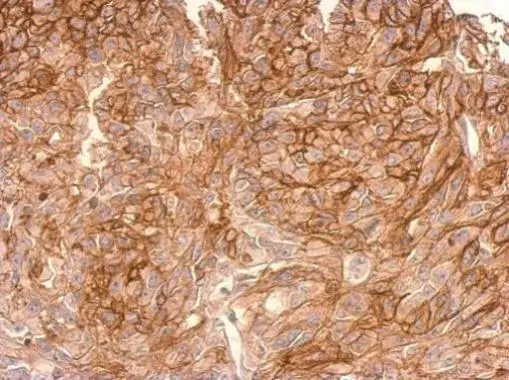
ADAMTSL2 antibody [C3], C-term detects ADAMTSL2 protein at cytosol(secreted) on SkHep1xenograft by immunohistochemical analysis. Sample: Paraffin-embedded SkHep1xenograft. ADAMTSL2 antibody [C3], C-term (GTX102069) dilution: 1:500.
Antigen Retrieval: Trilogy? (EDTA based, pH 8.0) buffer, 15min
![HepG2 whole cell extract and conditioned medium (30 μg) were separated by 7.5% SDS-PAGE, and the membrane was blotted with ADAMTSL2 antibody [C3], C-term (GTX102069) diluted at 1:500. The HRP-conjugated anti-rabbit IgG antibody (GTX213110-01) was used to detect the primary antibody.](https://www.genetex.com/upload/website/prouct_img/normal/GTX102069/GTX102069_39911_20240105_WB_Fraction_24011618_460.webp "HepG2 whole cell extract and conditioned medium (30 μg) were separated by 7.5% SDS-PAGE, and the membrane was blotted with ADAMTSL2 antibody [C3], C-term (GTX102069) diluted at 1:500. The HRP-conjugated anti-rabbit IgG antibody (GTX213110-01) was used to detect the primary antibody.")
![ADAMTSL2 antibody [C3], C-term detects ADAMTSL2 protein by immunohistochemical analysis. Sample: Paraffin-embedded rat tissues. ADAMTSL2 stained by ADAMTSL2 antibody [C3], C-term (GTX102069) diluted at 1:100. Antigen Retrieval: Citrate buffer, pH 6.0, 15 min](https://www.genetex.com/upload/website/prouct_img/normal/GTX102069/GTX102069_39911_20240301_IHC-P_multiple_R_24030600_763.webp "ADAMTSL2 antibody [C3], C-term detects ADAMTSL2 protein by immunohistochemical analysis. Sample: Paraffin-embedded rat tissues. ADAMTSL2 stained by ADAMTSL2 antibody [C3], C-term (GTX102069) diluted at 1:100. Antigen Retrieval: Citrate buffer, pH 6.0, 15 min")
![C2Cl2 whole cell and differentiated extracts (30 μg) were separated by 5% SDS-PAGE, and the membrane was blotted with ADAMTSL2 antibody [C3], C-term (GTX102069) diluted at 1:1000. The HRP-conjugated anti-rabbit IgG antibody (GTX213110-01) was used to detect the primary antibody, and the signal was developed with Trident ECL plus-Enhanced.](https://www.genetex.com/upload/website/prouct_img/normal/GTX102069/GTX102069_45341_20240308_WB_M_Differentiated_24052202_116.webp "C2Cl2 whole cell and differentiated extracts (30 μg) were separated by 5% SDS-PAGE, and the membrane was blotted with ADAMTSL2 antibody [C3], C-term (GTX102069) diluted at 1:1000. The HRP-conjugated anti-rabbit IgG antibody (GTX213110-01) was used to detect the primary antibody, and the signal was developed with Trident ECL plus-Enhanced.")
ADAMTSL2 antibody [C3], C-term detects ADAMTSL2 protein at cytosol(secreted) on SkHep1xenograft by immunohistochemical analysis. Sample: Paraffin-embedded SkHep1xenograft. ADAMTSL2 antibody [C3], C-term (GTX102069) dilution: 1:500.
Antigen Retrieval: Trilogy? (EDTA based, pH 8.0) buffer, 15min
ADAMTSL2 antibody [C3], C-term
GTX102069

ApplicationsWestern Blot, ImmunoHistoChemistry, ImmunoHistoChemistry Paraffin
Product group Antibodies
ReactivityHuman, Mouse, Rat
TargetADAMTSL2
Overview
- SupplierGeneTex
- Product NameADAMTSL2 antibody [C3], C-term
- Delivery Days Customer9
- Application Supplier NoteWB: 1:500-1:3000. IHC-P: 1:100-1:1000. *Optimal dilutions/concentrations should be determined by the researcher.Not tested in other applications.
- ApplicationsWestern Blot, ImmunoHistoChemistry, ImmunoHistoChemistry Paraffin
- CertificationResearch Use Only
- ClonalityPolyclonal
- Concentration1 mg/ml
- ConjugateUnconjugated
- Gene ID9719
- Target nameADAMTSL2
- Target descriptionADAMTS like 2
- Target synonymsADAMTSL-2, GPHYSD1, ADAMTS-like protein 2
- HostRabbit
- IsotypeIgG
- Protein IDQ86TH1
- Protein NameADAMTS-like protein 2
- Scientific DescriptionThis gene encodes a member of the ADAMTS (a disintegrin and metalloproteinase with thrombospondin motifs) and ADAMTS-like protein family. Members of the family share several distinct protein modules, including a propeptide region, a metalloproteinase domain, a disintegrin-like domain, and a thrombospondin type 1 (TS) motif. Individual members of this family differ in the number of C-terminal TS motifs, and some have unique C-terminal domains. The protein encoded by this gene lacks the protease domain, and is therefore of a member of the the ADAMTS-like protein subfamily. It is a secreted glycoprotein that binds the cell surface and extracellular matrix; it also interacts with latent transforming growth factor beta binding protein 1. Mutations in this gene have been associated with geleophysic dysplasia. [provided by RefSeq]
- ReactivityHuman, Mouse, Rat
- Storage Instruction-20°C or -80°C,2°C to 8°C
- UNSPSC41116161
Datasheet
Related products
Product group Antibodies

Anti-ADAMTSL2 (C-term) Antibody107-10314
ApplicationsWestern Blot, ImmunoHistoChemistry, ImmunoHistoChemistry Paraffin
ReactivityHuman
TargetADAMTSL2
- SizePrice
Product group Antibodies

Anti-ADAMTSL2 AntibodyA41722
ApplicationsWestern Blot
ReactivityHuman
- SizePrice
Product group Antibodies

ADAMTSL2 Polyclonal AntibodyBS-5862R
ApplicationsImmunoFluorescence, Western Blot, ELISA, ImmunoCytoChemistry, ImmunoHistoChemistry, ImmunoHistoChemistry Frozen, ImmunoHistoChemistry Paraffin
ReactivityHuman, Mouse, Rat
TargetADAMTSL2
- SizePrice
Product group Antibodies

ADAMTSL2 AntibodyCSB-PA105677
ApplicationsWestern Blot, ELISA
ReactivityHuman, Mouse
TargetADAMTSL2
- SizePrice
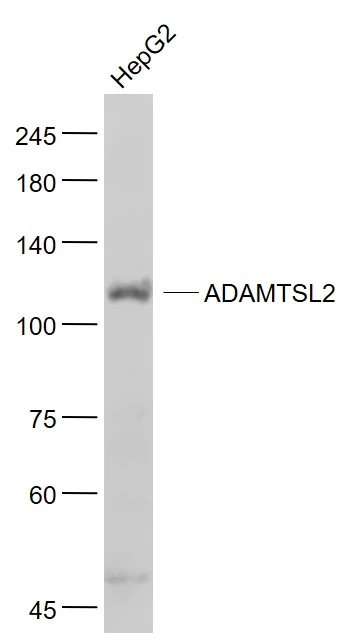
Product group Antibodies
ADAMTSL2 antibodyGTX04625
ApplicationsWestern Blot
ReactivityHuman
TargetADAMTSL2
- SizePrice
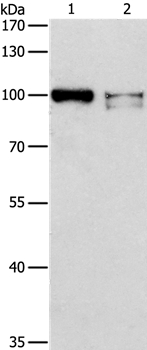
Product group Antibodies
ADAMTSL2 antibodyGTX04626
ApplicationsWestern Blot
ReactivityHuman
TargetADAMTSL2
- SizePrice

Product group Antibodies

Anti-ADAMTSL2 AntibodyHPA045634
ApplicationsImmunoCytoChemistry, ImmunoHistoChemistry
ReactivityHuman
TargetADAMTSL2
- SizePrice
![C2C12 whole cell and differentiated (30 μg) were separated by 7.5% SDS-PAGE, and the membrane was blotted with ADAMTSL2 antibody [HL2616] (GTX639070) diluted at 1:1000. The HRP-conjugated anti-rabbit IgG antibody (GTX213110-01) was used to detect the primary antibody, and the signal was developed with Trident ECL plus-Enhanced.](https://www.genetex.com/upload/website/prouct_img/normal/GTX639070/GTX639070_T-45173_20240126_WB_M_Differentiated_24013018_537.webp)
Product group Antibodies
ADAMTSL2 antibody [HL2616]GTX639070
ApplicationsWestern Blot, ImmunoHistoChemistry, ImmunoHistoChemistry Paraffin
ReactivityHuman, Mouse, Rat
TargetADAMTSL2
- SizePrice
Product group Antibodies

ADAMTSL2 AntibodyPACO15315
ApplicationsWestern Blot, ELISA
ReactivityHuman, Mouse
TargetADAMTSL2
- SizePrice
Product group Antibodies

ADAMTSL2 Antibody (aa213-226)LS-C112865
ApplicationsELISA
ReactivityCanine, Human
TargetADAMTSL2
- SizePrice