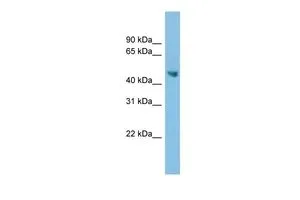
WB analysis of COLO205 cells using GTX45774 ADC antibody at 0.2-1μg/ml.
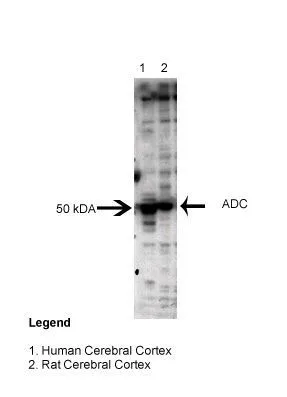
WB analysis of COLO205 cells using GTX45774 ADC antibody at 0.2-1μg/ml.
ADC antibody, Internal
GTX45774

ApplicationsWestern Blot
Product group Antibodies
ReactivityHuman, Rat
TargetAZIN2
Overview
- SupplierGeneTex
- Product NameADC antibody, Internal
- Delivery Days Customer9
- Application Supplier NoteWB: 0.2-2.5 ug/ml. *Optimal dilutions/concentrations should be determined by the researcher.Not tested in other applications.
- ApplicationsWestern Blot
- CertificationResearch Use Only
- ClonalityPolyclonal
- Concentration0.5-1 mg/ml
- ConjugateUnconjugated
- Gene ID113451
- Target nameAZIN2
- Target descriptionantizyme inhibitor 2
- Target synonymsADC, AZI2, AZIB1, ODC-p, ODC1L, ODCp, antizyme inhibitor 2, ODC antizyme inhibitor-2, ODC-like protein, ODC-paralogue, arginine decarboxylase, ornithine decarboxylase like, ornithine decarboxylase-like protein, ornithine decarboxylase-paralog
- HostRabbit
- IsotypeIgG
- Protein IDQ96A70
- Protein NameAntizyme inhibitor 2
- Scientific DescriptionThe protein encoded by this gene belongs to the antizyme inhibitor family, which plays a role in cell growth and proliferation by maintaining polyamine homeostasis within the cell. Antizyme inhibitors are homologs of ornithine decarboxylase (ODC, the key enzyme in polyamine biosynthesis) that have lost the ability to decarboxylase ornithine; however, retain the ability to bind to antizymes. Antizymes negatively regulate intracellular polyamine levels by binding to ODC and targeting it for degradation, as well as by inhibiting polyamine uptake. Antizyme inhibitors function as positive regulators of polyamine levels by sequestering antizymes and neutralizing their effect. This gene encodes antizyme inhibitor 2, the second member of this gene family. Like antizyme inhibitor 1, antizyme inhibitor 2 interacts with all 3 antizymes and stimulates ODC activity and polyamine uptake. However, unlike antizyme inhibitor 1, which is ubiquitously expressed and localized in the nucleus and cytoplasm, antizyme inhibitor 2 is predominantly expressed in the brain and testis and localized in the endoplasmic reticulum-golgi intermediate compartment. Recent studies indicate that antizyme inhibitor 2 is also expressed in specific cell types in ovaries, adrenal glands and pancreas, and in mast cells. The exact function of this gene is not known, however, available data suggest its role in cell growth, spermiogenesis, vesicular trafficking and secretion. Accumulation of antizyme inhibitor 2 has also been observed in brains of patients with Alzheimers disease. There has been confusion in literature and databases over the nomenclature of this gene, stemming from an earlier report that a human cDNA clone (identical to ODCp/AZIN2) had arginine decarboxylase (ADC) activity (PMID:14738999). Subsequent studies in human and mouse showed that antizyme inhibitor 2 was devoid of arginine decarboxylase activity (PMID:19956990). Alternatively spliced transcript variants have been described for this gene. [provided by RefSeq, Sep 2014]
- ReactivityHuman, Rat
- Storage Instruction-20°C or -80°C,2°C to 8°C
- UNSPSC41116161
Datasheet
Related products

Product group Antibodies

Anti-Arginine decarboxylase/AZIN2 Antibody Picoband(r)A07836-CARRIER-FREE
ApplicationsFlow Cytometry, Western Blot, ELISA, ImmunoHistoChemistry
ReactivityHuman, Mouse, Rat
TargetAZIN2
- SizePrice
Product group Antibodies

AZIN2 / Antizyme Inhibitor 2 AntibodyLS-C662476
ApplicationsWestern Blot, ImmunoHistoChemistry, ImmunoHistoChemistry Paraffin
ReactivityHuman
TargetAZIN2
- SizePrice
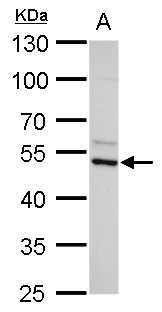
Product group Antibodies
ADC antibody [N2C2], InternalGTX120705
ApplicationsWestern Blot
ReactivityHuman
TargetAZIN2
- SizePrice
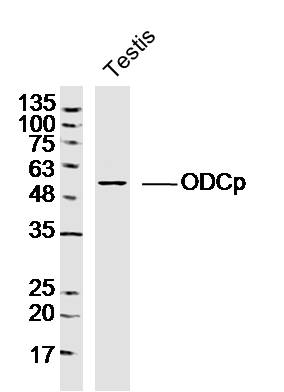
Product group Antibodies

ODCp Polyclonal AntibodyBS-16872R
ApplicationsImmunoFluorescence, Western Blot, ELISA, ImmunoCytoChemistry, ImmunoHistoChemistry, ImmunoHistoChemistry Frozen, ImmunoHistoChemistry Paraffin
ReactivityBovine, Canine, Equine, Human, Mouse, Porcine, Rabbit, Rat, Sheep
TargetAZIN2
- SizePrice