

beta Tubulin 4 antibody [ONS.1A6]
GTX11315

ApplicationsImmunoFluorescence, Western Blot, ELISA, ImmunoCytoChemistry, ImmunoHistoChemistry, ImmunoHistoChemistry Paraffin
Product group Antibodies
ReactivityBovine, Chicken, Hamster, Human, Mouse, Rat
TargetTUBB4A
Overview
- SupplierGeneTex
- Product Namebeta Tubulin 4 antibody [ONS.1A6]
- Delivery Days Customer9
- Application Supplier NoteWB: 1:400. *Optimal dilutions/concentrations should be determined by the researcher.Not tested in other applications.
- ApplicationsImmunoFluorescence, Western Blot, ELISA, ImmunoCytoChemistry, ImmunoHistoChemistry, ImmunoHistoChemistry Paraffin
- CertificationResearch Use Only
- ClonalityMonoclonal
- Clone IDONS.1A6
- ConjugateUnconjugated
- Gene ID10382
- Target nameTUBB4A
- Target descriptiontubulin beta 4A class IVa
- Target synonymsDYT4, TUBB4, beta-5, tubulin beta-4A chain, dystonia 4, torsion (autosomal dominant), tubulin beta-4 chain, tubulin, beta 4, tubulin, beta, 5
- HostMouse
- IsotypeIgG1
- Protein IDP04350
- Protein NameTubulin beta-4A chain
- Scientific DescriptionThe major building block of microtubules is tubulin, an intracellular cylindrical filamentous structure that is present in almost all eukaryotic cells. Except in the simplest eukaryotes, tubulin exists in all cells as a 100 kD protein, a heterodimer of two similar but not identical polypeptides, designated alpha and beta, that assembles into microtubules. Both alpha and beta tubulins consist of various isotypes. For beta tubulin, six evolutionarily conserved isotypes were identified (designated beta I-beta VI). Beta IV exists as two subtypes in mammals, differing from each other at 10 positions. beta IVa is brain specific, whereas beta IVb is ubiquitous, and both appear to be constitutive. The detection, localization and characterization of proteins involved in microtubule function is fundamental to the understanding of mitosis, meiosis, organellar and flagellar movement, intracellular transport, and cytoskeletal functions.
- ReactivityBovine, Chicken, Hamster, Human, Mouse, Rat
- Storage Instruction-20°C or -80°C,2°C to 8°C
- UNSPSC41116161
References
- Down syndrome is associated with altered frequency and functioning of tracheal multiciliated cells, and response to influenza virus infection.Read this paper
- BPIFA1 is a secreted biomarker of differentiating human airway epithelium.Read this paper
- Broad antiviral and anti-inflammatory efficacy of nafamostat against SARS-CoV-2 and seasonal coronaviruses in primary human bronchiolar epithelia. Niemeyer BF et al., 2022 Feb, Nano SelRead this paper
Datasheet
Related products
Product group Antibodies

ApplicationsWestern Blot, ELISA
ReactivityHuman, Mouse
TargetTUBB4A
- SizePrice

Product group Antibodies

Anti-beta Tubulin 4 Antibody107-10316
ApplicationsImmunoFluorescence, Western Blot, ImmunoCytoChemistry
ReactivityHuman, Mouse
TargetTUBB4A
- SizePrice
Product group Antibodies

TUBB4 / Tubulin Beta 4 AntibodyLS-C679924
ApplicationsImmunoFluorescence, ImmunoPrecipitation, Western Blot, ELISA, ImmunoHistoChemistry, ImmunoHistoChemistry Paraffin
ReactivityHuman
TargetTUBB4A
- SizePrice
Product group Antibodies

Tubb4A Polyclonal AntibodyCAC07632
ApplicationsImmunoFluorescence, Western Blot, ELISA, ImmunoHistoChemistry
ReactivityMouse
TargetTUBB4A
- SizePrice
Product group Antibodies

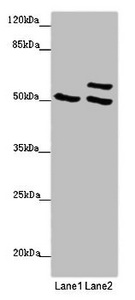
TUBB4A AntibodyCSB-PA025324LA01HU
ApplicationsImmunoFluorescence, Western Blot, ELISA, ImmunoHistoChemistry
ReactivityHuman, Mouse
TargetTUBB4A
- SizePrice
Product group Antibodies
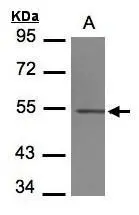
beta Tubulin 4 antibodyGTX102095
ApplicationsImmunoFluorescence, Western Blot, ImmunoCytoChemistry
ReactivityHuman, Mouse, Rat
TargetTUBB4A
- SizePrice

Product group Antibodies

TUBB4A AntibodyPACO46306
ApplicationsImmunoFluorescence, Western Blot, ELISA, ImmunoHistoChemistry
ReactivityHuman, Mouse
TargetTUBB4A
- SizePrice