

CARD8 antibody
GTX04354

ApplicationsImmunoFluorescence, Western Blot, ELISA, ImmunoCytoChemistry, ImmunoHistoChemistry
Product group Antibodies
ReactivityHuman
TargetCARD8
Overview
- SupplierGeneTex
- Product NameCARD8 antibody
- Delivery Days Customer9
- Application Supplier NoteWB: 1-2 microg/mL. ICC/IF: 20 microg/mL. IHC-P (cell pellet): 10 microg/mL. *Optimal dilutions/concentrations should be determined by the researcher.Not tested in other applications.
- ApplicationsImmunoFluorescence, Western Blot, ELISA, ImmunoCytoChemistry, ImmunoHistoChemistry
- CertificationResearch Use Only
- ClonalityPolyclonal
- Concentration1 mg/ml
- ConjugateUnconjugated
- Gene ID22900
- Target nameCARD8
- Target descriptioncaspase recruitment domain family member 8
- Target synonymsCARDINAL, DACAR, DAKAR, NDPP, NDPP1, TUCAN, caspase recruitment domain-containing protein 8, CARD inhibitor of NF-kappaB-activating ligands, apoptotic protein NDPP1, tumor up-regulated CARD-containing antagonist of CASP9, tumor up-regulated CARD-containing antagonist of caspase nine
- HostRabbit
- IsotypeIgG
- Protein IDQ9Y2G2
- Protein NameCaspase recruitment domain-containing protein 8
- Scientific DescriptionThe protein encoded by this gene belongs to the caspase recruitment domain (CARD)-containing family of proteins, which are involved in pathways leading to activation of caspases or nuclear factor kappa-B (NFKB). This protein may be a component of the inflammasome, a protein complex that plays a role in the activation of proinflammatory caspases. It is thought that this protein acts as an adaptor molecule that negatively regulates NFKB activation, CASP1-dependent IL1B secretion, and apoptosis. Polymorphisms in this gene may be associated with a susceptibility to rheumatoid arthritis. Alternatively spliced transcript variants have been described for this gene. [provided by RefSeq, May 2010]
- ReactivityHuman
- Storage Instruction-20°C or -80°C,2°C to 8°C
- UNSPSC12352203
Datasheet
Related products
Product group Antibodies

Anti-CARD8 Antibody144-00293
ApplicationsWestern Blot
ReactivityHuman, Mouse, Rat
TargetCARD8
- SizePrice
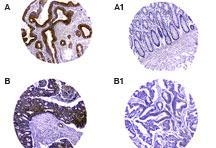
Product group Antibodies

ApplicationsImmunoPrecipitation, Western Blot, ImmunoHistoChemistry
ReactivityHuman
TargetCARD8
- SizePrice

Product group Antibodies

CARD8 Polyclonal AntibodyBS-7088R
ApplicationsImmunoFluorescence, Western Blot, ELISA, ImmunoCytoChemistry, ImmunoHistoChemistry, ImmunoHistoChemistry Frozen, ImmunoHistoChemistry Paraffin
ReactivityHuman
TargetCARD8
- SizePrice
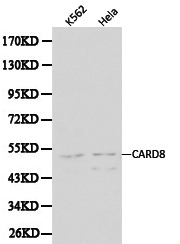
Product group Antibodies

Anti-CARD8 AntibodyA28409
ApplicationsWestern Blot, ImmunoHistoChemistry
ReactivityHuman, Mouse, Rat
- SizePrice
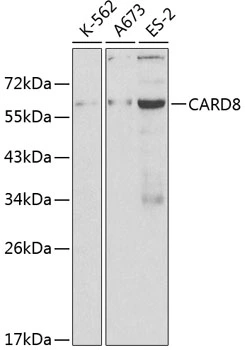
Product group Antibodies
CARD8 antibodyGTX32488
ApplicationsWestern Blot
ReactivityHuman
TargetCARD8
- SizePrice
Product group Antibodies

CARD8 / Cardinal / TUCAN AntibodyLS-C335086
ApplicationsWestern Blot, ImmunoHistoChemistry
ReactivityHuman, Mouse, Rat
TargetCARD8
- SizePrice
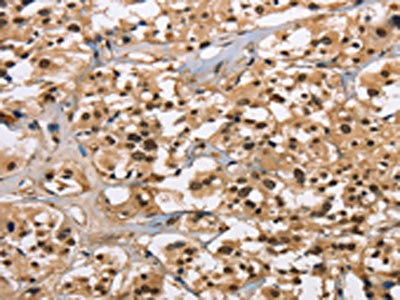
Product group Antibodies

CARD8 AntibodyCSB-PA101001
ApplicationsELISA, ImmunoHistoChemistry
ReactivityHuman
TargetCARD8
- SizePrice

Product group Antibodies

Anti-CARD8 AntibodyHPA042071
ApplicationsImmunoCytoChemistry, ImmunoHistoChemistry
ReactivityHuman
TargetCARD8
- SizePrice