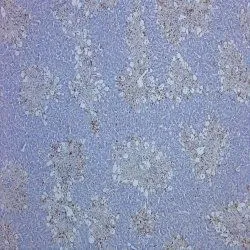
IHC analysis of rat liver, with induced hepatocellular damage tissue using GTX41868 CD68 antibody [ED1].
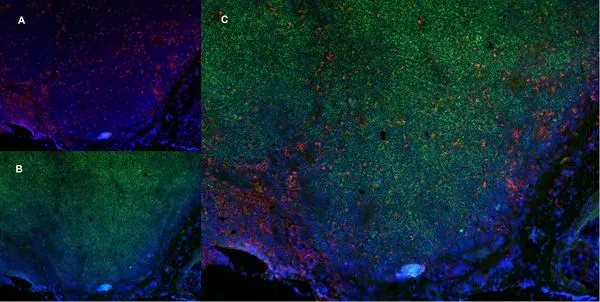
![IHC-Fr analysis of rat lymph node tissue using GTX41868 CD68 antibody [ED1].](https://www.genetex.com/upload/website/prouct_img/normal/GTX41868/GTX41868_2558_IHC-Fr_w_23060820_632.webp "IHC-Fr analysis of rat lymph node tissue using GTX41868 CD68 antibody [ED1].")
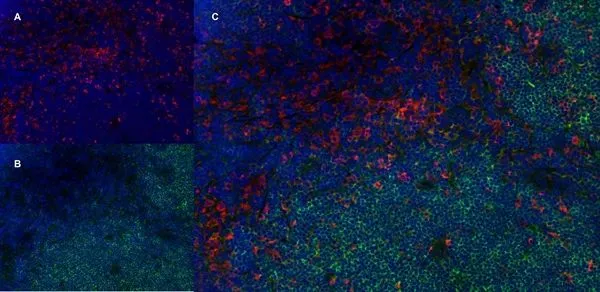
![IHC-Fr analysis of rat lymph node tissue using GTX41868 CD68 antibody [ED1].](https://www.genetex.com/upload/website/prouct_img/normal/GTX41868/GTX41868_2556_IHC-Fr_w_23060820_702.webp "IHC-Fr analysis of rat lymph node tissue using GTX41868 CD68 antibody [ED1].")
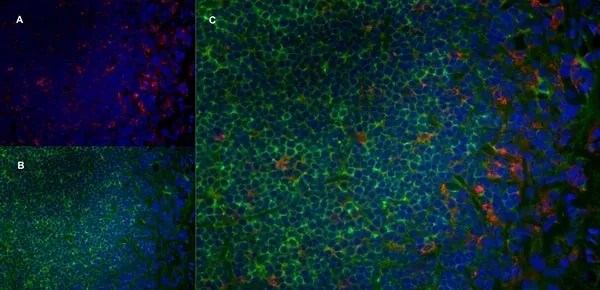
![IHC-Fr analysis of rat lymph node tissue using GTX41868 CD68 antibody [ED1].](https://www.genetex.com/upload/website/prouct_img/normal/GTX41868/GTX41868_2557_IHC-Fr_w_23060820_674.webp "IHC-Fr analysis of rat lymph node tissue using GTX41868 CD68 antibody [ED1].")
IHC analysis of rat liver, with induced hepatocellular damage tissue using GTX41868 CD68 antibody [ED1].
CD68 antibody [ED1]
GTX41868

ApplicationsFlow Cytometry, ImmunoFluorescence, ImmunoPrecipitation, Western Blot, ImmunoCytoChemistry, ImmunoHistoChemistry, ImmunoHistoChemistry Frozen, ImmunoHistoChemistry Paraffin, RadioImmunoAssay
Product group Antibodies
ReactivityBovine, Human, Rat
TargetCD68
Overview
- SupplierGeneTex
- Product NameCD68 antibody [ED1]
- Delivery Days Customer9
- Application Supplier NoteFACS: 1/50-1/100. *Optimal dilutions/concentrations should be determined by the researcher.Not tested in other applications.
- ApplicationsFlow Cytometry, ImmunoFluorescence, ImmunoPrecipitation, Western Blot, ImmunoCytoChemistry, ImmunoHistoChemistry, ImmunoHistoChemistry Frozen, ImmunoHistoChemistry Paraffin, RadioImmunoAssay
- CertificationResearch Use Only
- ClonalityMonoclonal
- Clone IDED1
- Concentration0.5 mg/ml
- ConjugateUnconjugated
- Gene ID968
- Target nameCD68
- Target descriptionCD68 molecule
- Target synonymsGP110, LAMP4, SCARD1, macrosialin, CD68 antigen, macrophage antigen CD68, scavenger receptor class D, member 1
- HostMouse
- IsotypeIgG1
- Protein IDP34810
- Protein NameMacrosialin
- Scientific DescriptionThis gene encodes a 110-kD transmembrane glycoprotein that is highly expressed by human monocytes and tissue macrophages. It is a member of the lysosomal/endosomal-associated membrane glycoprotein (LAMP) family. The protein primarily localizes to lysosomes and endosomes with a smaller fraction circulating to the cell surface. It is a type I integral membrane protein with a heavily glycosylated extracellular domain and binds to tissue- and organ-specific lectins or selectins. The protein is also a member of the scavenger receptor family. Scavenger receptors typically function to clear cellular debris, promote phagocytosis, and mediate the recruitment and activation of macrophages. Alternative splicing results in multiple transcripts encoding different isoforms. [provided by RefSeq, Jul 2008]
- ReactivityBovine, Human, Rat
- Storage Instruction-20°C or -80°C,2°C to 8°C
- UNSPSC12352203
References
- Mang Y, Zhang S, Zhao J, et al. Characteristics of pre-sensitization-related acute antibody-mediated rejection in a rat model of orthotopic liver transplantation. Ann Transl Med. 2022,10(19):1066. doi: 10.21037/atm-22-4311Read this paper
- Murata K, Kaji K, Nishimura N, et al. Rifaximin enhances the L‑carnitine‑mediated preventive effects on skeletal muscle atrophy in cirrhotic rats by modulating the gut‑liver‑muscle axis. Int J Mol Med. 2022,50(2):pii: 101. doi: 10.3892/ijmm.2022.5157.Read this paper
- Hung HS, Kao WC, Shen CC, et al. Inflammatory Modulation of Polyethylene Glycol-AuNP for Regulation of the Neural Differentiation Capacity of Mesenchymal Stem Cells. Cells. 2021,10(11). doi: 10.3390/cells10112854Read this paper
- Tseng WC, Lee PY, Tsai MT, et al. Hypoxic mesenchymal stem cells ameliorate acute kidney ischemia-reperfusion injury via enhancing renal tubular autophagy. Stem Cell Res Ther. 2021,12(1):367. doi: 10.1186/s13287-021-02374-xRead this paper
- He S, Wang X, Liu Z, et al. Hydroxysafflor Yellow A Inhibits Staphylococcus aureus-Induced Mouse Endometrial Inflammation via TLR2-Mediated NF-kB and MAPK Pathway. Inflammation. 2021,44(3):835-845. doi: 10.1007/s10753-020-01297-8Read this paper
- Mahara A, Kitai M, Masunaga H, et al. Modification of decellularized vascular xenografts with 8-arm polyethylene glycol suppresses macrophage infiltration but maintains graft degradability. J Biomed Mater Res A. 2020,108(10):2005-2014. doi: 10.1002/jbm.a.36960Read this paper
- Kao YJ, Lui YW, Lu CF, et al. Behavioral and Structural Effects of Single and Repeat Closed-Head Injury. AJNR Am J Neuroradiol. 2019,40(4):601-608. doi: 10.3174/ajnr.A6014Read this paper
- Hou HH, Wang HC, Cheng SL, et al. MMP-12 activates protease-activated receptor-1, upregulates placenta growth factor, and leads to pulmonary emphysema. Am J Physiol Lung Cell Mol Physiol. 2018,315(3):L432-L442. doi: 10.1152/ajplung.00216.2017Read this paper
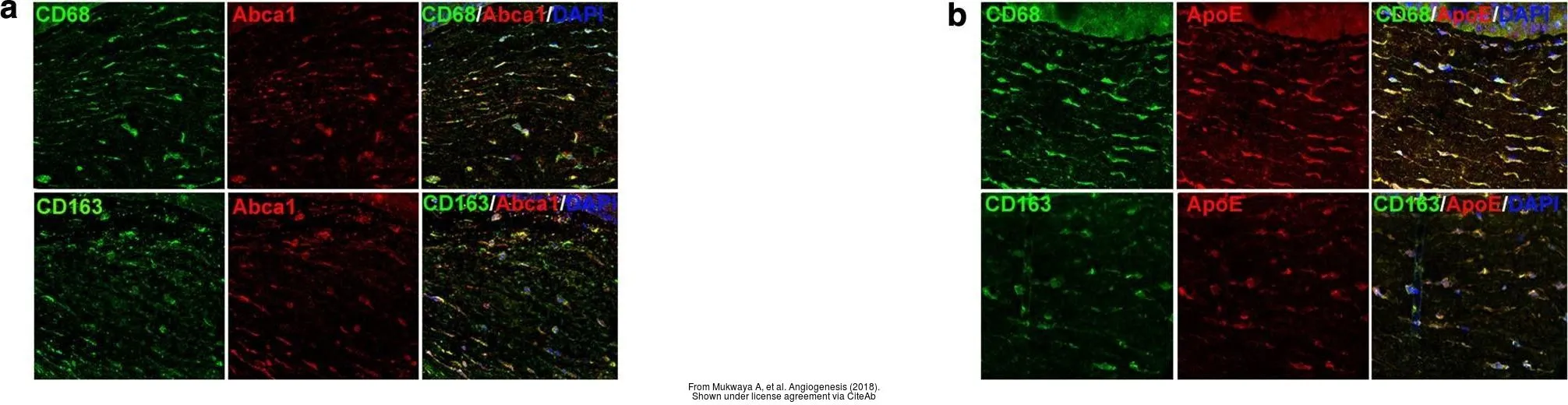
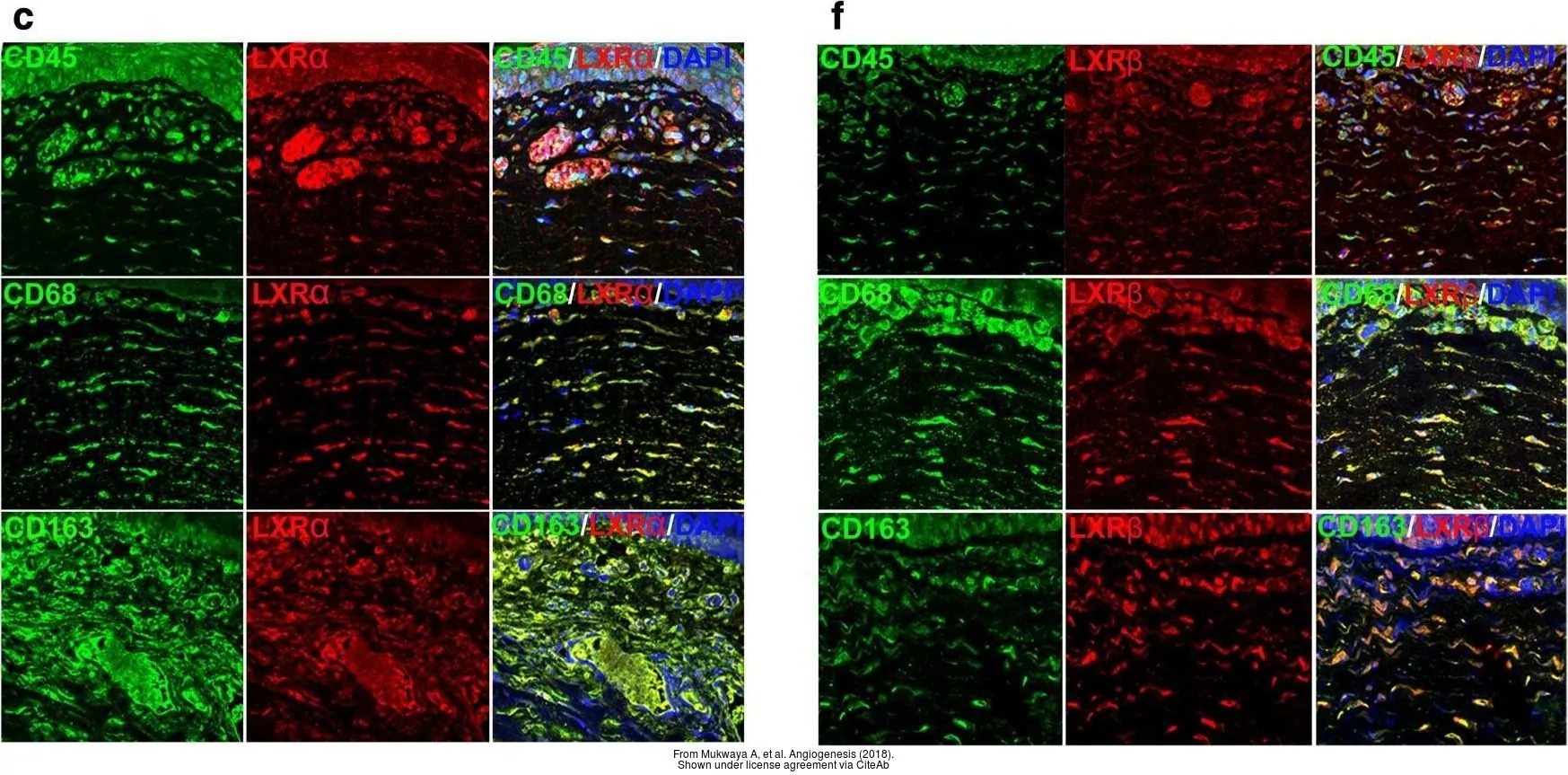
- Mukwaya A, Lennikov A, Xeroudaki M, et al. Time-dependent LXR/RXR pathway modulation characterizes capillary remodeling in inflammatory corneal neovascularization. Angiogenesis. 2018,21(2):395-413. doi: 10.1007/s10456-018-9604-yRead this paper
- Jeuthe S, Wassilew K, O H-Ici D, et al. Myocardial T1 maps reflect histological findings in acute and chronic stages of myocarditis in a rat model. J Cardiovasc Magn Reson. 2016,18:19. doi: 10.1186/s12968-016-0241-6Read this paper
Datasheet
Related products

Product group Antibodies

Anti-CD68 AntibodyA00602-1-CARRIER-FREE
ApplicationsImmunoFluorescence, ELISA, ImmunoHistoChemistry
ReactivityHuman
TargetCD68
- SizePrice
Product group Antibodies

Anti-CD68 [Y-2/131/47]Ab01316-1.1
ApplicationsImmunoPrecipitation, Western Blot, ImmunoCytoChemistry
ReactivityHuman
TargetCD68
- SizePrice

Product group Antibodies

Anti-CD68 AntibodyAMAB90873
ApplicationsImmunoHistoChemistry
ReactivityHuman
TargetCD68
- SizePrice
Product group Antibodies

Anti-CD68 Antibody144-62730
ApplicationsWestern Blot, ImmunoHistoChemistry
ReactivityHuman, Mouse, Rat
TargetCD68
- SizePrice


Product group Antibodies

ApplicationsImmunoPrecipitation, Western Blot, ImmunoCytoChemistry, ImmunoHistoChemistry
TargetCD68
- SizePrice
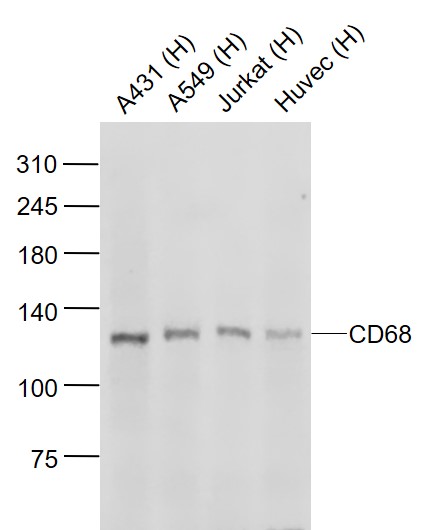
Product group Antibodies
References

CD68 Polyclonal AntibodyBS-1432R
ApplicationsImmunoFluorescence, Western Blot, ImmunoHistoChemistry, ImmunoHistoChemistry Frozen, ImmunoHistoChemistry Paraffin
ReactivityBovine, Human, Mouse
TargetCD68
- SizePrice
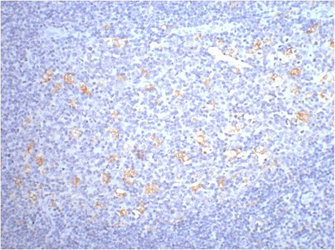
Product group Antibodies

CD68 Monoclonal AntibodyCSB-MA000323
ApplicationsELISA, ImmunoHistoChemistry
ReactivityHuman, Mouse, Rat
TargetCD68
- SizePrice