

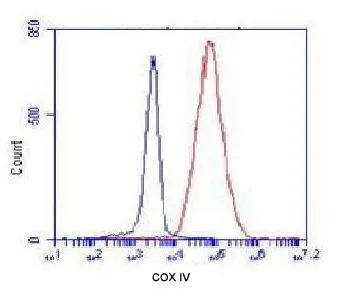
FACS analysis of K562 cells using COX4 antibody at a dilution of 1:100 (red) or an isotype control (blue).
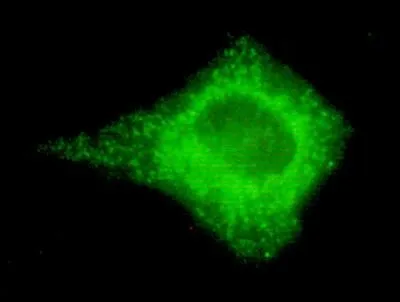
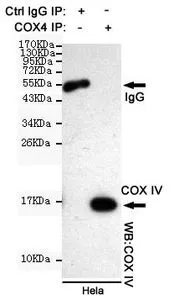
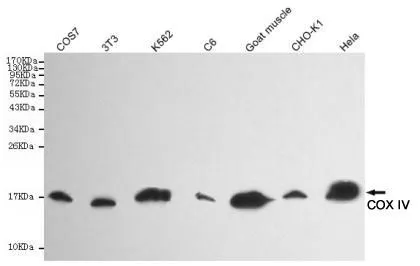
FACS analysis of K562 cells using COX4 antibody at a dilution of 1:100 (red) or an isotype control (blue).
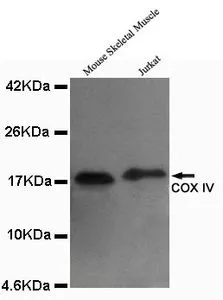
COX4 antibody [4D11-B3-E8]
GTX49132

ApplicationsFlow Cytometry, ImmunoFluorescence, ImmunoPrecipitation, Western Blot, ImmunoCytoChemistry
Product group Antibodies
ReactivityGoat, Hamster, Human, Monkey, Mouse, Rat
TargetCOX4I1
Overview
- SupplierGeneTex
- Product NameCOX4 antibody [4D11-B3-E8]
- Delivery Days Customer9
- ApplicationsFlow Cytometry, ImmunoFluorescence, ImmunoPrecipitation, Western Blot, ImmunoCytoChemistry
- CertificationResearch Use Only
- ClonalityMonoclonal
- Clone ID4D11-B3-E8
- ConjugateUnconjugated
- Gene ID1327
- Target nameCOX4I1
- Target descriptioncytochrome c oxidase subunit 4I1
- Target synonymsCOX IV-1, COX4, COX4-1, COXIV, COXIV-1, MC4DN16, cytochrome c oxidase subunit 4 isoform 1, mitochondrial, cytochrome c oxidase polypeptide IV, cytochrome c oxidase subunit IV
- HostMouse
- IsotypeIgG1
- Protein IDP13073
- Protein NameCytochrome c oxidase subunit 4 isoform 1, mitochondrial
- Scientific DescriptionCytochrome c oxidase (COX) is the terminal enzyme of the mitochondrial respiratory chain. It is a multi-subunit enzyme complex that couples the transfer of electrons from cytochrome c to molecular oxygen and contributes to a proton electrochemical gradient across the inner mitochondrial membrane. The complex consists of 13 mitochondrial- and nuclear-encoded subunits. The mitochondrially-encoded subunits perform the electron transfer and proton pumping activities. The functions of the nuclear-encoded subunits are unknown but they may play a role in the regulation and assembly of the complex. This gene encodes the nuclear-encoded subunit IV isoform 1 of the human mitochondrial respiratory chain enzyme. It is located at the 3 of the NOC4 (neighbor of COX4) gene in a head-to-head orientation, and shares a promoter with it. Pseudogenes related to this gene are located on chromosomes 13 and 14. Alternative splicing results in multiple transcript variants encoding different isoforms. [provided by RefSeq, Jan 2016]
- ReactivityGoat, Hamster, Human, Monkey, Mouse, Rat
- Storage Instruction-20°C or -80°C,2°C to 8°C
- UNSPSC12352203
References
- Zhang H, Song W, Ma X, et al. Acetylation stabilizes the signaling protein WISP2 by preventing its degradation to suppress the progression of acute myeloid leukemia. J Biol Chem. 2023,299(3):102971. doi: 10.1016/j.jbc.2023.102971Read this paper
- Wang L, Ding Y, Bai Y, et al. The activation of SIRT3 by dexmedetomidine mitigates limb ischemia-reperfusion-induced lung injury. Ann Transl Med. 2022,10(6):319. doi: 10.21037/atm-22-711Read this paper
- Tao Y, Zhang J, Chen L, et al. LncRNA CD27-AS1 promotes acute myeloid leukemia progression through the miR-224-5p/PBX3 signaling circuit. Cell Death Dis. 2021,12(6):510. doi: 10.1038/s41419-021-03767-9Read this paper
- Piao Z, Song L, Yao L, et al. Schisandrin Restores the Amyloid β-Induced Impairments on Mitochondrial Function, Energy Metabolism, Biogenesis, and Dynamics in Rat Primary Hippocampal Neurons. Pharmacology. 2021,106(5-6):254-264. doi: 10.1159/000507818Read this paper
Datasheet
Related products
Product group Antibodies
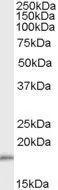
COX4I1 antibody, C-termGTX88987
ApplicationsWestern Blot, ImmunoHistoChemistry, ImmunoHistoChemistry Paraffin
ReactivityHuman
TargetCOX4I1
- SizePrice
![FACS analysis of K562 cells using GTX82782 COX4 antibody [6B3]. Blue : COX4 Red : negative control](https://www.genetex.com/upload/website/prouct_img/normal/GTX82782/GTX82782_20170912_FACS_w_23061322_816.webp)
Product group Antibodies
COX4 antibody [6B3]GTX82782
ApplicationsFlow Cytometry, ImmunoFluorescence, Western Blot, ELISA, ImmunoCytoChemistry
ReactivityHuman, Monkey, Mouse, Rat
TargetCOX4I1
- SizePrice
Product group Antibodies
References
COX4 antibody [GT6310]GTX628886
ApplicationsImmunoFluorescence, Western Blot, ImmunoCytoChemistry, ImmunoHistoChemistry, ImmunoHistoChemistry Paraffin
ReactivityHuman, Rat
TargetCOX4I1
- SizePrice
Product group Antibodies
References
COX4 antibody [GT854]GTX628901
ApplicationsImmunoFluorescence, Western Blot, ImmunoCytoChemistry, ImmunoHistoChemistry, ImmunoHistoChemistry Paraffin
ReactivityHuman, Mouse, Rat
TargetCOX4I1
- SizePrice
Product group Antibodies
COX4 antibody [HL2264]GTX638316
ApplicationsImmunoFluorescence, Western Blot, ImmunoCytoChemistry, ImmunoHistoChemistry, ImmunoHistoChemistry Paraffin
ReactivityHuman, Mouse, Rat, Zebra Fish
TargetCOX4I1
- SizePrice
Product group Antibodies

ApplicationsWestern Blot, ELISA, ImmunoHistoChemistry
ReactivityHuman
TargetCOX4I1
- SizePrice

Product group Antibodies
References
COX4 antibodyGTX101499
ApplicationsImmunoFluorescence, ImmunoPrecipitation, Western Blot, ImmunoCytoChemistry, ImmunoHistoChemistry, ImmunoHistoChemistry Paraffin
ReactivityHuman, Mouse
TargetCOX4I1
- SizePrice
Product group Antibodies
References

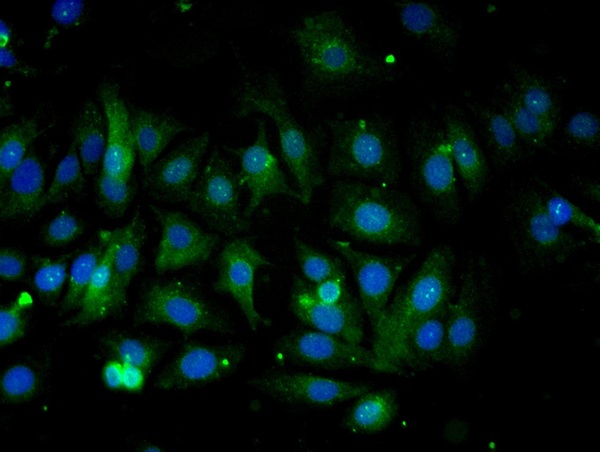
COX4I1 Polyclonal AntibodyBS-10257R
ApplicationsFlow Cytometry, ImmunoFluorescence, Western Blot, ELISA, ImmunoCytoChemistry, ImmunoHistoChemistry, ImmunoHistoChemistry Frozen, ImmunoHistoChemistry Paraffin
ReactivityBovine, Canine, Equine, Human, Mouse, Porcine, Rat
TargetCOX4I1
- SizePrice
Product group Antibodies

Cox4I1 Polyclonal AntibodyCAC07075
ApplicationsWestern Blot, ELISA, ImmunoHistoChemistry
ReactivityRat, Zebra Fish
TargetCOX4I1
- SizePrice