

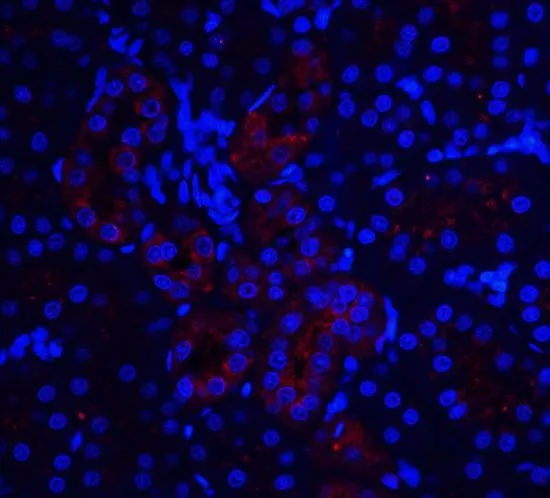
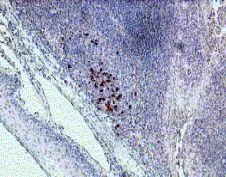
IHC-P analysis of rat kidney tissue using GTX16978 IL22 Receptor alpha 1 antibody. Working concentration : 20 μg/ml
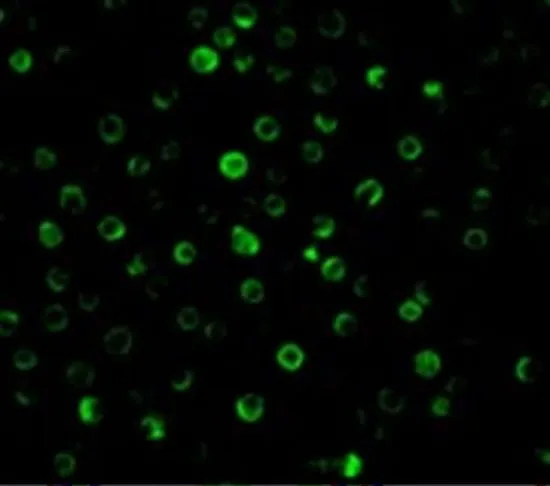
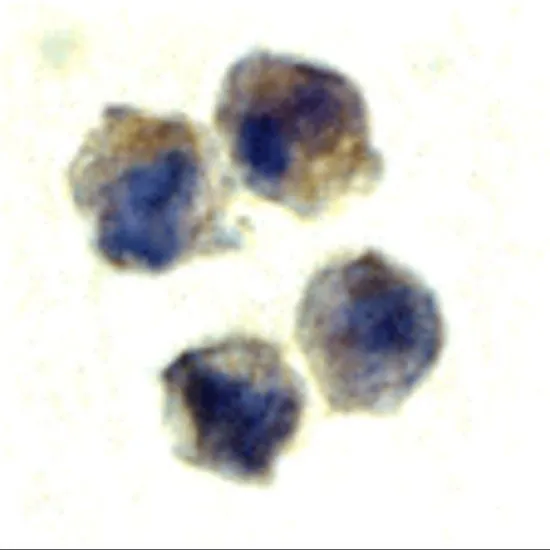
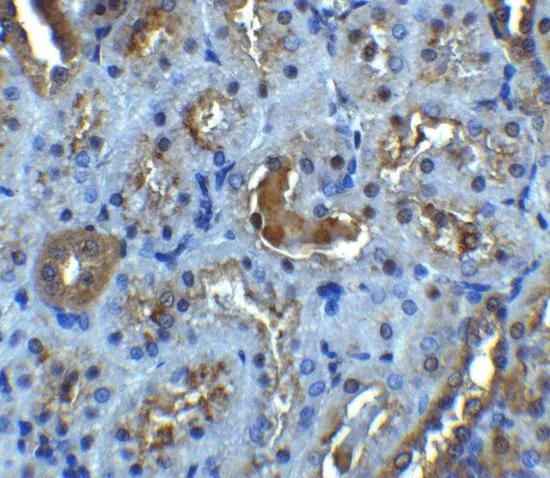
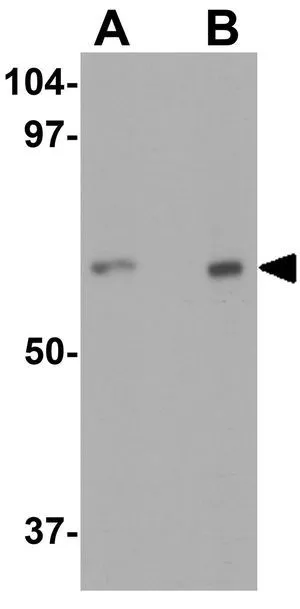
IHC-P analysis of rat kidney tissue using GTX16978 IL22 Receptor alpha 1 antibody. Working concentration : 20 μg/ml
IL22 Receptor alpha 1 antibody
GTX16978

ApplicationsImmunoFluorescence, Western Blot, ELISA, ImmunoCytoChemistry, ImmunoHistoChemistry, ImmunoHistoChemistry Paraffin
Product group Antibodies
ReactivityHuman, Rat
TargetIL22RA1
Overview
- SupplierGeneTex
- Product NameIL22 Receptor alpha 1 antibody
- Delivery Days Customer9
- Application Supplier NoteWB: 0.5-1 microg/mL. ICC/IF: 10 microg/mL. IHC-P: 5 microg/mL. *Optimal dilutions/concentrations should be determined by the researcher.Not tested in other applications.
- ApplicationsImmunoFluorescence, Western Blot, ELISA, ImmunoCytoChemistry, ImmunoHistoChemistry, ImmunoHistoChemistry Paraffin
- CertificationResearch Use Only
- ClonalityPolyclonal
- Concentration1 mg/ml
- ConjugateUnconjugated
- Gene ID58985
- Target nameIL22RA1
- Target descriptioninterleukin 22 receptor subunit alpha 1
- Target synonymsCRF2-9, IL22R, IL22R1, interleukin-22 receptor subunit alpha-1, IL-22 receptor subunit alpha-1, IL-22R-alpha-1, IL-22RA1, cytokine receptor class-II member 9, cytokine receptor family 2 member 9, interleukin 22 receptor, alpha 1, zcytoR11
- HostRabbit
- IsotypeIgG
- Protein IDQ8N6P7
- Protein NameInterleukin-22 receptor subunit alpha-1
- Scientific DescriptionThe protein encoded by this gene belongs to the class II cytokine receptor family, and has been shown to be a receptor for interleukin 22 (IL22). IL22 receptor is a protein complex that consists of this protein and interleukin 10 receptor, beta (IL10BR/CRFB4), a subunit also shared by the receptor complex for interleukin 10 (IL10). This gene and interleukin 28 receptor, alpha (IL28RA) form a cytokine receptor gene cluster in the chromosomal region 1p36. [provided by RefSeq, Jul 2008]
- ReactivityHuman, Rat
- Storage Instruction-20°C or -80°C,2°C to 8°C
- UNSPSC41116161
References
- Interleukin-22 is elevated in the atrium and plasma of patients with atrial fibrillation and increases collagen synthesis in transforming growth factor-beta1-treated cardiac fibroblasts via the JNK pathway. Wu Y et al., 2020 Aug, Exp Ther MedRead this paper
Datasheet
Related products
Product group Antibodies

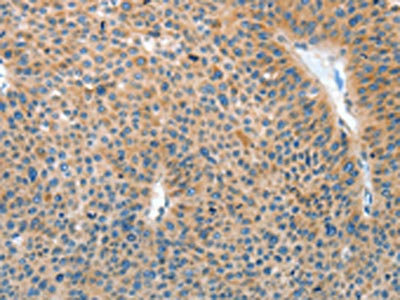
IL22RA1 AntibodyCSB-PA279247
ApplicationsELISA, ImmunoHistoChemistry
ReactivityHuman
TargetIL22RA1
- SizePrice
Product group Antibodies

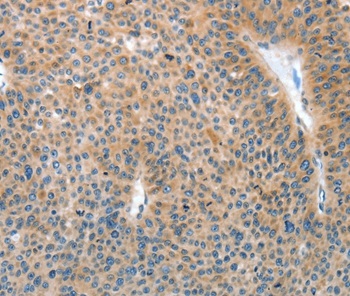
Anti-IL22RA1 AntibodyA45084
ApplicationsImmunoHistoChemistry
ReactivityHuman
- SizePrice
Product group Antibodies

IL22RA1 / IL22R AntibodyLS-C497649
ApplicationsWestern Blot
ReactivityHuman
TargetIL22RA1
- SizePrice
Product group Antibodies
References

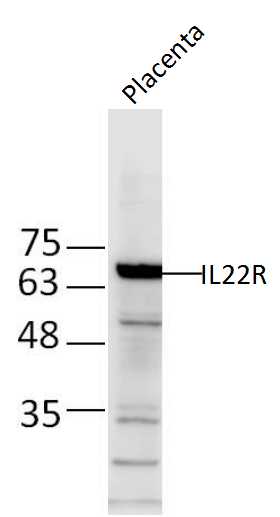
IL22R Polyclonal AntibodyBS-2624R
ApplicationsWestern Blot, ELISA, ImmunoHistoChemistry, ImmunoHistoChemistry Paraffin
ReactivityBovine, Canine, Equine, Guinea Pig, Human, Mouse, Porcine, Rabbit, Rat
TargetIL22RA1
- SizePrice
Product group Antibodies
IL22 Receptor alpha 1 antibodyGTX25982
ApplicationsWestern Blot
ReactivityHuman
TargetIL22RA1
- SizePrice
Product group Antibodies
IL22 Receptor alpha 1 antibodyGTX25984
ApplicationsWestern Blot
ReactivityHuman
TargetIL22RA1
- SizePrice
Product group Antibodies

Il22Ra1 Polyclonal AntibodyCAC10661
ApplicationsWestern Blot, ELISA, ImmunoHistoChemistry
ReactivityMouse
TargetIL22RA1
- SizePrice
Product group Antibodies
IL22 Receptor alpha 1 antibodyGTX18568
ApplicationsELISA, ImmunoHistoChemistry
ReactivityHuman, Mouse
TargetIL22RA1
- SizePrice