

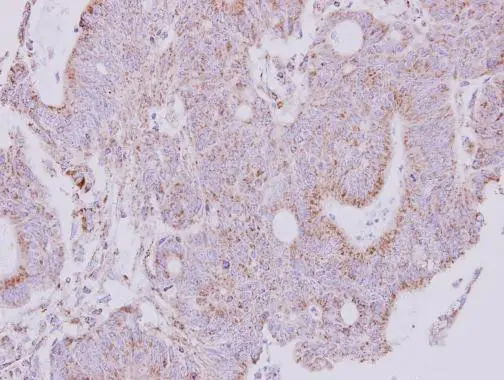
Immunohistochemical analysis of paraffin-embedded human colon carcinoma, using NDUFS1(GTX113787) antibody at 1:250 dilution.
Antigen Retrieval: Trilogy? (EDTA based, pH 8.0) buffer, 15min
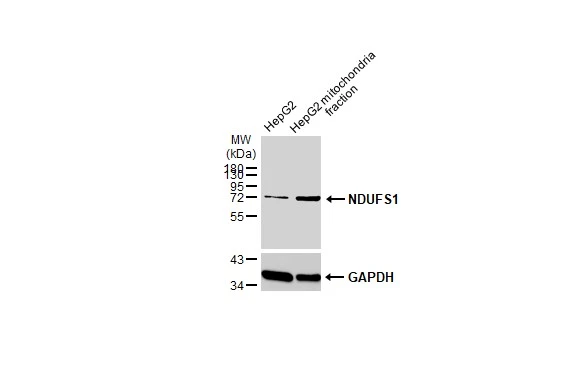
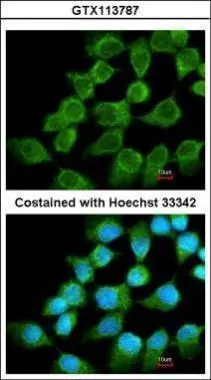
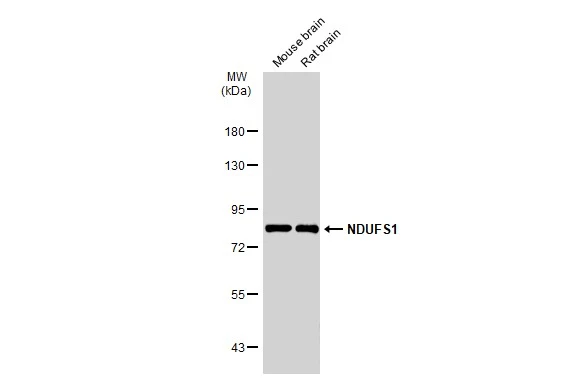
Immunohistochemical analysis of paraffin-embedded human colon carcinoma, using NDUFS1(GTX113787) antibody at 1:250 dilution.
Antigen Retrieval: Trilogy? (EDTA based, pH 8.0) buffer, 15min
NDUFS1 antibody
GTX113787

ApplicationsImmunoFluorescence, Western Blot, ImmunoCytoChemistry, ImmunoHistoChemistry, ImmunoHistoChemistry Paraffin
Product group Antibodies
ReactivityHuman, Mouse, Rat
TargetNDUFS1
Overview
- SupplierGeneTex
- Product NameNDUFS1 antibody
- Delivery Days Customer9
- Application Supplier NoteWB: 1:500-1:3000. ICC/IF: 1:100-1:1000. IHC-P: 1:100-1:1000. *Optimal dilutions/concentrations should be determined by the researcher.Not tested in other applications.
- ApplicationsImmunoFluorescence, Western Blot, ImmunoCytoChemistry, ImmunoHistoChemistry, ImmunoHistoChemistry Paraffin
- CertificationResearch Use Only
- ClonalityPolyclonal
- Concentration0.57 mg/ml
- ConjugateUnconjugated
- Gene ID4719
- Target nameNDUFS1
- Target descriptionNADH:ubiquinone oxidoreductase core subunit S1
- Target synonymsCI-75Kd, CI-75k, MC1DN5, PRO1304, NADH-ubiquinone oxidoreductase 75 kDa subunit, mitochondrial, NADH dehydrogenase (ubiquinone) Fe-S protein 1, 75kDa (NADH-coenzyme Q reductase), complex I 75kDa subunit, complex I, mitochondrial respiratory chain, 75-kD subunit, mitochondrial NADH-ubiquinone oxidoreductase 75 kDa subunit
- HostRabbit
- IsotypeIgG
- Protein IDP28331
- Protein NameNADH-ubiquinone oxidoreductase 75 kDa subunit, mitochondrial
- Scientific DescriptionThe protein encoded by this gene belongs to the complex I 75 kDa subunit family. Mammalian complex I is composed of 45 different subunits. It locates at the mitochondrial inner membrane. This protein has NADH dehydrogenase activity and oxidoreductase activity. It transfers electrons from NADH to the respiratory chain. The immediate electron acceptor for the enzyme is believed to be ubiquinone. This protein is the largest subunit of complex I and it is a component of the iron-sulfur (IP) fragment of the enzyme. It may form part of the active site crevice where NADH is oxidized. Mutations in this gene are associated with complex I deficiency. [provided by RefSeq]
- ReactivityHuman, Mouse, Rat
- Storage Instruction-20°C or -80°C,2°C to 8°C
- UNSPSC41116161
Datasheet
Related products
Product group Antibodies

NDUFS1 AntibodyCSB-PA015660DSR1HU
ApplicationsWestern Blot, ELISA, ImmunoHistoChemistry
ReactivityHuman, Mouse
TargetNDUFS1
- SizePrice
Product group Antibodies

Anti-NDUFS1 Antibody144-64720
ApplicationsImmunoFluorescence, Western Blot
ReactivityHuman, Mouse
TargetNDUFS1
- SizePrice
Product group Antibodies

Anti-NDUFS1 AntibodyA95605
ApplicationsWestern Blot, ELISA, ImmunoHistoChemistry
ReactivityHuman, Mouse, Rat
- SizePrice

Product group Antibodies

Goat anti-NDUFS1EB10188
ApplicationsWestern Blot, ELISA, ImmunoHistoChemistry
ReactivityBovine, Canine, Human, Mouse, Rat
TargetNDUFS1
- SizePrice

Product group Antibodies

Anti-NDUFS1 AntibodyHPA064605
ApplicationsWestern Blot, ImmunoCytoChemistry
ReactivityHuman
TargetNDUFS1
- SizePrice
Product group Antibodies

NDUFS1 AntibodyLS-C401879
ApplicationsWestern Blot, ELISA, ImmunoHistoChemistry
ReactivityHuman, Mouse, Rat
TargetNDUFS1
- SizePrice
Product group Antibodies
NDUFS1 antibodyGTX105270
ApplicationsWestern Blot, ImmunoHistoChemistry, ImmunoHistoChemistry Paraffin
ReactivityHuman, Mouse, Rat
TargetNDUFS1
- SizePrice
Product group Antibodies
NDUFS1 antibody, InternalGTX88087
ApplicationsWestern Blot
ReactivityHuman, Mouse
TargetNDUFS1
- SizePrice
Product group Antibodies

NDUFS1 Recombinant AntibodyBSM-62180R
ApplicationsFlow Cytometry, ImmunoFluorescence, ImmunoPrecipitation, Western Blot, ImmunoCytoChemistry, ImmunoHistoChemistry, ImmunoHistoChemistry Frozen, ImmunoHistoChemistry Paraffin
ReactivityHuman, Mouse, Rat
TargetNDUFS1
- SizePrice