

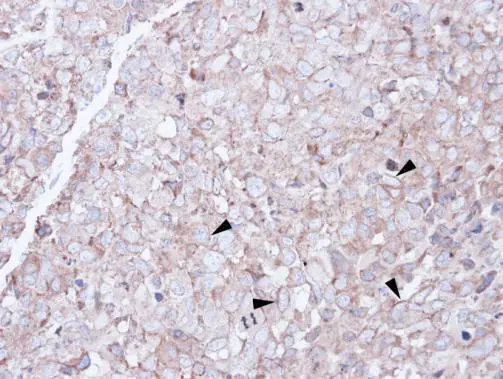
Immunohistochemical analysis of paraffin-embedded CL1-0 xenograft, using SCARA3(GTX100595) antibody at 1:100 dilution.
Antigen Retrieval: Trilogy? (EDTA based, pH 8.0) buffer, 15min
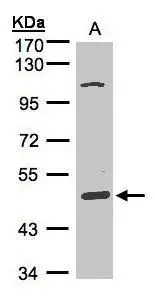
![SCARA3 antibody [N2C2], Internal detects SCARA3 protein at cytoplasm by immunofluorescent analysis. Sample: HeLa cells were fixed in -20oC 100% MeOH for 5 min. Green: SCARA3 protein stained by SCARA3 antibody [N2C2], Internal (GTX100595) diluted at 1:500. Blue: Hoechst 33343 staining.](https://www.genetex.com/upload/website/prouct_img/normal/GTX100595/GTX100595_39771_IFA_w_23060100_963.webp "SCARA3 antibody [N2C2], Internal detects SCARA3 protein at cytoplasm by immunofluorescent analysis. Sample: HeLa cells were fixed in -20oC 100% MeOH for 5 min. Green: SCARA3 protein stained by SCARA3 antibody [N2C2], Internal (GTX100595) diluted at 1:500. Blue: Hoechst 33343 staining.")
Immunohistochemical analysis of paraffin-embedded CL1-0 xenograft, using SCARA3(GTX100595) antibody at 1:100 dilution.
Antigen Retrieval: Trilogy? (EDTA based, pH 8.0) buffer, 15min
SCARA3 antibody [N2C2], Internal
GTX100595

ApplicationsImmunoFluorescence, Western Blot, ImmunoCytoChemistry, ImmunoHistoChemistry, ImmunoHistoChemistry Paraffin
Product group Antibodies
ReactivityHuman
TargetSCARA3
Overview
- SupplierGeneTex
- Product NameSCARA3 antibody [N2C2], Internal
- Delivery Days Customer9
- Application Supplier NoteWB: 1:500-1:3000. ICC/IF: 1:100-1:1000. IHC-P: 1:100-1:1000. *Optimal dilutions/concentrations should be determined by the researcher.Not tested in other applications.
- ApplicationsImmunoFluorescence, Western Blot, ImmunoCytoChemistry, ImmunoHistoChemistry, ImmunoHistoChemistry Paraffin
- CertificationResearch Use Only
- ClonalityPolyclonal
- Concentration0.78 mg/ml
- ConjugateUnconjugated
- Gene ID51435
- Target nameSCARA3
- Target descriptionscavenger receptor class A member 3
- Target synonymsAPC7, CSR, CSR1, MSLR1, MSRL1, scavenger receptor class A member 3, cellular stress response gene protein, cellular stress response protein, macrophage scavenger receptor-like 1
- HostRabbit
- IsotypeIgG
- Protein IDQ6AZY7
- Protein NameScavenger receptor class A member 3
- Scientific DescriptionThis gene encodes a macrophage scavenger receptor-like protein. This protein has been shown to deplete reactive oxygen species, and thus play an important role in protecting cells from oxidative stress. The expression of this gene is induced by oxidative stress. Alternatively spliced transcript variants encoding distinct isoforms have been described. [provided by RefSeq]
- ReactivityHuman
- Storage Instruction-20°C or -80°C,2°C to 8°C
- UNSPSC41116161
Datasheet
Related products
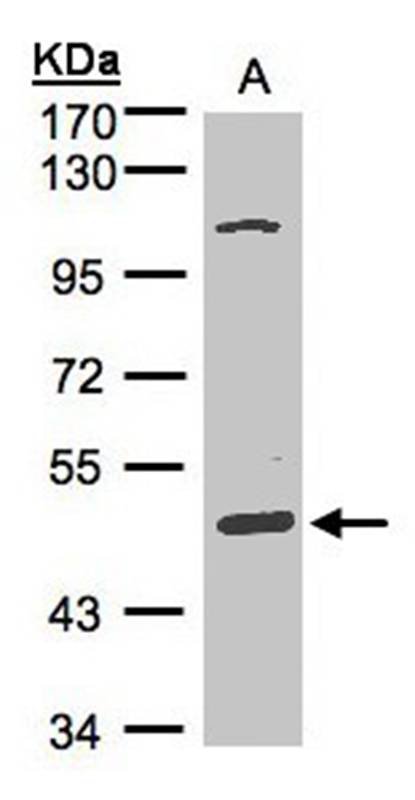
Product group Antibodies

Anti-SCARA3 AntibodyA36976
ApplicationsWestern Blot, ImmunoHistoChemistry
ReactivityHuman
- SizePrice
Product group Antibodies

Anti-SCARA3 Antibody101-11517
ApplicationsWestern Blot, ELISA
TargetSCARA3
- SizePrice

Product group Antibodies

Anti-SCARA3 Antibody Picoband(r)A11048-1-CARRIER-FREE
ApplicationsWestern Blot, ELISA
ReactivityHuman, Mouse, Rat
TargetSCARA3
- SizePrice
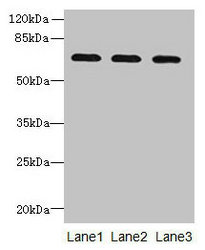
Product group Antibodies

SCARA3 AntibodyCSB-PA721489LA01HU
ApplicationsWestern Blot, ELISA, ImmunoHistoChemistry
ReactivityHuman, Mouse
TargetSCARA3
- SizePrice
Product group Antibodies

Scara3 Polyclonal AntibodyCAC09362
ApplicationsWestern Blot, ELISA, ImmunoHistoChemistry
ReactivityMouse
TargetSCARA3
- SizePrice
Product group Antibodies

SCARA3 / APC7 Antibody (Biotin)LS-C394607
ApplicationsELISA
ReactivityHuman, Mouse
TargetSCARA3
- SizePrice

Product group Antibodies

Anti-SCARA3 AntibodyHPA029861
ApplicationsImmunoCytoChemistry
ReactivityHuman
TargetSCARA3
- SizePrice
Product group Antibodies

SCARA3 AntibodyPACO36438
ApplicationsWestern Blot, ELISA, ImmunoHistoChemistry
ReactivityHuman, Mouse
TargetSCARA3
- SizePrice