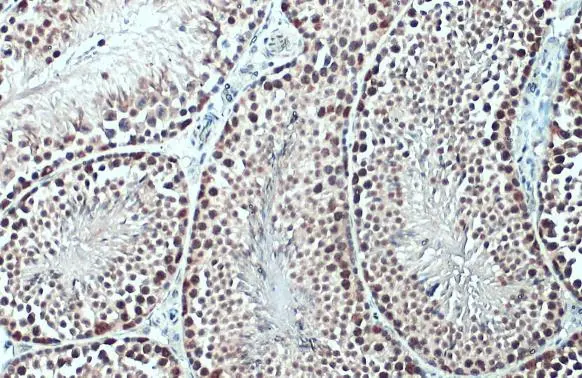
TET1 antibody [N1], N-term detects TET1 protein at nucleus by immunohistochemical analysis. Sample: Paraffin-embedded mouse testis. TET1 stained by TET1 antibody [N1], N-term (GTX125888) diluted at 1:500. Antigen Retrieval: Citrate buffer, pH 6.0, 15 min
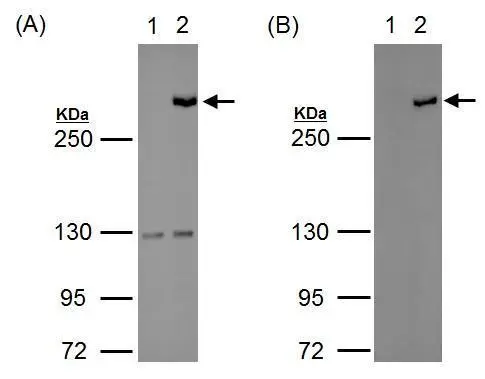
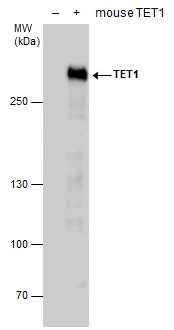
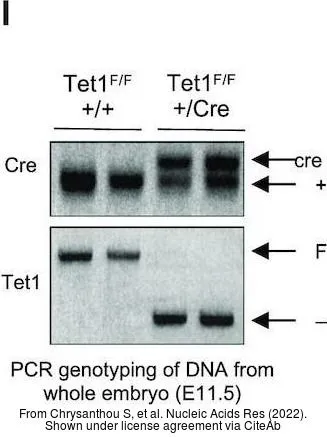
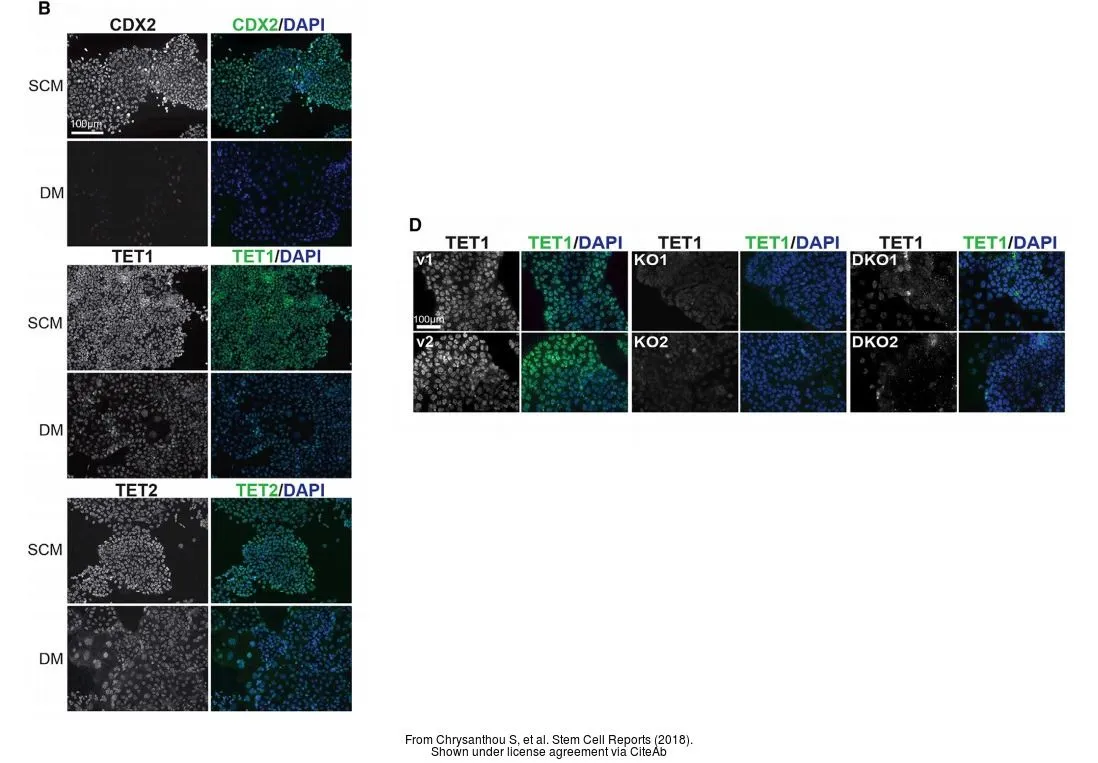
TET1 antibody [N1], N-term detects TET1 protein at nucleus by immunohistochemical analysis. Sample: Paraffin-embedded mouse testis. TET1 stained by TET1 antibody [N1], N-term (GTX125888) diluted at 1:500. Antigen Retrieval: Citrate buffer, pH 6.0, 15 min
TET1 antibody [N1], N-term
GTX125888

ApplicationsImmunoFluorescence, ImmunoPrecipitation, Western Blot, ChIP Chromatin ImmunoPrecipitation, ImmunoCytoChemistry, ImmunoHistoChemistry, ImmunoHistoChemistry Paraffin
Product group Antibodies
ReactivityMouse
TargetTet1
Overview
- SupplierGeneTex
- Product NameTET1 antibody [N1], N-term
- Delivery Days Customer9
- Application Supplier NoteWB: 1:500-1:20000. ICC/IF: 1:100-1:1000. *Optimal dilutions/concentrations should be determined by the researcher.Not tested in other applications.
- ApplicationsImmunoFluorescence, ImmunoPrecipitation, Western Blot, ChIP Chromatin ImmunoPrecipitation, ImmunoCytoChemistry, ImmunoHistoChemistry, ImmunoHistoChemistry Paraffin
- CertificationResearch Use Only
- ClonalityPolyclonal
- Concentration1 mg/ml
- ConjugateUnconjugated
- Gene ID52463
- Target nameTet1
- Target descriptiontet methylcytosine dioxygenase 1
- Target synonyms2510010B09Rik, Cxxc6, D10Ertd17e, LCX, mKIAA1676, methylcytosine dioxygenase TET1, CXXC finger 6, CXXC-type zinc finger protein 6, ten-eleven translocation 1 gene protein homolog, tet oncogene 1
- HostRabbit
- IsotypeIgG
- Protein IDQ3URK3
- Protein NameMethylcytosine dioxygenase TET1
- Scientific DescriptionDioxygenase that specifically binds methylcytosine (5mC), a minor base in mammalian DNA found in repetitive DNA elements that is crucial for retrotransposon silencing and mammalian development. Catalyzes the conversion of methylcytosine (5mC) to 5-hydroxymethylcytosine (hmC). The clear function of 5-hydroxymethylcytosine (hmC) is still unclear but it may influence chromatin structure and recruit specific factors or may constitute an intermediate component in cytosine demethylation. 5-hydroxymethylcytosine (hmC) is present in ES cells and is enriched in the brain, especially in Purkinje neurons. May play a role in the fetal development of heart, lung and brain.
- ReactivityMouse
- Storage Instruction-20°C or -80°C,2°C to 8°C
- UNSPSC12352203
References
- Flores JC, Sidoli S, Dawlaty MM. Tet2 regulates Sin3a recruitment at active enhancers in embryonic stem cells. iScience. 2023,26(7):107170. doi: 10.1016/j.isci.2023.107170Read this paper
- van der Veer BK, Chen L, Custers C, et al. Dual functions of TET1 in germ layer lineage bifurcation distinguished by genomic context and dependence on 5-methylcytosine oxidation. Nucleic Acids Res. 2023,51(11):5469-5498. doi: 10.1093/nar/gkad231Read this paper
- Huang X, Balmer S, Lyu C, et al. ZFP281 coordinates DNMT3 and TET1 for transcriptional and epigenetic control in pluripotent state transitions. bioRxiv. 2023,:pii: 2023.03.24.534143. doi: 10.1101/2023.03.24.534143.Read this paper
- Huang X, Bashkenova N, Hong Y, et al. A TET1-PSPC1-Neat1 molecular axis modulates PRC2 functions in controlling stem cell bivalency. Cell Rep. 2022,39(10):110928. doi: 10.1016/j.celrep.2022.110928Read this paper
- Chrysanthou S, Flores JC, Dawlaty MM. Tet1 Suppresses p21 to Ensure Proper Cell Cycle Progression in Embryonic Stem Cells. Cells. 2022,11(8). doi: 10.3390/cells11081366Read this paper
- Chrysanthou S, Tang Q, Lee J, et al. The DNA dioxygenase Tet1 regulates H3K27 modification and embryonic stem cell biology independent of its catalytic activity. Nucleic Acids Res. 2022,50(6):3169-3189. doi: 10.1093/nar/gkac089Read this paper
- Arand J, Chiang HR, Martin D, et al. Tet enzymes are essential for early embryogenesis and completion of embryonic genome activation. EMBO Rep. 2022,23(2):e53968. doi: 10.15252/embr.202153968Read this paper
- Huang Z, Yu J, Cui W, et al. The chromosomal protein SMCHD1 regulates DNA methylation and the 2c-like state of embryonic stem cells by antagonizing TET proteins. Sci Adv. 2021,7(4). doi: 10.1126/sciadv.abb9149Read this paper
- Kim KP, Wu Y, Yoon J, et al. Reprogramming competence of OCT factors is determined by transactivation domains. Sci Adv. 2020,6(36). doi: 10.1126/sciadv.aaz7364Read this paper
- Senner CE, Chrysanthou S, Burge S, et al. TET1 and 5-Hydroxymethylation Preserve the Stem Cell State of Mouse Trophoblast. Stem Cell Reports. 2020,15(6):1301-1316. doi: 10.1016/j.stemcr.2020.04.009Read this paper
Datasheet
Related products
Product group Antibodies

Anti-Mouse Tet1 (C-term) Antibody102-24409
ApplicationsWestern Blot
TargetTet1
- SizePrice