

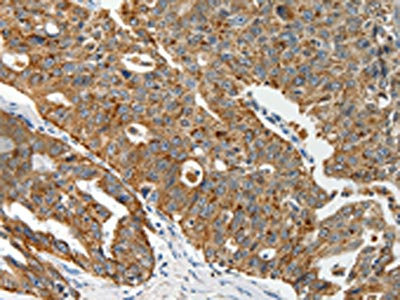
The image on the left is immunohistochemistry of paraffin-embedded Human ovarian cancer tissue using CSB-PA909687(ABCD2 Antibody) at dilution 1/20, on the right is treated with synthetic peptide. (Original magnification: x200)
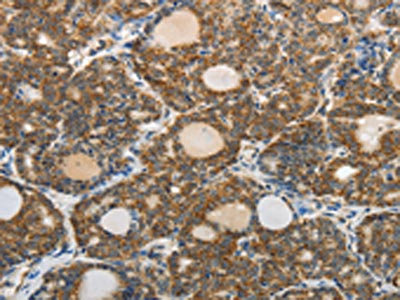
The image on the left is immunohistochemistry of paraffin-embedded Human ovarian cancer tissue using CSB-PA909687(ABCD2 Antibody) at dilution 1/20, on the right is treated with synthetic peptide. (Original magnification: x200)
ABCD2 Antibody
CSB-PA909687

ApplicationsELISA, ImmunoHistoChemistry
Product group Antibodies
ReactivityHuman, Mouse, Rat
TargetABCD2
Overview
- SupplierCusabio
- Product NameABCD2 Antibody
- Delivery Days Customer20
- ApplicationsELISA, ImmunoHistoChemistry
- CertificationResearch Use Only
- ClonalityPolyclonal
- ConjugateUnconjugated
- Gene ID225
- Target nameABCD2
- Target descriptionATP binding cassette subfamily D member 2
- Target synonymsABC39, ALDL1, ALDR, ALDRP, hALDR, ATP-binding cassette sub-family D member 2, ATP-binding cassette, sub-family D (ALD), member 2, adrenoleukodystrophy-like 1, adrenoleukodystrophy-related protein
- HostRabbit
- IsotypeIgG
- Protein IDQ9UBJ2
- Protein NameATP-binding cassette sub-family D member 2
- Scientific DescriptionThe protein encoded by this gene is a member of the superfamily of ATP-binding cassette (ABC) transporters. ABC proteins transport various molecules across extra- and intra-cellular membranes. ABC genes are divided into seven distinct subfamilies (ABC1, MDR/TAP, MRP, ALD, OABP, GCN20, White). This protein is a member of the ALD subfamily, which is involved in peroxisomal import of fatty acids and/or fatty acyl-CoAs in the organelle. All known peroxisomal ABC transporters are half transporters which require a partner half transporter molecule to form a functional homodimeric or heterodimeric transporter. The function of this peroxisomal membrane protein is unknown; however this protein is speculated to function as a dimerization partner of ABCD1 and/or other peroxisomal ABC transporters. Mutations in this gene have been observed in patients with adrenoleukodystrophy, a severe demyelinating disease. This gene has been identified as a candidate for a modifier gene, accounting for the extreme variation among adrenoleukodystrophy phenotypes. This gene is also a candidate for a complement group of Zellweger syndrome, a genetically heterogeneous disorder of peroxisomal biogenesis.
- ReactivityHuman, Mouse, Rat
- Storage Instruction-20°C or -80°C
- UNSPSC41116161
Related products
Product group Antibodies

Anti-ABCD2 (C-term) Antibody102-21174
ApplicationsFlow Cytometry, Western Blot, ImmunoHistoChemistry, ImmunoHistoChemistry Paraffin
TargetABCD2
- SizePrice
Product group Antibodies
References

ABCD2 antibody [N3C2], InternalGTX112623
ApplicationsWestern Blot
ReactivityHuman
TargetABCD2
- SizePrice
Product group Antibodies

ABCD2 Polyclonal AntibodyBS-10646R
ApplicationsImmunoFluorescence, Western Blot, ELISA, ImmunoCytoChemistry, ImmunoHistoChemistry, ImmunoHistoChemistry Frozen, ImmunoHistoChemistry Paraffin
TargetABCD2
- SizePrice
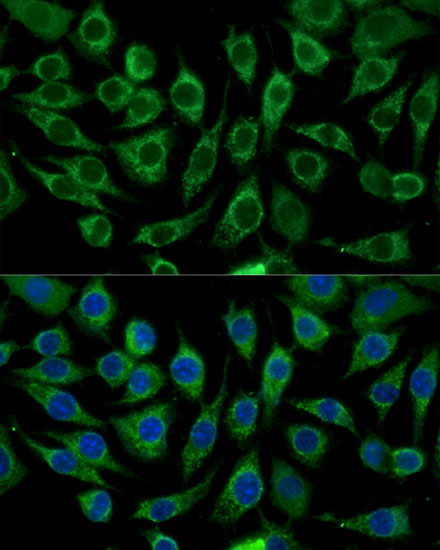
Product group Antibodies

Anti-ABCD2 AntibodyA92521
ApplicationsImmunoFluorescence, Western Blot, ImmunoCytoChemistry
ReactivityHuman, Mouse, Rat
- SizePrice

Product group Antibodies

Goat anti-ABCD2 (aa460-473)EB11507
ApplicationsWestern Blot, ELISA
ReactivityHuman
TargetABCD2
- SizePrice

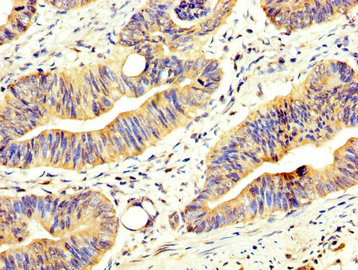
Product group Antibodies
ABCD2 AntibodyCSB-PA866202LA01HU
ApplicationsELISA, ImmunoHistoChemistry
ReactivityHuman
TargetABCD2
- SizePrice