

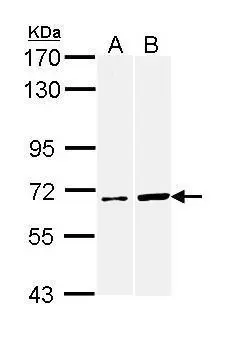
Sample (30 ug of whole cell lysate) A: H1299 B: Hep G2 (GTX27900) 7.5% SDS PAGE GTX113306 diluted at 1:1000
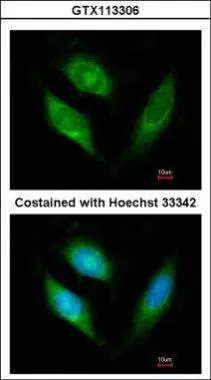
![Non-transfected (–) and transfected (+) 293T whole cell extracts (30 μg) were separated by 7.5% SDS-PAGE, and the membrane was blotted with AIF antibody [N1C1] (GTX113306) diluted at 1:1000.](https://www.genetex.com/upload/website/prouct_img/normal/GTX113306/GTX113306_40128_20160804_WB_shRNA_watermark_w_23060501_176.webp "Non-transfected (–) and transfected (+) 293T whole cell extracts (30 μg) were separated by 7.5% SDS-PAGE, and the membrane was blotted with AIF antibody [N1C1] (GTX113306) diluted at 1:1000.")
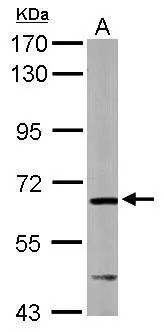
![Rat tissue extract (50 μg) was separated by 7.5% SDS-PAGE, and the membrane was blotted with AIF antibody [N1C1] (GTX113306) diluted at 1:1000.](https://www.genetex.com/upload/website/prouct_img/normal/GTX113306/GTX113306_40128_20160107_WB_R_liver_w_23060501_213.webp "Rat tissue extract (50 μg) was separated by 7.5% SDS-PAGE, and the membrane was blotted with AIF antibody [N1C1] (GTX113306) diluted at 1:1000.")
Sample (30 ug of whole cell lysate) A: H1299 B: Hep G2 (GTX27900) 7.5% SDS PAGE GTX113306 diluted at 1:1000
AIF antibody [N1C1]
GTX113306

ApplicationsImmunoFluorescence, Western Blot, ImmunoCytoChemistry, ImmunoHistoChemistry, ImmunoHistoChemistry Paraffin
Product group Antibodies
ReactivityHuman, Mouse, Rat
TargetAIFM1
Overview
- SupplierGeneTex
- Product NameAIF antibody [N1C1]
- Delivery Days Customer9
- Application Supplier NoteWB: 1:500-1:3000. ICC/IF: 1:100-1:1000. IHC-P: 1:100-1:1000. *Optimal dilutions/concentrations should be determined by the researcher.Not tested in other applications.
- ApplicationsImmunoFluorescence, Western Blot, ImmunoCytoChemistry, ImmunoHistoChemistry, ImmunoHistoChemistry Paraffin
- CertificationResearch Use Only
- ClonalityPolyclonal
- Concentration1 mg/ml
- ConjugateUnconjugated
- Gene ID9131
- Target nameAIFM1
- Target descriptionapoptosis inducing factor mitochondria associated 1
- Target synonymsAIF, AUNX1, CMT2D, CMTX4, COWCK, COXPD6, DFNX5, NADMR, NAMSD, PDCD8, SEMDHL, apoptosis-inducing factor 1, mitochondrial, apoptosis-inducing factor, mitochondrion-associated, 1, auditory neuropathy, X-linked recessive 1, programmed cell death 8 (apoptosis-inducing factor), striatal apoptosis-inducing factor, testicular secretory protein Li 4
- HostRabbit
- IsotypeIgG
- Protein IDO95831
- Protein NameApoptosis-inducing factor 1, mitochondrial
- Scientific DescriptionThis gene encodes a flavoprotein essential for nuclear disassembly in apoptotic cells that is found in the mitochondrial intermembrane space in healthy cells. Induction of apoptosis results in the translocation of this protein to the nucleus where it effects chromosome condensation and fragmentation. In addition, this gene product induces mitochondria to release the apoptogenic proteins cytochrome c and caspase-9. Several alternative transcripts encoding different isoforms have been identified for this gene. [provided by RefSeq]
- ReactivityHuman, Mouse, Rat
- Storage Instruction-20°C or -80°C,2°C to 8°C
- UNSPSC41116161
Datasheet
Related products

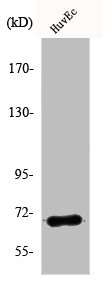
Product group Antibodies

AIFM1 AntibodyCSB-PA000836
ApplicationsImmunoFluorescence, Western Blot, ELISA, ImmunoHistoChemistry
ReactivityHuman, Mouse, Rat
TargetAIFM1
- SizePrice
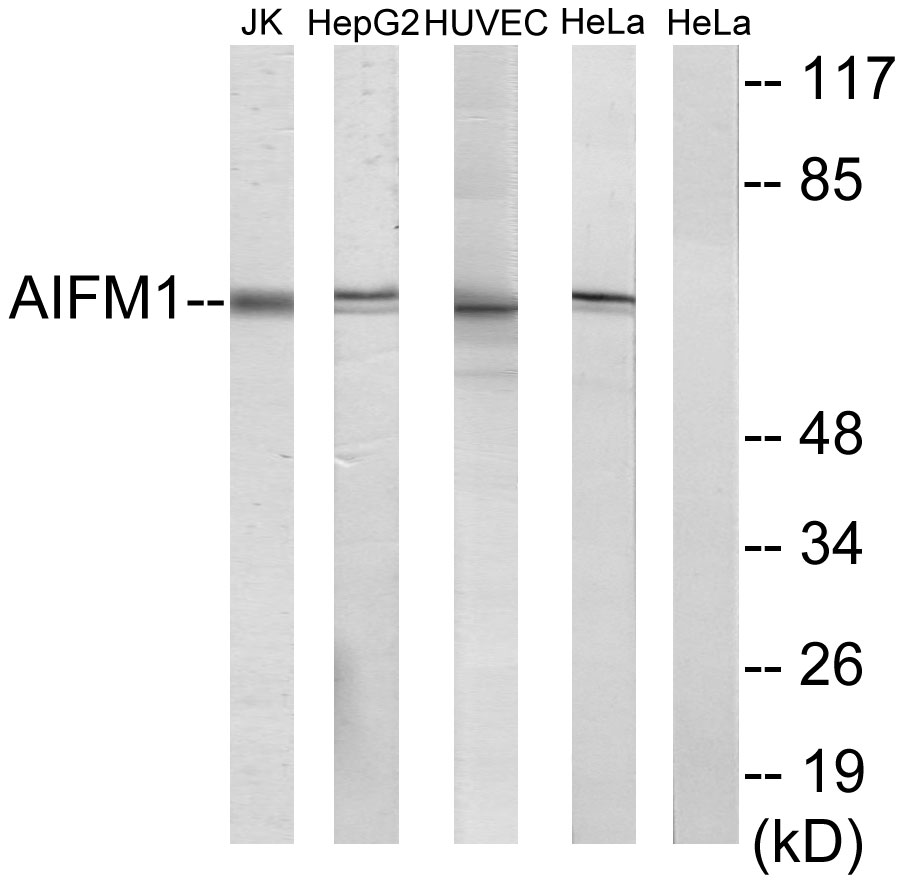
Product group Antibodies

Anti-AIFM1 AntibodyA97728
ApplicationsWestern Blot, ELISA
ReactivityHuman, Mouse, Rat
- SizePrice
Product group Antibodies

AIFM1 / AIF / PDCD8 AntibodyLS-C763929
ApplicationsWestern Blot
ReactivityRat
TargetAIFM1
- SizePrice

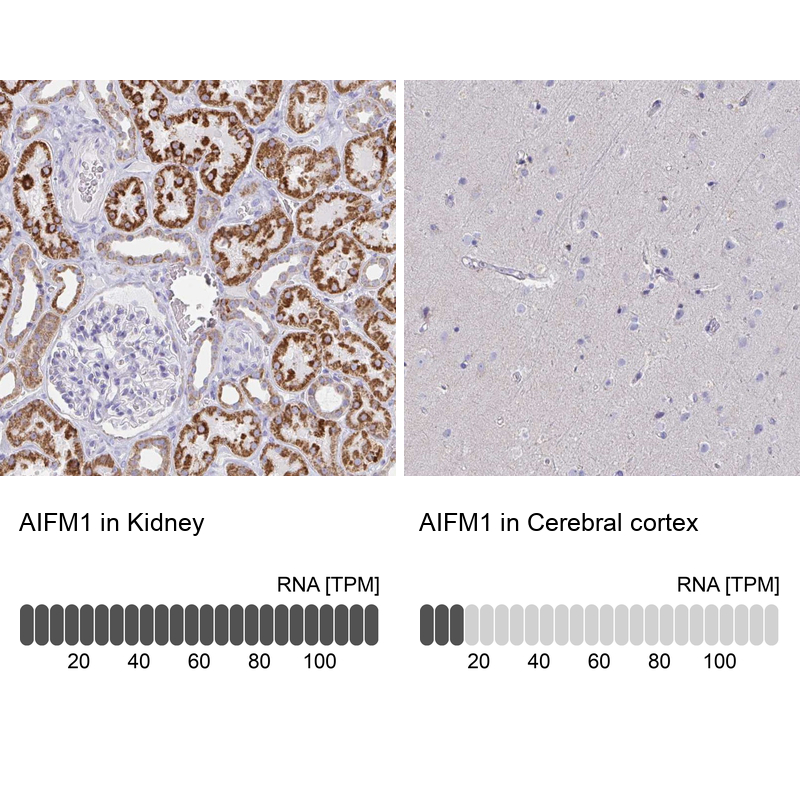
Product group Antibodies

Anti-AIFM1 AntibodyHPA030611
ApplicationsWestern Blot, ImmunoHistoChemistry
ReactivityHuman
TargetAIFM1
- SizePrice
Product group Antibodies

Goat anti-AIFM1 (aa183-195)EB12621
ApplicationsImmunoFluorescence, Western Blot, ELISA, ImmunoHistoChemistry
ReactivityBovine, Human, Mouse
TargetAIFM1
- SizePrice
Product group Antibodies

Aifm1 Polyclonal AntibodyCAC11738
ApplicationsImmunoFluorescence, Western Blot, ELISA, ImmunoHistoChemistry
TargetAIFM1
- SizePrice

Product group Antibodies

Anti-AIF/AIFM1 Antibody Picoband(r)PB9366-CARRIER-FREE
ApplicationsFlow Cytometry, ImmunoFluorescence, Western Blot, ImmunoCytoChemistry, ImmunoHistoChemistry
ReactivityHamster, Human, Mouse, Rat
TargetAIFM1
- SizePrice
![AIF antibody [N1N2], N-term detects AIFM1 protein at Mitochondria by immunofluorescent analysis. Sample: HeLa cells were fixed in 2% paraformaldehyde/culture medium at 37oC for 30 min. Green: AIFM1 protein stained by AIF antibody [N1N2], N-term (GTX102399) diluted at 1:500. Blue: Hoechst 33343 staining.](https://www.genetex.com/upload/website/prouct_img/normal/GTX102399/GTX102399_39925_IFA_w_23060100_355.webp)
Product group Antibodies
AIF antibody [N1N2], N-termGTX102399
ApplicationsImmunoFluorescence, Western Blot, ImmunoCytoChemistry, ImmunoHistoChemistry, ImmunoHistoChemistry Paraffin
ReactivityHuman
TargetAIFM1
- SizePrice