

anti-CD254 / RANKL antibody
ARG55101

ApplicationsWestern Blot, ELISA, ImmunoHistoChemistry, ImmunoHistoChemistry Paraffin
Product group Antibodies
TargetTNFSF11
Overview
- SupplierArigo Biolaboratories
- Product Nameanti-CD254 / RANKL antibody
- Delivery Days Customer23
- ApplicationsWestern Blot, ELISA, ImmunoHistoChemistry, ImmunoHistoChemistry Paraffin
- CertificationResearch Use Only
- ClonalityPolyclonal
- Concentration1 mg/ml
- ConjugateUnconjugated
- Gene ID8600
- Target nameTNFSF11
- Target descriptionTNF superfamily member 11
- Target synonymsCD254, ODF, OPGL, OPTB2, RANKL, TNLG6B, TRANCE, hRANKL2, sOdf, tumor necrosis factor ligand superfamily member 11, TNF-related activation-induced cytokine, osteoclast differentiation factor, osteoprotegerin ligand, receptor activator of nuclear factor kappa B ligand, tumor necrosis factor (ligand) superfamily, member 11, tumor necrosis factor ligand 6B, tumor necrosis factor superfamily member 11
- HostRabbit
- IsotypeIgG
- Scientific Descriptionanti-RANKL antibody: The receptor activator of NF-kappaB ligand (RANK-L) is a recently discovered member of the TNF-ligand family involved in the regulation of the T cell-dependent immune response, lymph node organogenesis and bone formation. RANK-L exists as both a normal, transmembrane form and a truncated, soluble form (sRANK-L), both of which can stimulate the receptor. Activation of T cells, such as by treatment with interleukin-7, induces RANK-L production and leads to an increase of osteoclast formation and bone loss. Finally, sRANK-L can activate the antiapoptotic kinase Akt through a signaling complex involving Src kinase and TRAF6, suggesting sRANK-L may also play a role in regulating apoptosis. This antibody will recognize both the soluble form and the uncleaved transmembrane form of RANK-L.
- Storage Instruction-20°C
- UNSPSC12352203
Related products
Product group Antibodies

Anti-OPGL [9H7]AB04111-10.0
ApplicationsELISA, Neutralisation/Blocking, Other Application
ReactivityHuman, Monkey
TargetTNFSF11
- SizePrice
Product group Antibodies

ApplicationsNeutralisation/Blocking
TargetTNFSF11
- SizePrice
Product group Antibodies

Anti-TNFSF11 Antibody144-02550
ApplicationsImmunoFluorescence, Western Blot, ImmunoHistoChemistry
ReactivityHuman, Mouse, Rat
TargetTNFSF11
- SizePrice

Product group Antibodies

ApplicationsFlow Cytometry
TargetTNFSF11
- SizePrice
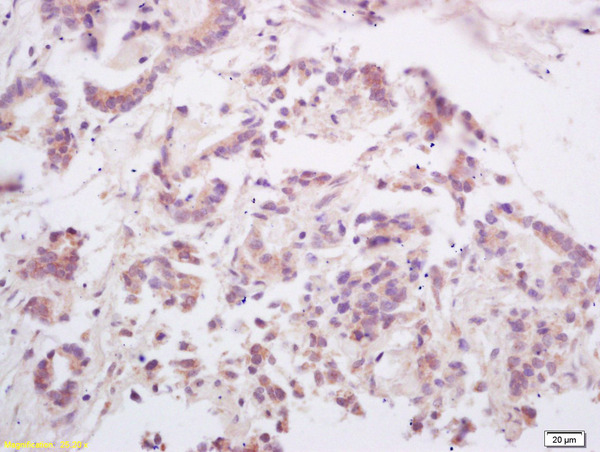
Product group Antibodies
References

RANKL/CD254 Polyclonal AntibodyBS-0747R
ApplicationsFlow Cytometry, ImmunoFluorescence, Western Blot, ELISA, ImmunoCytoChemistry, ImmunoHistoChemistry, ImmunoHistoChemistry Frozen, ImmunoHistoChemistry Paraffin
ReactivityCanine, Human, Mouse, Rat
TargetTNFSF11
- SizePrice

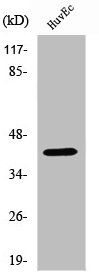
Product group Antibodies

TNFSF11 AntibodyCSB-PA003937
ApplicationsImmunoFluorescence, Western Blot, ELISA
ReactivityHuman, Mouse, Rat
TargetTNFSF11
- SizePrice
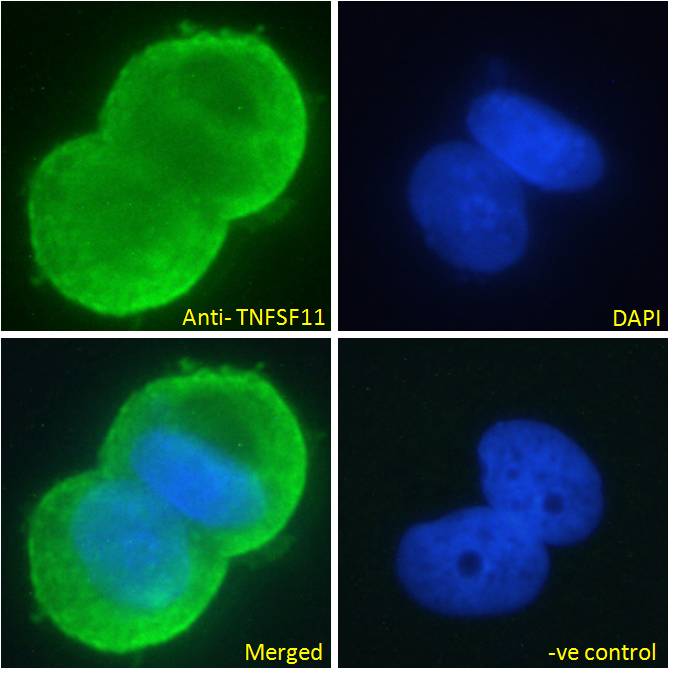
Product group Antibodies

Anti-RANKL AntibodyA285959
ApplicationsFlow Cytometry, ImmunoFluorescence, ELISA
ReactivityHuman, Mouse
- SizePrice
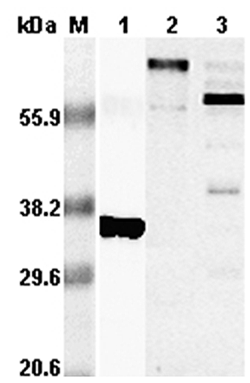
Product group Antibodies

anti-RANKL (human), pAbAG-25A-0016
ApplicationsFlow Cytometry, Western Blot, ELISA
ReactivityHuman
TargetTNFSF11
- SizePrice