Anti-CLOCK Antibody
R1511-2

ApplicationsFlow Cytometry, ImmunoFluorescence, Western Blot, ImmunoHistoChemistry, ImmunoHistoChemistry Paraffin
Product group Antibodies
ReactivityHuman, Mouse, Rat
TargetCLOCK
Overview
- SupplierHUABIO
- Product NameAnti-CLOCK Antibody
- Delivery Days Customer7
- ApplicationsFlow Cytometry, ImmunoFluorescence, Western Blot, ImmunoHistoChemistry, ImmunoHistoChemistry Paraffin
- Applications SupplierWB,IF-Cell,IHC-P,FC
- CertificationResearch Use Only
- ClonalityPolyclonal
- Concentration1 mg/ml
- ConjugateUnconjugated
- Gene ID9575
- Target nameCLOCK
- Target descriptionclock circadian regulator
- Target synonymsKAT13D, bHLHe8, circadian locomoter output cycles protein kaput, circadian locomoter output cycles kaput protein, class E basic helix-loop-helix protein 8, clock homolog
- HostRabbit
- IsotypeIgG
- Protein IDO08785
- Protein NameCircadian locomoter output cycles protein kaput
- Scientific DescriptionCLOCK protein has been found to play a central role as a transcription factor in the circadian pacemaker. In Drosophila, newly synthesized CLOCK (CLK) is hypophosphorylated in the cytoplasm before entering the nucleus. Once in the nuclei, CLK is localized in nuclear foci and is later redistributed homogeneously. CYCLE (CYC) (also known as dBMAL for the BMAL1 ortholog in mammals) dimerizes with CLK via their respective PAS domains. This dimer then recruits co-activator CREB-binding protein (CBP) and is further phosphorylated. Once phosphorylated, this CLK-CYC complex binds to the E-box elements of the promoters of period (per) and timeless (tim) via its bHLH domain, causing the stimulation of gene expression of per and tim. A large molar excess of period (PER) and timeless (TIM) proteins causes formation of the PER-TIM heterodimer which prevents the CLK-CYC heterodimer from binding to the E-boxes of per and tim, essentially blocking per and tim transcription. CLK is hyperphosphorylated when doubletime (DBT) kinase interacts with the CLK-CYC complex in a PER reliant manner, destabilizing both CLK and PER, leading to the degradation of both proteins. Hypophosphorylated CLK then accumulates, binds to the E-boxes of per and tim and activates their transcription once again. This cycle of post-translational phosphorylation suggest that temporal phosphorylation of CLK helps in the timing mechanism of the circadian clock. CLOCK exhibits histone acetyl transferase (HAT) activity, which is enhanced by dimerization with BMAL1. Dr. Paolo Sassone-Corsi and colleagues demonstrated in vitro that CLOCK mediated HAT activity is necessary to rescue circadian rhythms in Clock mutants.
- ReactivityHuman, Mouse, Rat
- Reactivity SupplierHuman,Mouse,Rat
- Storage Instruction-20°C,2°C to 8°C
- UNSPSC41116161
Datasheet
Related products
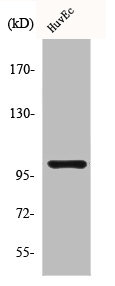
Product group Antibodies

CLOCK AntibodyCSB-PA001722
ApplicationsWestern Blot, ELISA, ImmunoHistoChemistry
ReactivityHuman, Mouse, Rat
TargetCLOCK
- SizePrice

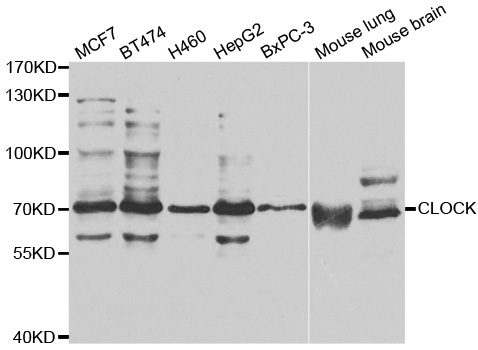
Product group Antibodies

Anti-CLOCK AntibodyA43359
ApplicationsWestern Blot
ReactivityHuman, Mouse, Rat
- SizePrice
Product group Antibodies

Goat anti-CLOCK (aa458-472)EB12170
ApplicationsWestern Blot, ELISA
ReactivityBovine, Human, Mouse, Rat
TargetCLOCK
- SizePrice

Product group Antibodies

Anti-CLOCK AntibodyHPA027565
ApplicationsChIP Chromatin ImmunoPrecipitation, ImmunoCytoChemistry, ImmunoHistoChemistry
ReactivityHuman
TargetCLOCK
- SizePrice
Product group Antibodies

CLOCK Antibody (aa577-846)LS-C375490
ApplicationsWestern Blot, ELISA, ImmunoHistoChemistry, ImmunoHistoChemistry Paraffin
ReactivityHuman
TargetCLOCK
- SizePrice
Product group Antibodies

CLOCK Polyclonal AntibodyCAC14828
ApplicationsImmunoFluorescence, Western Blot, ELISA, ImmunoHistoChemistry
TargetCLOCK
- SizePrice

Product group Antibodies

CLOCK Recombinant AntibodyBSM-54050R
ApplicationsFlow Cytometry, ImmunoFluorescence, ImmunoCytoChemistry, ImmunoHistoChemistry, ImmunoHistoChemistry Frozen, ImmunoHistoChemistry Paraffin
ReactivityHuman, Mouse, Rat
TargetCLOCK
- SizePrice
![Mouse tissue extract (50 μg) was separated by 7.5% SDS-PAGE, and the membranes were blotted with CLOCK antibody [C2C3], C-term (GTX102318) diluted at 1:1000 and competitor's antibody diluted at 1:1000. The HRP-conjugated anti-rabbit IgG antibody (GTX213110-01) was used to detect the primary antibody, and the signal was developed with Trident ECL plus-Enhanced. *The competitor is not affiliated with GeneTex and does not endorse this product.](https://www.genetex.com/upload/website/prouct_img/normal/GTX102318/GTX102318_43916_20200501_WB_M_brain_competitor_watermark_w_23060100_822.webp)
Product group Antibodies

CLOCK antibody [C2C3], C-termGTX102318
ApplicationsImmunoFluorescence, Western Blot, ImmunoCytoChemistry
ReactivityHuman, Mouse, Rat
TargetCLOCK
- SizePrice