

Anti-Hsc70 Antibody
R1511-6

ApplicationsImmunoFluorescence, Western Blot, ImmunoHistoChemistry, ImmunoHistoChemistry Paraffin
Product group Antibodies
ReactivityHuman, Mouse, Rat
TargetHSPA8
Overview
- SupplierHUABIO
- Product NameAnti-Hsc70 Antibody
- Delivery Days Customer7
- ApplicationsImmunoFluorescence, Western Blot, ImmunoHistoChemistry, ImmunoHistoChemistry Paraffin
- Applications SupplierWB,IF-Cell,IHC-P
- CertificationResearch Use Only
- ClonalityPolyclonal
- Concentration1 mg/ml
- ConjugateUnconjugated
- Gene ID3312
- Target nameHSPA8
- Target descriptionheat shock protein family A (Hsp70) member 8
- Target synonymsHEL-33, HEL-S-72p, HSC54, HSC70, HSC71, HSP71, HSP73, HSPA10, LAP-1, LAP1, NIP71, heat shock cognate 71 kDa protein, LPS-associated protein 1, N-myristoyltransferase inhibitor protein 71, constitutive heat shock protein 70, epididymis luminal protein 33, epididymis secretory sperm binding protein Li 72p, heat shock 70kDa protein 8, heat shock 70kd protein 10, heat shock cognate protein 54, heat shock protein family A member 8, lipopolysaccharide-associated protein 1
- HostRabbit
- IsotypeIgG
- Protein IDP11142
- Protein NameHeat shock cognate 71 kDa protein
- Scientific DescriptionThe HSP 70 family is composed of four highly conserved proteins: HSP 70, HSC 70, GRP 75 and GRP 78. These proteins serve a variety of roles: they act as molecular chaperones facilitating the assembly of multi-protein complexes, participate in the translocation of polypeptides across cell membranes and to the nucleus, and aid in the proper folding of nascent polypeptide chains. All members of the family, except HSP 70, are constitutively expressed in primate cells. HSP 70 expression is strongly induced in response to heat stress. HSP 70 and HSC 70 play key roles in the cytosolic endoplasmic reticulum and mitochondrial import machinery and are found in both the cytosol and nucleus of mammalian cells. Both HSP 70 and HSC 70 are involved in the chaperoning of nascent polypeptide chains and in protecting cells against the accumulation of improperly folded proteins. GRP 78 is localized in the endoplasmic reticulum, where it receives imported secretory proteins and is involved in the folding and translocation of nascent peptide chains. GRP 75 expression is restricted to the mitochondrial matrix and aids in the translocation and folding of nascent polypeptide chains of both nuclear and mitochondrial origin. GRP 75 and GRP 78 are unresponsive to heat stress and are induced by glucose deprivation. It has been postulated that members of the HSP 70 family act as force-generating motors, relying on the hydrolysis of ATP for their activity.
- ReactivityHuman, Mouse, Rat
- Reactivity SupplierHuman,Mouse,Rat
- Storage Instruction-20°C,2°C to 8°C
- UNSPSC41116161
Datasheet
Related products
Product group Antibodies

Anti-HSP70 AntibodyA81956
ApplicationsWestern Blot, ELISA, ImmunoHistoChemistry
- SizePrice
Product group Antibodies

Anti-HSP70 [cmhsp70.1 (C92F3B1)]Ab03197-1.1
ApplicationsFlow Cytometry, ImmunoFluorescence, Western Blot, ELISA, ImmunoHistoChemistry
ReactivityHuman
TargetHSPA1A
- SizePrice

Product group Antibodies

ApplicationsImmunoFluorescence, Western Blot, ELISA, ImmunoHistoChemistry
ReactivityHuman, Mouse, Rat
TargetHSPA1A
- SizePrice
Product group Antibodies

HSPA1A AntibodyLS-C763520
ApplicationsWestern Blot, ImmunoHistoChemistry
ReactivityHuman
TargetHSPA1A
- SizePrice

Product group Antibodies

Anti-HSPA1A AntibodyHPA052504
ApplicationsImmunoCytoChemistry
ReactivityHuman
TargetHSPA1A
- SizePrice
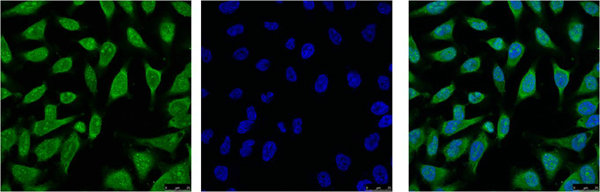
Product group Antibodies

HSPA1L Monoclonal AntibodyCSB-MA000197
ApplicationsImmunoFluorescence, Western Blot, ELISA, ImmunoHistoChemistry
ReactivityHuman, Mouse, Rat
TargetHSPA1A
- SizePrice
Product group Antibodies

HSPA1A Polyclonal AntibodyCAC15126
ApplicationsImmunoFluorescence, Western Blot, ELISA, ImmunoHistoChemistry
TargetHSPA1A
- SizePrice
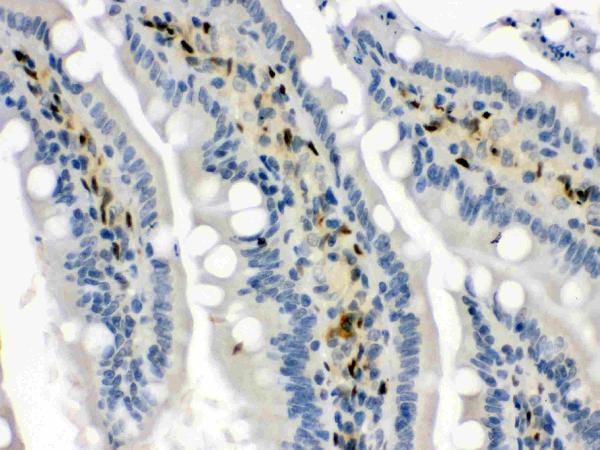
Product group Antibodies

Anti-Hsp70/HSPA1A/HSPA1B Antibody Picoband(r)PB9638-CARRIER-FREE
ApplicationsFlow Cytometry, ImmunoFluorescence, Western Blot, ImmunoCytoChemistry, ImmunoHistoChemistry
ReactivityBovine, Equine, Human, Monkey, Mouse, Rat
TargetHSPA1A
- SizePrice
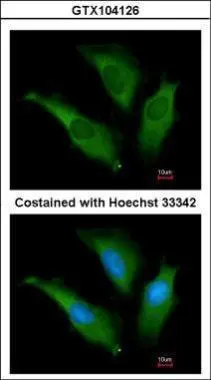
Product group Antibodies

Hsp70 antibodyGTX104126
ApplicationsImmunoFluorescence, ImmunoPrecipitation, Western Blot, ImmunoCytoChemistry, ImmunoHistoChemistry, ImmunoHistoChemistry Paraffin
ReactivityHuman, Mouse, Rat
TargetHSPA1A
- SizePrice