

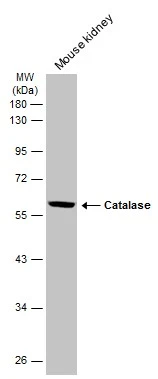
Mouse tissue extract (50 μg) was separated by 10% SDS-PAGE, and the membrane was blotted with Catalase antibody (GTX110704) diluted at 1:3000. The HRP-conjugated anti-rabbit IgG antibody (GTX213110-01) was used to detect the primary antibody.
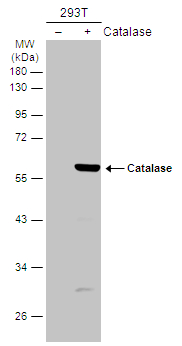
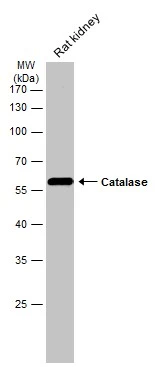
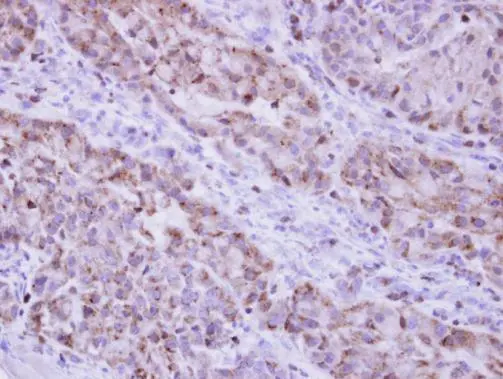
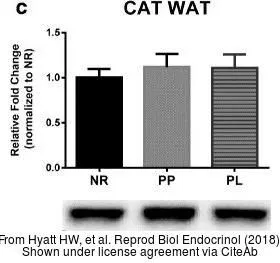
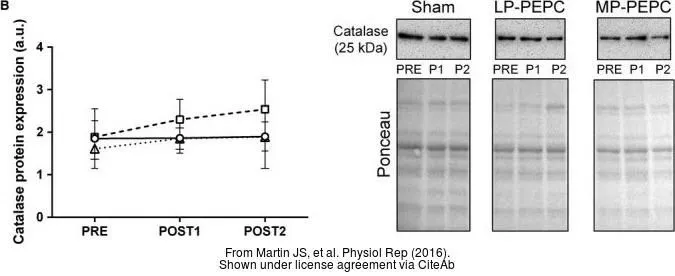
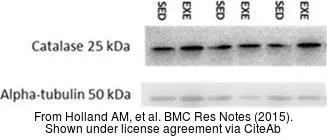
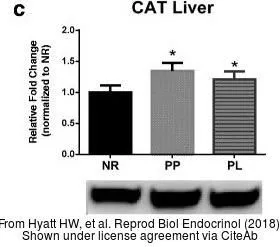
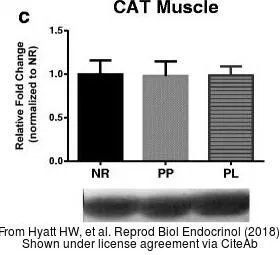
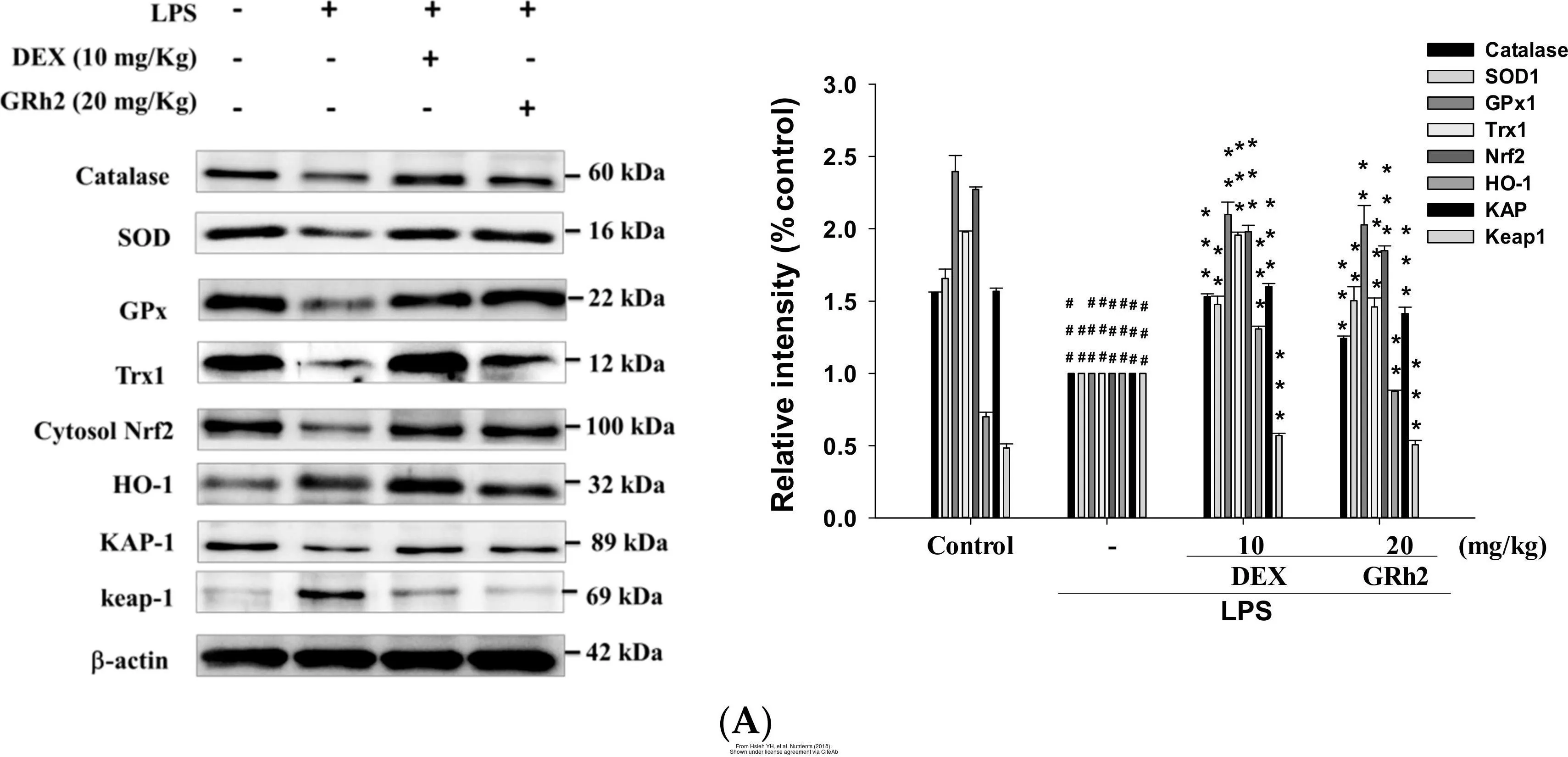
Mouse tissue extract (50 μg) was separated by 10% SDS-PAGE, and the membrane was blotted with Catalase antibody (GTX110704) diluted at 1:3000. The HRP-conjugated anti-rabbit IgG antibody (GTX213110-01) was used to detect the primary antibody.
Catalase antibody
GTX110704

ApplicationsWestern Blot, ImmunoHistoChemistry, ImmunoHistoChemistry Frozen, ImmunoHistoChemistry Paraffin
Product group Antibodies
ReactivityHuman, Mouse, Rat
TargetCAT
Overview
- SupplierGeneTex
- Product NameCatalase antibody
- Delivery Days Customer9
- Application Supplier NoteWB: 1:500-1:3000. IHC-P: 1:100-1:1000. *Optimal dilutions/concentrations should be determined by the researcher.Not tested in other applications.
- ApplicationsWestern Blot, ImmunoHistoChemistry, ImmunoHistoChemistry Frozen, ImmunoHistoChemistry Paraffin
- CertificationResearch Use Only
- ClonalityPolyclonal
- Concentration0.47 mg/ml
- ConjugateUnconjugated
- Gene ID847
- Target nameCAT
- Target descriptioncatalase
- Target synonymscatalase, epididymis secretory sperm binding protein
- HostRabbit
- IsotypeIgG
- Protein IDP04040
- Protein NameCatalase
- Scientific DescriptionThis gene encodes catalase, a key antioxidant enzyme in the bodies defense against oxidative stress. Catalase is a heme enzyme that is present in the peroxisome of nearly all aerobic cells. Catalase converts the reactive oxygen species hydrogen peroxide to water and oxygen and thereby mitigates the toxic effects of hydrogen peroxide. Oxidative stress is hypothesized to play a role in the development of many chronic or late-onset diseases such as diabetes, asthma, Alzheimers disease, systemic lupus erythematosus, rheumatoid arthritis, and cancers. Polymorphisms in this gene have been associated with decreases in catalase activity but, to date, acatalasemia is the only disease known to be caused by this gene. [provided by RefSeq]
- ReactivityHuman, Mouse, Rat
- Storage Instruction-20°C or -80°C,2°C to 8°C
- UNSPSC41116161
Datasheet
Related products

Product group Antibodies

Anti-CAT AntibodyA101645
ApplicationsWestern Blot, ELISA
ReactivityHuman
- SizePrice
Product group Antibodies

Anti-Mouse/Rat CAT Antibody144-11777
ApplicationsWestern Blot
ReactivityHuman, Mouse, Rat
TargetCAT
- SizePrice
Product group Antibodies
References

CAT Polyclonal AntibodyBS-6874R
ApplicationsFlow Cytometry, ImmunoFluorescence, Western Blot, ELISA, ImmunoCytoChemistry, ImmunoHistoChemistry, ImmunoHistoChemistry Frozen, ImmunoHistoChemistry Paraffin
ReactivityEquine, Human, Mouse, Rat
TargetCAT
- SizePrice
Product group Antibodies
References

Goat anti-Catalase / CATEB07282
ApplicationsWestern Blot, ELISA, ImmunoHistoChemistry
ReactivityCanine, Human, Mouse
TargetCAT
- SizePrice
Product group Antibodies

ApplicationsImmunoPrecipitation, Western Blot, ImmunoCytoChemistry, ImmunoHistoChemistry
ReactivityMouse, Rat
TargetCAT
- SizePrice
Product group Antibodies

CAT AntibodyCSB-PA004980
ApplicationsWestern Blot, ELISA
ReactivityHuman
TargetCAT
- SizePrice
Product group Antibodies

CAT / Catalase AntibodyLS-C401483
ApplicationsWestern Blot, ELISA, ImmunoHistoChemistry
ReactivityHuman, Mouse, Rat
TargetCAT
- SizePrice
Product group Antibodies
References
Catalase antibody, InternalGTX89332
ApplicationsWestern Blot, ImmunoHistoChemistry, ImmunoHistoChemistry Paraffin
ReactivityHuman, Mouse, Rat
TargetCAT
- SizePrice

Product group Antibodies

Anti-CAT AntibodyHPA051282
ApplicationsWestern Blot, ImmunoHistoChemistry
ReactivityHuman
TargetCAT
- SizePrice