

Immunohistochemistry of paraffin-embedded Human liver cancer tissue using CD151 Polyclonal Antibody at dilution 1:25
Immunohistochemistry of paraffin-embedded Human liver cancer tissue using CD151 Polyclonal Antibody at dilution 1:25
CD151 Polyclonal Antibody
E-AB-10262

ApplicationsImmunoHistoChemistry
Product group Antibodies
TargetCD151
Overview
- SupplierElabscience
- Product NameCD151 Polyclonal Antibody
- Delivery Days Customer12
- ApplicationsImmunoHistoChemistry
- Applications SupplierELISA IHC
- CertificationResearch Use Only
- ClonalityPolyclonal
- Concentration1.2 mg/ml
- ConjugateUnconjugated
- Gene ID977
- Target nameCD151
- Target descriptionCD151 molecule (Raph blood group)
- Target synonymsEBS7, GP27, MER2, PETA-3, RAPH, SFA1, TSPAN24, CD151 antigen, CD151 antigen (Raph blood group), hemidesmosomal tetraspanin CD151, membrane glycoprotein SFA-1, platelet surface glycoprotein gp27, platelet-endothelial cell tetraspan antigen 3, platelet-endothelial tetraspan antigen 3, tetraspanin-24, tspan-24
- HostRabbit
- IsotypeIgG
- Protein IDP48509
- Protein NameCD151 antigen
- Scientific DescriptionThe protein encoded by this gene is a member of the transmembrane 4 superfamily, also known as the tetraspanin family. Most of these members are cell-surface proteins that are characterized by the presence of four hydrophobic domains. The proteins mediate signal transduction events that play a role in the regulation of cell development, activation, growth and motility. This encoded protein is a cell surface glycoprotein that is known to complex with integrins and other transmembrane 4 superfamily proteins. It is involved in cellular processes including cell adhesion and may regulate integrin trafficking and/or function. This protein enhances cell motility, invasion and metastasis of cancer cells. Multiple alternatively spliced transcript variants that encode the same protein have been described for this gene.
- Storage Instruction-20°C
- UNSPSC41116161
MSDS
Related products
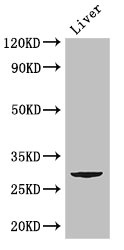
Product group Antibodies

CD151 AntibodyCSB-PA004880LA01HU
ApplicationsImmunoFluorescence, Western Blot, ELISA, ImmunoHistoChemistry
ReactivityHuman, Mouse
TargetCD151
- SizePrice

Product group Antibodies

Anti-CD151 [11G5a]Ab00850-1.1
ApplicationsFlow Cytometry, ImmunoFluorescence, ImmunoPrecipitation, Western Blot, ELISA, ImmunoHistoChemistry
ReactivityHuman
TargetCD151
- SizePrice
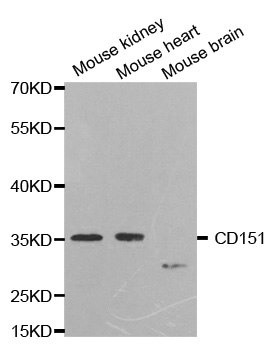
Product group Antibodies

Anti-CD151 AntibodyA30522
ApplicationsWestern Blot, ImmunoHistoChemistry
ReactivityHuman, Mouse, Rat
- SizePrice

Product group Antibodies

ApplicationsFlow Cytometry, Western Blot, ImmunoCytoChemistry, ImmunoHistoChemistry, ImmunoHistoChemistry Frozen
ReactivityHuman
TargetCD151
- SizePrice

Product group Antibodies

Anti-CD151 AntibodyHPA011906
ApplicationsImmunoHistoChemistry
ReactivityHuman
TargetCD151
- SizePrice
Product group Antibodies

CD151 AntibodyLS-C331770
ApplicationsWestern Blot, ImmunoHistoChemistry
ReactivityHuman, Mouse, Rat
TargetCD151
- SizePrice
Product group Antibodies

Cd151 Polyclonal AntibodyCAC07765
ApplicationsImmunoFluorescence, Western Blot, ELISA, ImmunoHistoChemistry
ReactivityMouse
TargetCD151
- SizePrice
![FACS analysis of human peripheral blood platelets using GTX42394 CD151 antibody [11G5a].](https://www.genetex.com/upload/website/prouct_img/normal/GTX42394/GTX42394_713_FACS_w_23060820_772.webp)
Product group Antibodies

CD151 antibody [11G5a]GTX42394
ApplicationsFlow Cytometry, ImmunoPrecipitation, Western Blot, ELISA, ImmunoHistoChemistry, ImmunoHistoChemistry Frozen, ImmunoHistoChemistry Paraffin
ReactivityHuman
TargetCD151
- SizePrice
Product group Antibodies

Anti-CD151 Antibody144-01930
ApplicationsWestern Blot, ImmunoHistoChemistry
ReactivityHuman, Mouse, Rat
TargetCD151
- SizePrice