

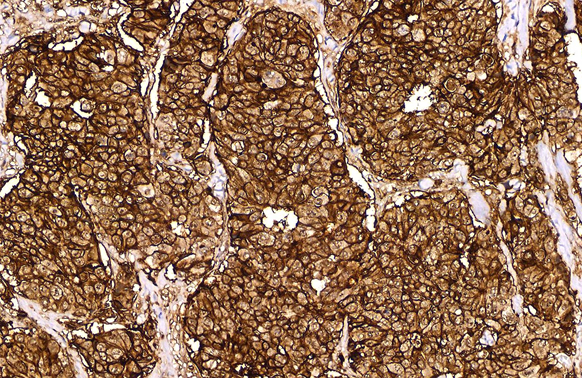
CD44 antibody [GT462] detects CD44 protein at cell membrane by immunohistochemical analysis (Autostainer Formulated). Sample: Paraffin-embedded human breast cancer. CD44 stained by CD44 antibody [GT462] (GTX628895) diluted at 1:200. Antigen Retrieval: EDTA buffer, 20 min
![Various whole cell extracts (30 μg) were separated by 7.5% SDS-PAGE, and the membrane was blotted with CD44 antibody [GT462] (GTX628895) diluted at 1:1000.](https://www.genetex.com/upload/website/prouct_img/normal/GTX628895/GTX628895_41232_20170119_WB_w_23061202_370.webp "Various whole cell extracts (30 μg) were separated by 7.5% SDS-PAGE, and the membrane was blotted with CD44 antibody [GT462] (GTX628895) diluted at 1:1000.")
![Untreated (–) and treated (+) HeLa whole cell extracts (30 μg) were separated by 7.5% SDS-PAGE, and the membrane was blotted with CD44 antibody [GT462] (GTX628895) diluted at 1:1000. The HRP-conjugated anti-mouse IgG antibody (GTX213111-01) was used to detect the primary antibody.](https://www.genetex.com/upload/website/prouct_img/normal/GTX628895/GTX628895_41232_20180827_WB_Tunicamycin_shRNA_watermark_w_23061202_175.webp "Untreated (–) and treated (+) HeLa whole cell extracts (30 μg) were separated by 7.5% SDS-PAGE, and the membrane was blotted with CD44 antibody [GT462] (GTX628895) diluted at 1:1000. The HRP-conjugated anti-mouse IgG antibody (GTX213111-01) was used to detect the primary antibody.")
![Untreated (–) and treated (+) MDA-MB-231 whole cell extracts (30 μg) were separated by 7.5% SDS-PAGE, and the membrane was blotted with CD44 antibody [GT462] (GTX628895) diluted at 1:1000. The HRP-conjugated anti-rabbit IgG antibody (GTX213110-01) was used to detect the primary antibody.](https://www.genetex.com/upload/website/prouct_img/normal/GTX628895/GTX628895_41232_20180427_WB_treatment_Tunicamycin_w_23061202_948.webp "Untreated (–) and treated (+) MDA-MB-231 whole cell extracts (30 μg) were separated by 7.5% SDS-PAGE, and the membrane was blotted with CD44 antibody [GT462] (GTX628895) diluted at 1:1000. The HRP-conjugated anti-rabbit IgG antibody (GTX213110-01) was used to detect the primary antibody.")
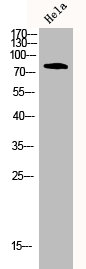
![Wild-type (WT) and CD44 knockout (KO) HeLa cell extracts (30 μg) were separated by 7.5% SDS-PAGE, and the membrane was blotted with CD44 antibody [GT462] (GTX628895) diluted at 1:500.](https://www.genetex.com/upload/website/prouct_img/normal/GTX628895/GTX628895_41232_20170112_WB_KO_watermark_w_23061202_519.webp "Wild-type (WT) and CD44 knockout (KO) HeLa cell extracts (30 μg) were separated by 7.5% SDS-PAGE, and the membrane was blotted with CD44 antibody [GT462] (GTX628895) diluted at 1:500.")
![CD44 antibody [GT462] detects CD44 protein at membrane on Cal27 xenograft by immunohistochemical analysis. Sample: Paraffin-embedded Cal27 xenograft. CD44 antibody [GT462] (GTX628895) dilution: 1:200.
Antigen Retrieval: Trilogy? (EDTA based, pH 8.0) buffer, 15min](https://www.genetex.com/upload/website/prouct_img/normal/GTX628895/GTX628895_41232_IHC_w_23061202_452.webp "CD44 antibody [GT462] detects CD44 protein at membrane on Cal27 xenograft by immunohistochemical analysis. Sample: Paraffin-embedded Cal27 xenograft. CD44 antibody [GT462] (GTX628895) dilution: 1:200.
Antigen Retrieval: Trilogy? (EDTA based, pH 8.0) buffer, 15min")
CD44 antibody [GT462] detects CD44 protein at cell membrane by immunohistochemical analysis (Autostainer Formulated). Sample: Paraffin-embedded human breast cancer. CD44 stained by CD44 antibody [GT462] (GTX628895) diluted at 1:200. Antigen Retrieval: EDTA buffer, 20 min
CD44 antibody [GT462]
GTX628895

ApplicationsFlow Cytometry, ImmunoFluorescence, Western Blot, ImmunoCytoChemistry, ImmunoHistoChemistry, ImmunoHistoChemistry Paraffin
Product group Antibodies
ReactivityHuman
TargetCD44
Overview
- SupplierGeneTex
- Product NameCD44 antibody [GT462]
- Delivery Days Customer9
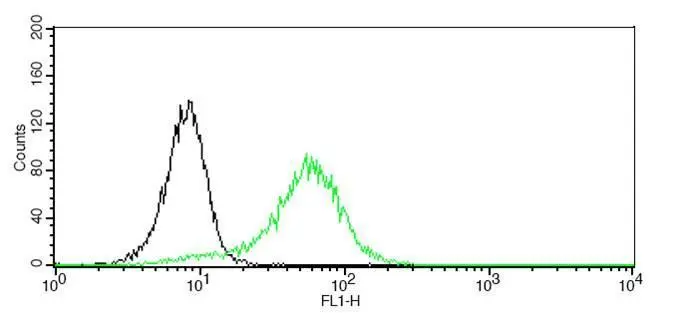
- Application Supplier NoteWB: 1:500-1:3000. IHC-P: 1:100-1:1000. FCM: 1:50-1:200. *Optimal dilutions/concentrations should be determined by the researcher.Not tested in other applications.
- ApplicationsFlow Cytometry, ImmunoFluorescence, Western Blot, ImmunoCytoChemistry, ImmunoHistoChemistry, ImmunoHistoChemistry Paraffin
- CertificationResearch Use Only
- ClonalityMonoclonal
- Clone IDGT462
- Concentration0.7 mg/ml
- ConjugateUnconjugated
- Gene ID960
- Target nameCD44
- Target descriptionCD44 molecule (IN blood group)
- Target synonymsCDW44, CSPG8, ECM-III, ECMR-III, H-CAM, HCELL, HUTCH-1, HUTCH-I, Hermes-1, LHR, MC56, MDU2, MDU3, MIC4, Pgp1, CD44 antigen, CD44 molecule (Indian blood group), GP90 lymphocyte homing/adhesion receptor, Hermes antigen, In(Lu) related-p80, Indian blood group antigen, cell surface glycoprotein CD44, chondroitin sulfate proteoglycan 8, epican, extracellular matrix receptor III, hematopoietic cell E- and L-selectin ligand, heparan sulfate proteoglycan, homing cell adhesion molecule, homing function and Indian blood group system, hyaluronate receptor, phagocyte glycoprotein 1, phagocytic glycoprotein 1, soluble CD44
- HostMouse
- IsotypeIgG2b
- Protein IDP16070
- Protein NameCD44 antigen
- Scientific DescriptionThe protein encoded by this gene is a cell-surface glycoprotein involved in cell-cell interactions, cell adhesion and migration. It is a receptor for hyaluronic acid (HA) and can also interact with other ligands, such as osteopontin, collagens, and matrix metalloproteinases (MMPs). This protein participates in a wide variety of cellular functions including lymphocyte activation, recirculation and homing, hematopoiesis, and tumor metastasis. Transcripts for this gene undergo complex alternative splicing that results in many functionally distinct isoforms, however, the full length nature of some of these variants has not been determined. Alternative splicing is the basis for the structural and functional diversity of this protein, and may be related to tumor metastasis. [provided by RefSeq]
- ReactivityHuman
- Storage Instruction-20°C or -80°C,2°C to 8°C
- UNSPSC41116161
Datasheet
Related products
Product group Antibodies

CD44 AntibodyCSB-PA001460
ApplicationsWestern Blot, ELISA
ReactivityHuman, Mouse, Rat
TargetCD44
- SizePrice

Product group Antibodies

Anti-CD44 Antibody Picoband(r)A00052-2-CARRIER-FREE
ApplicationsFlow Cytometry, ImmunoFluorescence, Western Blot, ELISA, ImmunoCytoChemistry, ImmunoHistoChemistry
ReactivityHuman, Mouse, Rat
TargetCD44
- SizePrice

Product group Antibodies

ApplicationsFlow Cytometry, ImmunoPrecipitation, ImmunoHistoChemistry
ReactivityHuman, Mouse
TargetCD44
- SizePrice

Product group Antibodies

Anti-CD44 AntibodyAMAB91845
ApplicationsWestern Blot, ImmunoHistoChemistry
ReactivityHuman
TargetCD44
- SizePrice
Product group Antibodies

Anti-CD44 [Hermes-1]Ab00628-10.0
ApplicationsFlow Cytometry, ImmunoFluorescence, ImmunoPrecipitation, Western Blot, ELISA, ImmunoCytoChemistry, ImmunoHistoChemistry, Neutralisation/Blocking
ReactivityBovine, Goat, Human, Mouse, Primate, Rabbit, Rat, Sheep
TargetCD44
- SizePrice
Product group Antibodies

Anti-CD44 AntibodyA98244
ApplicationsWestern Blot, ELISA
ReactivityHuman, Mouse, Rat
- SizePrice
Product group Antibodies

CD44 Antibody (clone IM7)LS-C763540
ApplicationsFlow Cytometry, ImmunoPrecipitation, ImmunoHistoChemistry
ReactivityMouse
TargetCD44
- SizePrice
Product group Antibodies

Goat anti-CD44EB12255
ApplicationsWestern Blot, ELISA, ImmunoHistoChemistry
ReactivityHuman
TargetCD44
- SizePrice
![WB analysis of MOLT-4 (lane 1) and HeLa (lane 2) cell lysates (non-reducing) using GTX29524 CD44 antibody [MEM-263].](https://www.genetex.com/upload/website/prouct_img/normal/GTX29524/GTX29524_20191025_AP_001_229_w_23060722_294.webp)
Product group Antibodies
CD44 antibody [MEM-263]GTX29524
ApplicationsFlow Cytometry, ImmunoPrecipitation, Western Blot, ImmunoHistoChemistry, ImmunoHistoChemistry Paraffin
ReactivityCanine, Human, Monkey, Porcine
TargetCD44
- SizePrice