

CFTR Antibody / Cystic Fibrosis Transmembrane Regulator
ORB606381

ApplicationsImmunoHistoChemistry, ImmunoHistoChemistry Paraffin
Product group Antibodies
ReactivityHuman, Mouse
TargetCFTR
Overview
- SupplierBiorbyt
- Product NameCFTR Antibody / Cystic Fibrosis Transmembrane Regulator
- Delivery Days Customer16
- Application Supplier NoteOptimal dilution of the recombinant CFTR antibody should be determined by the researcher. 1. The prediluted format is supplied in a dropper bottle and is optimized for use in IHC. After epitope retrieval step (if required), drip mAb solution onto the tissue section and incubate at RT for 30 min.
- ApplicationsImmunoHistoChemistry, ImmunoHistoChemistry Paraffin
- Applications SupplierImmunohistochemistry (FFPE): 0.5-1ug/ml for 30 min at RT IHC-P
- CertificationResearch Use Only
- ClonalityMonoclonal
- Clone IDCFTR/2290R
- ConjugateUnconjugated
- Gene ID1080
- Target nameCFTR
- Target descriptionCF transmembrane conductance regulator
- Target synonymsABC35, ABCC7, CF, CFTR/MRP, MRP7, TNR-CFTR, dJ760C5.1, cystic fibrosis transmembrane conductance regulator, cAMP-dependent chloride channel, channel conductance-controlling ATPase, cystic fibrosis transmembrane conductance regulating, cystic fibrosis transmembrane conductance regulator (ATP-binding cassette sub-family C, member 7)
- HostRabbit
- IsotypeIgG
- Protein IDP13569
- Protein NameCystic fibrosis transmembrane conductance regulator
- Scientific DescriptionCystic fibrosis transmembrane conductance regulator (CFTR) is a membrane protein and chloride channel in vertebrates that is encoded by the CFTR gene. The CFTR gene codes for an ABC transporter-class ion channel protein that conducts chloride and thiocyanate ions across epithelial cell membranes. Mutations of the CFTR gene affecting chloride ion channel function lead to dysregulation of epithelial fluid transport in the lung, pancreas and other organs, resulting in cystic fibrosis. Complications include thickened mucus in the lungs with frequent respiratory infections, and pancreatic insufficiency giving rise to malnutrition and diabetes. These conditions lead to chronic disability and reduced life expectancy. In male patients, the progressive obstruction and destruction of the developing vas deferens (spermatic cord) and epididymis appear to result from abnormal intraluminal secretions, causing congenital absence of the vas deferens and male infertility. [Wiki]
- ReactivityHuman, Mouse
- Storage Instruction-20°C,2°C to 8°C
- UNSPSC12352203
Related products
Product group Antibodies

Anti-CFTR Antibody144-66601
ApplicationsWestern Blot
ReactivityHuman
TargetCFTR
- SizePrice

Product group Antibodies

Anti-CFTR (Phospho-Ser737) AntibodyA00028S737
ApplicationsImmunoFluorescence, Western Blot, ImmunoHistoChemistry
ReactivityHuman, Mouse, Rat
TargetCFTR
- SizePrice
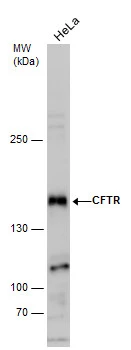
Product group Antibodies

CFTR antibodyGTX129939
ApplicationsWestern Blot
ReactivityHuman
TargetCFTR
- SizePrice

Product group Antibodies

ApplicationsImmunoPrecipitation, Western Blot, ImmunoCytoChemistry, ImmunoHistoChemistry
ReactivityPorcine
TargetCFTR
- SizePrice
Product group Antibodies

CFTR C-terminus Monoclonal AntibodyBSM-60568M
ApplicationsImmunoFluorescence, ImmunoHistoChemistry, ImmunoHistoChemistry Frozen, ImmunoHistoChemistry Paraffin
ReactivityHuman
TargetCFTR
- SizePrice
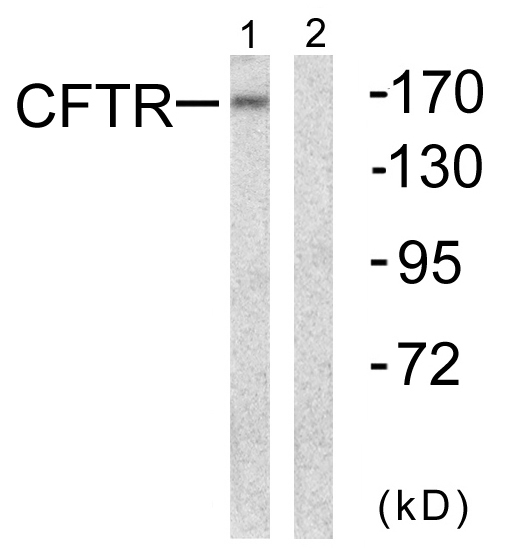
Product group Antibodies

Anti-CFTR AntibodyA96225
ApplicationsWestern Blot, ELISA, ImmunoHistoChemistry
ReactivityHuman, Mouse, Rat
- SizePrice
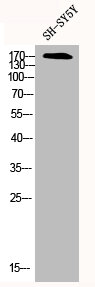
Product group Antibodies

CFTR AntibodyCSB-PA001608
ApplicationsWestern Blot, ELISA, ImmunoHistoChemistry
ReactivityHuman, Mouse, Rat
TargetCFTR
- SizePrice
Product group Antibodies

Goat anti-CFTREB06694
ApplicationsELISA, ImmunoHistoChemistry
ReactivityBovine, Canine, Human, Mouse, Rat
TargetCFTR
- SizePrice