

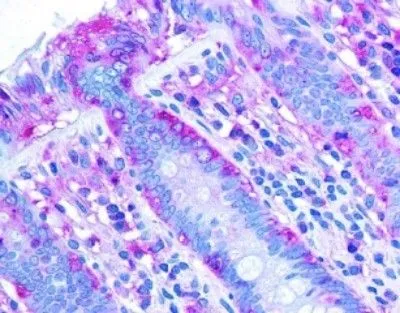
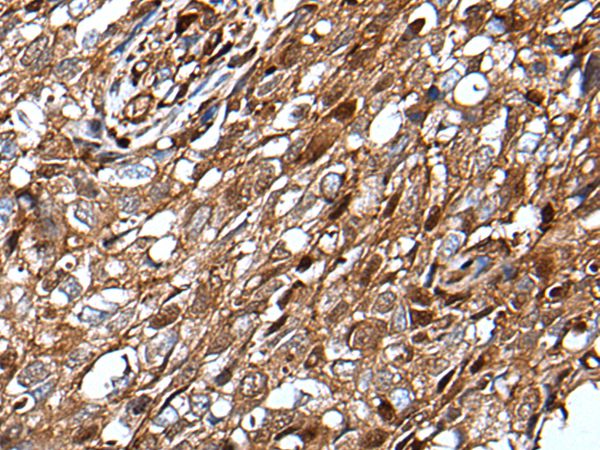
IHC-P analysis of human colon tissue using GTX30677 ChREBP antibody.
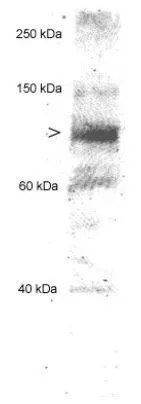
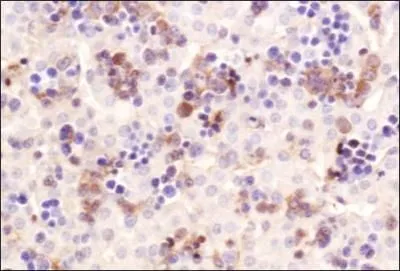
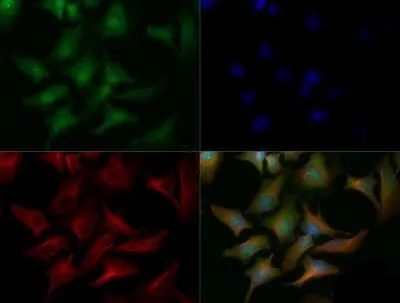
IHC-P analysis of human colon tissue using GTX30677 ChREBP antibody.
ChREBP antibody
GTX30677

ApplicationsImmunoFluorescence, ImmunoPrecipitation, Western Blot, ChIP Chromatin ImmunoPrecipitation, ImmunoCytoChemistry, ImmunoHistoChemistry, ImmunoHistoChemistry Paraffin
Product group Antibodies
ReactivityHuman, Mouse, Rat
TargetMLXIPL
Overview
- SupplierGeneTex
- Product NameChREBP antibody
- Delivery Days Customer9
- Application Supplier NoteWB: 1:1000. ICC/IF: 1:100 - 1:500. IHC-P: 1:100. IP: 1:10 - 1:500. ChIP assay: 1:10 - 1:500. *Optimal dilutions/concentrations should be determined by the researcher.Not tested in other applications.
- ApplicationsImmunoFluorescence, ImmunoPrecipitation, Western Blot, ChIP Chromatin ImmunoPrecipitation, ImmunoCytoChemistry, ImmunoHistoChemistry, ImmunoHistoChemistry Paraffin
- CertificationResearch Use Only
- ClonalityPolyclonal
- Concentration1 mg/ml
- ConjugateUnconjugated
- Gene ID51085
- Target nameMLXIPL
- Target descriptionMLX interacting protein like
- Target synonymsCHREBP, MIO, MLX, MONDOB, WBSCR14, WS-bHLH, bHLHd14, carbohydrate-responsive element-binding protein, Mlx interactor, WS basic-helix-loop-helix leucine zipper protein, Williams Beuren syndrome chromosome region 14, Williams-Beuren syndrome chromosome region 14 protein 1, Williams-Beuren syndrome chromosome region 14 protein 2, Williams-Beuren syndrome chromosome region 14 protein 3, carbohydrate response element binding protein, class D basic helix-loop-helix protein 14, williams-Beuren syndrome chromosomal region 14 protein
- HostRabbit
- IsotypeIgG
- Protein IDQ9NP71
- Protein NameCarbohydrate-responsive element-binding protein
- Scientific DescriptionThis gene encodes a basic helix-loop-helix leucine zipper transcription factor of the Myc/Max/Mad superfamily. This protein forms a heterodimeric complex and binds and activates, in a glucose-dependent manner, carbohydrate response element (ChoRE) motifs in the promoters of triglyceride synthesis genes. The gene is deleted in Williams-Beuren syndrome, a multisystem developmental disorder caused by the deletion of contiguous genes at chromosome 7q11.23. [provided by RefSeq]
- ReactivityHuman, Mouse, Rat
- Storage Instruction-20°C or -80°C,2°C to 8°C
- UNSPSC41116161
References
- Long non-coding RNA (lncRNA) H19 induces hepatic steatosis through activating MLXIPL and mTORC1 networks in hepatocytes. Wang H et al., 2020 Jan, J Cell Mol MedRead this paper
- Diet-induced gene expression of isolated pancreatic islets from a polygenic mouse model of the metabolic syndrome. Dreja T et al., 2010 Feb, DiabetologiaRead this paper
Datasheet
Related products
Product group Antibodies

Anti-MLXIPL AntibodyA45766
ApplicationsImmunoHistoChemistry
ReactivityHuman
- SizePrice
Product group Antibodies

Anti-MLXIPL Antibody144-07630
ApplicationsWestern Blot
ReactivityHuman, Mouse
TargetMLXIPL
- SizePrice

Product group Antibodies

WBSCR14 Polyclonal AntibodyBS-3516R
ApplicationsImmunoFluorescence, ELISA, ImmunoCytoChemistry, ImmunoHistoChemistry, ImmunoHistoChemistry Frozen, ImmunoHistoChemistry Paraffin
ReactivityBovine, Canine, Chicken, Equine, Human, Mouse, Porcine, Rat
TargetMLXIPL
- SizePrice
Product group Antibodies

MLXIPL AntibodyCSB-PA014645GA01HU
ApplicationsWestern Blot, ELISA
ReactivityHuman, Mouse, Rat
TargetMLXIPL
- SizePrice
Product group Antibodies

MLXIPL / CHREBP AntibodyLS-C409190
ApplicationsImmunoPrecipitation, Western Blot
ReactivityHuman, Mouse
TargetMLXIPL
- SizePrice
Product group Antibodies
ChREBP antibodyGTX30679
ApplicationsImmunoFluorescence, Western Blot, ImmunoCytoChemistry
ReactivityHuman, Mouse
TargetMLXIPL
- SizePrice

Product group Antibodies

Anti-MLXIPL AntibodyHPA064640
ApplicationsImmunoCytoChemistry
ReactivityHuman
TargetMLXIPL
- SizePrice
Product group Antibodies
ChREBP antibodyGTX64439
ApplicationsWestern Blot
ReactivityHuman, Mouse
TargetMLXIPL
- SizePrice