

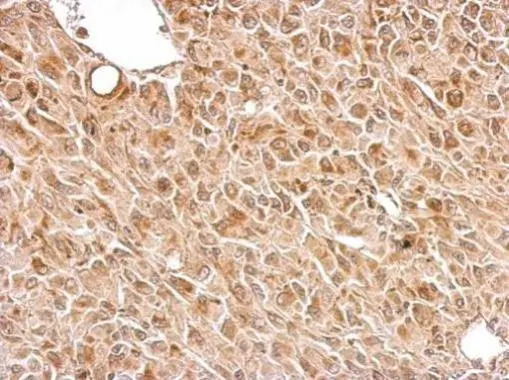
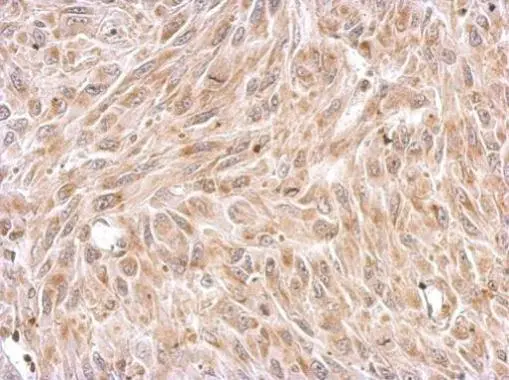
Chromogranin C antibody detects SCG2 protein at cytosol on U87 xenograft by immunohistochemical analysis. Sample: Paraffin-embedded U87 xenograft. Chromogranin C antibody (GTX116446) dilution: 1:500.
Antigen Retrieval: Trilogy? (EDTA based, pH 8.0) buffer, 15min
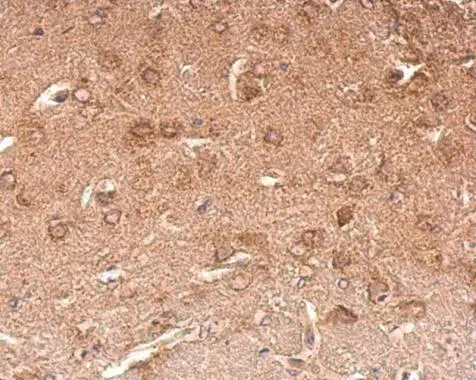
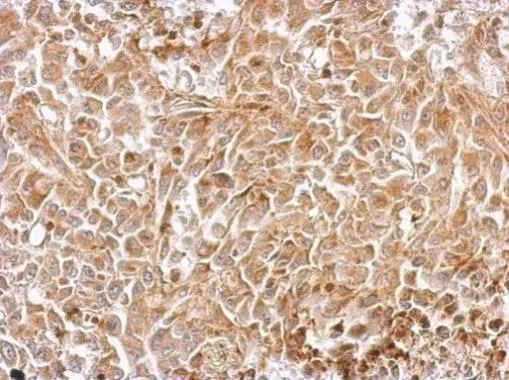
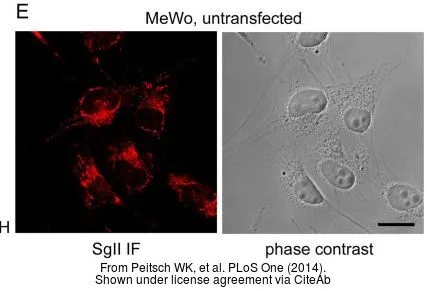
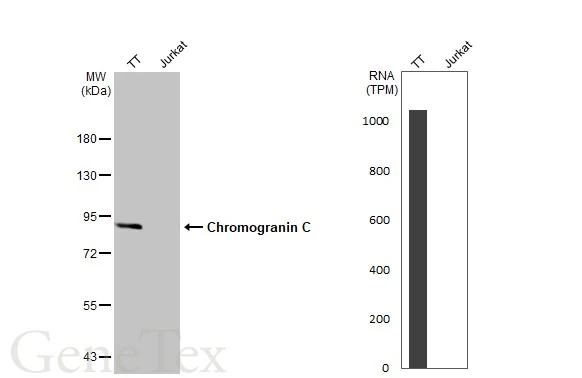
Chromogranin C antibody detects SCG2 protein at cytosol on U87 xenograft by immunohistochemical analysis. Sample: Paraffin-embedded U87 xenograft. Chromogranin C antibody (GTX116446) dilution: 1:500.
Antigen Retrieval: Trilogy? (EDTA based, pH 8.0) buffer, 15min
Chromogranin C antibody
GTX116446

ApplicationsImmunoFluorescence, Western Blot, ImmunoCytoChemistry, ImmunoHistoChemistry, ImmunoHistoChemistry Paraffin
Product group Antibodies
ReactivityHuman, Mouse
TargetSCG2
Overview
- SupplierGeneTex
- Product NameChromogranin C antibody
- Delivery Days Customer9
- Application Supplier NoteWB: 1:500-1:3000. IHC-P: 1:100-1:1000. *Optimal dilutions/concentrations should be determined by the researcher.Not tested in other applications.
- ApplicationsImmunoFluorescence, Western Blot, ImmunoCytoChemistry, ImmunoHistoChemistry, ImmunoHistoChemistry Paraffin
- CertificationResearch Use Only
- ClonalityPolyclonal
- Concentration0.26 mg/ml
- ConjugateUnconjugated
- Gene ID7857
- Target nameSCG2
- Target descriptionsecretogranin II
- Target synonymsCHGC, EM66, SN, SgII, secretogranin-2, chromogranin-C, secretoneurin
- HostRabbit
- IsotypeIgG
- Protein IDP13521
- Protein NameSecretogranin-2
- Scientific DescriptionThe protein encoded by this gene is a member of the chromogranin/secretogranin family of neuroendocrine secretory proteins. Studies in rodents suggest that the full-length protein, secretogranin II, is involved in the packaging or sorting of peptide hormones and neuropeptides into secretory vesicles. The full-length protein is cleaved to produce the active peptide secretoneurin, which exerts chemotaxic effects on specific cell types, and EM66, whose function is unknown. [provided by RefSeq]
- ReactivityHuman, Mouse
- Storage Instruction-20°C or -80°C,2°C to 8°C
- UNSPSC41116161
Datasheet
Related products
Product group Antibodies

Anti-SCG2 AntibodyA31372
ApplicationsWestern Blot, ImmunoHistoChemistry
ReactivityHuman
- SizePrice

Product group Antibodies

Anti-SCG2 Antibody144-06425
ApplicationsImmunoFluorescence, Western Blot
ReactivityHuman
TargetSCG2
- SizePrice
Product group Antibodies

ApplicationsWestern Blot, ELISA
ReactivityCanine, Human, Porcine
TargetSCG2
- SizePrice
Product group Antibodies

ApplicationsImmunoPrecipitation, Western Blot, ImmunoCytoChemistry, ImmunoHistoChemistry
ReactivityPorcine
TargetSCG2
- SizePrice
Product group Antibodies

SCG2 AntibodyCSB-PA020808LA01HU
ApplicationsImmunoFluorescence, ELISA, ImmunoHistoChemistry
ReactivityHuman
TargetSCG2
- SizePrice

Product group Antibodies

Anti-SCG2 AntibodyHPA011893
ApplicationsImmunoHistoChemistry
ReactivityHuman
TargetSCG2
- SizePrice
Product group Antibodies
Chromogranin C antibodyGTX115049
ApplicationsWestern Blot, ImmunoHistoChemistry, ImmunoHistoChemistry Paraffin
ReactivityHuman, Mouse, Rat
TargetSCG2
- SizePrice
Product group Antibodies
References
Chromogranin C antibodyGTX12241
ApplicationsImmunoPrecipitation, Western Blot, ImmunoHistoChemistry
ReactivityHuman, Rat
TargetSCG2
- SizePrice
![Whole cell extract (30 μg) was separated by 7.5% SDS-PAGE, and the membrane was blotted with Chromogranin C antibody [HL2992] (GTX640402) diluted at 1:1000. The HRP-conjugated anti-rabbit IgG antibody (GTX213110-01) was used to detect the primary antibody.](https://www.genetex.com/upload/website/prouct_img/normal/GTX640402/GTX640402_T-45418_20240524_WB_R_24052802_957.webp)
Product group Antibodies
Chromogranin C antibody [HL2992]GTX640402
ApplicationsImmunoFluorescence, Western Blot, ImmunoCytoChemistry, ImmunoHistoChemistry, ImmunoHistoChemistry Paraffin
ReactivityHuman, Mouse, Rat
TargetSCG2
- SizePrice