

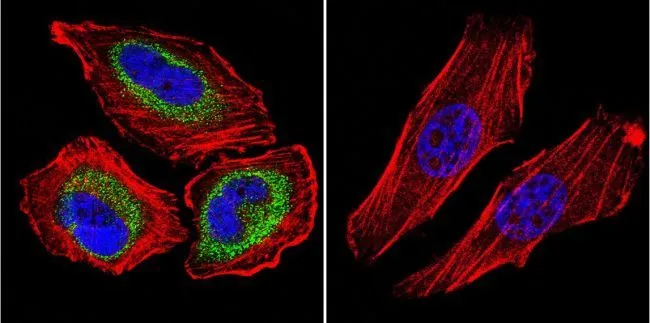
ICC/IF analysis of U251 cells using GTX79456 CNG Channel antibody [CNC 9C1]. Cells were probed without (right) or with(left) an antibody. Green : Primary antibody Blue : Nuclei Red : Actin Fixation : formaldehyde Dilution : 1:20 overnight at 4oC
![ICC/IF analysis of B-3 cells using GTX79456 CNG Channel antibody [CNC 9C1]. Cells were probed without (right) or with(left) an antibody. Green : Primary antibody Blue : Nuclei Red : Actin Fixation : formaldehyde Dilution : 1:20 overnight at 4oC](https://www.genetex.com/upload/website/prouct_img/normal/GTX79456/GTX79456_874_ICC-IF_w_23061322_442.webp "ICC/IF analysis of B-3 cells using GTX79456 CNG Channel antibody [CNC 9C1]. Cells were probed without (right) or with(left) an antibody. Green : Primary antibody Blue : Nuclei Red : Actin Fixation : formaldehyde Dilution : 1:20 overnight at 4oC")
![ICC/IF analysis of HeLa cells using GTX79456 CNG Channel antibody [CNC 9C1]. Cells were probed without (right) or with(left) an antibody. Green : Primary antibody Blue : Nuclei Red : Actin Fixation : formaldehyde Dilution : 1:20 overnight at 4oC](https://www.genetex.com/upload/website/prouct_img/normal/GTX79456/GTX79456_875_ICC-IF_w_23061322_408.webp "ICC/IF analysis of HeLa cells using GTX79456 CNG Channel antibody [CNC 9C1]. Cells were probed without (right) or with(left) an antibody. Green : Primary antibody Blue : Nuclei Red : Actin Fixation : formaldehyde Dilution : 1:20 overnight at 4oC")
ICC/IF analysis of U251 cells using GTX79456 CNG Channel antibody [CNC 9C1]. Cells were probed without (right) or with(left) an antibody. Green : Primary antibody Blue : Nuclei Red : Actin Fixation : formaldehyde Dilution : 1:20 overnight at 4oC
CNG Channel antibody [CNC 9C1]
GTX79456

ApplicationsImmunoFluorescence, Western Blot, ImmunoCytoChemistry, ImmunoHistoChemistry
Product group Antibodies
ReactivityHuman, Mouse, Rat
TargetCNGA1
Overview
- SupplierGeneTex
- Product NameCNG Channel antibody [CNC 9C1]
- Delivery Days Customer9
- Application Supplier NoteWB: 1:5000. ICC/IF: 1:10-1:100. IHC: 1:1000. *Optimal dilutions/concentrations should be determined by the researcher.Not tested in other applications.
- ApplicationsImmunoFluorescence, Western Blot, ImmunoCytoChemistry, ImmunoHistoChemistry
- CertificationResearch Use Only
- ClonalityMonoclonal
- Clone IDCNC 9C1
- ConjugateUnconjugated
- Gene ID1259
- Target nameCNGA1
- Target descriptioncyclic nucleotide gated channel subunit alpha 1
- Target synonymsCNCG, CNCG1, CNG-1, CNG1, RCNC1, RCNCa, RCNCalpha, RP49, cyclic nucleotide-gated channel alpha-1, CNG channel alpha-1, cGMP-gated cation channel alpha-1, cyclic nucleotide gated channel alpha 1, cyclic nucleotide-gated cation channel 1, cyclic nucleotide-gated channel, photoreceptor, interleukin-1 homologue, rod photoreceptor cGMP-gated cation channel subunit alpha, rod photoreceptor cGMP-gated channel subunit alpha
- HostMouse
- IsotypeIgG1
- Protein IDP29973
- Protein NameCyclic nucleotide-gated channel alpha-1
- Scientific DescriptionThe protein encoded by this gene is involved in phototransduction. Along with another protein, the encoded protein forms a cGMP-gated cation channel in the plasma membrane, allowing depolarization of rod photoreceptors. This represents the last step in the phototransduction pathway. Defects in this gene are a cause of retinitis pigmentosa autosomal recessive (ARRP) disease. Two transcript variants encoding different isoforms have been found for this gene. [provided by RefSeq, Dec 2008]
- ReactivityHuman, Mouse, Rat
- Storage Instruction-20°C or -80°C,2°C to 8°C
- UNSPSC12352203
References
- Otsuka Y, Imamura K, Oishi A, et al. One-step induction of photoreceptor-like cells from human iPSCs by delivering transcription factors. iScience. 2022,25(4):103987. doi: 10.1016/j.isci.2022.103987Read this paper
Datasheet
Related products
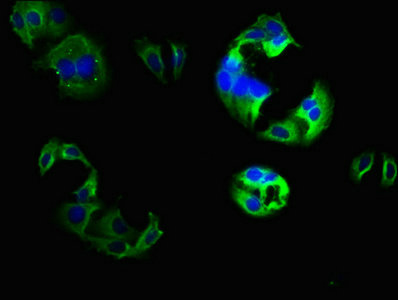
Product group Antibodies

CNGA1 AntibodyCSB-PA005642LA01HU
ApplicationsImmunoFluorescence, ELISA
ReactivityHuman
TargetCNGA1
- SizePrice
Product group Antibodies

RP49 / CNG1 AntibodyLS-C760878
ApplicationsWestern Blot
ReactivityBovine, Canine, Chicken, Human, Mouse, Porcine, Rat
TargetCNGA1
- SizePrice
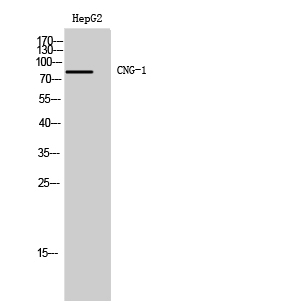
Product group Antibodies

Anti-CNGA1 AntibodyA97621
ApplicationsWestern Blot, ELISA
ReactivityHuman, Mouse, Rat
- SizePrice

Product group Antibodies

Anti-CNG-1 CNGA1 AntibodyA05494-1
ApplicationsWestern Blot, ELISA
ReactivityHuman, Mouse, Rat
TargetCNGA1
- SizePrice