

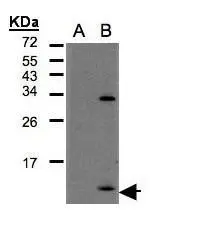
Western Blot analysis of CXCL1 expression in transfected 293T cell line by CXCL1 polyclonal antibody. A: Non-transfected lysate. B: CXCL1 transfected lysate. 15% SDS PAGE GTX108435 diluted at 1:500
Western Blot analysis of CXCL1 expression in transfected 293T cell line by CXCL1 polyclonal antibody. A: Non-transfected lysate. B: CXCL1 transfected lysate. 15% SDS PAGE GTX108435 diluted at 1:500
CXCL1 / GRO alpha antibody [N3C3]
GTX108435

ApplicationsWestern Blot
Product group Antibodies
ReactivityHuman
TargetCXCL1
Overview
- SupplierGeneTex
- Product NameCXCL1 / GRO alpha antibody [N3C3]
- Delivery Days Customer9
- Application Supplier NoteWB: 1:500-1:3000. *Optimal dilutions/concentrations should be determined by the researcher.Not tested in other applications.
- ApplicationsWestern Blot
- CertificationResearch Use Only
- ClonalityPolyclonal
- Concentration1 mg/ml
- ConjugateUnconjugated
- Gene ID2919
- Target nameCXCL1
- Target descriptionC-X-C motif chemokine ligand 1
- Target synonymsFSP, GRO1, GROa, MGSA, MGSA-a, NAP-3, SCYB1, growth-regulated alpha protein, C-X-C motif chemokine 1, GRO-alpha(1-73), GRO1 oncogene (melanoma growth stimulating activity, alpha), GRO1 oncogene (melanoma growth-stimulating activity), MGSA alpha, chemokine (C-X-C motif) ligand 1 (melanoma growth stimulating activity, alpha), fibroblast secretory protein, melanoma growth stimulating activity, alpha, melanoma growth stimulatory activity alpha, neutrophil-activating protein 3
- HostRabbit
- IsotypeIgG
- Protein IDP09341
- Protein NameGrowth-regulated alpha protein
- Scientific DescriptionChemokines are a group of small (approximately 8 to 14 kD), mostly basic, structurally related molecules that regulate cell trafficking of various types of leukocytes through interactions with a subset of 7-transmembrane, G protein-coupled receptors. Chemokines also play fundamental roles in the development, homeostasis, and function of the immune system, and they have effects on cells of the central nervous system as well as on endothelial cells involved in angiogenesis or angiostasis. Chemokines are divided into 2 major subfamilies, CXC and CC, based on the arrangement of the first 2 of the 4 conserved cysteine residues; the 2 cysteines are separated by a single amino acid in CXC chemokines and are adjacent in CC chemokines. CXC chemokines are further subdivided into ELR and non-ELR types based on the presence or absence of a glu-leu-arg sequence adjacent and N terminal to the CXC motif. ELR types are chemotactic for neutrophils, while non-ELR types are chemotactic for lymphocytes.[supplied by OMIM]
- ReactivityHuman
- Storage Instruction-20°C or -80°C,2°C to 8°C
- UNSPSC41116161
Datasheet
Related products
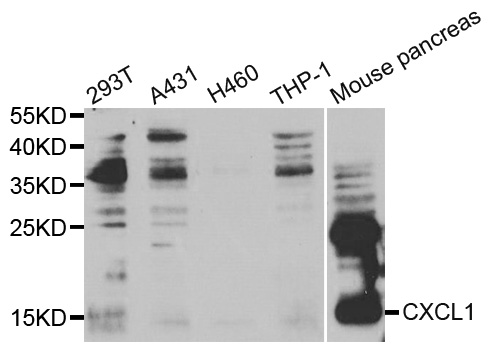
Product group Antibodies

Anti-CXCL1 AntibodyA37663
ApplicationsWestern Blot, ImmunoHistoChemistry
ReactivityHuman
- SizePrice
Product group Antibodies

Anti-GRO alpha Antibody144-65998
ApplicationsWestern Blot
ReactivityHuman
TargetCXCL1
- SizePrice

Product group Antibodies

CXCL1 / GRO Alpha AntibodyLS-C834932
ApplicationsELISA, ImmunoHistoChemistry
ReactivityHuman, Mouse, Rat
TargetCXCL1
- SizePrice

Product group Antibodies

Anti-CXCL1 AntibodyA00533-2-CARRIER-FREE
ApplicationsELISA, ImmunoHistoChemistry
ReactivityHuman
TargetCXCL1
- SizePrice
Product group Antibodies

CXCL1 AntibodyCSB-PA009036
ApplicationsELISA, ImmunoHistoChemistry
ReactivityHuman, Mouse, Rat
TargetCXCL1
- SizePrice

Product group Antibodies

ApplicationsWestern Blot, ELISA, ImmunoCytoChemistry, ImmunoHistoChemistry, ImmunoHistoChemistry Frozen, ImmunoHistoChemistry Paraffin
ReactivityPorcine
TargetCXCL1
- SizePrice
Product group Antibodies
CXCL1 / GRO alpha antibodyGTX14026
ApplicationsWestern Blot, ELISA
ReactivityHuman, Mouse, Rat
TargetCXCL1
- SizePrice
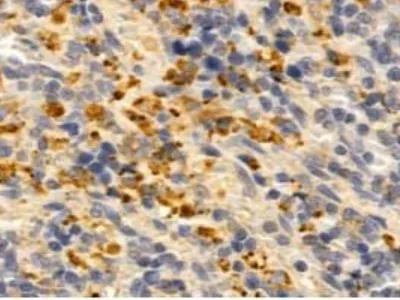
Product group Antibodies
CXCL1 / GRO alpha antibodyGTX03810
ApplicationsWestern Blot, ImmunoHistoChemistry, ImmunoHistoChemistry Paraffin
ReactivityHuman, Mouse, Rat
TargetCXCL1
- SizePrice