

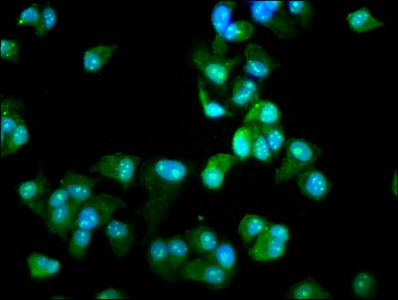
Immunofluorescence staining of MCF-7 cells with CSB-PA880993LA01HU at 1:66, counter-stained with DAPI. The cells were fixed in 4% formaldehyde, permeabilized using 0.2% Triton X-100 and blocked in 10% normal Goat Serum. The cells were then incubated with the antibody overnight at 4°C. The secondary antibody was Alexa Fluor 488-congugated AffiniPure Goat Anti-Rabbit IgG(H+L).
Immunofluorescence staining of MCF-7 cells with CSB-PA880993LA01HU at 1:66, counter-stained with DAPI. The cells were fixed in 4% formaldehyde, permeabilized using 0.2% Triton X-100 and blocked in 10% normal Goat Serum. The cells were then incubated with the antibody overnight at 4°C. The secondary antibody was Alexa Fluor 488-congugated AffiniPure Goat Anti-Rabbit IgG(H+L).
DCLRE1B Antibody
CSB-PA880993LA01HU

ApplicationsImmunoFluorescence, ELISA
Product group Antibodies
ReactivityHuman
TargetDCLRE1B
Overview
- SupplierCusabio
- Product NameDCLRE1B Antibody
- Delivery Days Customer20
- ApplicationsImmunoFluorescence, ELISA
- CertificationResearch Use Only
- ClonalityPolyclonal
- ConjugateUnconjugated
- Gene ID64858
- Target nameDCLRE1B
- Target descriptionDNA cross-link repair 1B
- Target synonymsAPOLLO, DKCB8, SNM1B, SNMIB, 5' exonuclease Apollo, DNA cross-link repair 1B (PSO2 homolog, S. cerevisiae), PSO2 homolog, SNM1 homolog B, beta-lactamase DCLRE1B
- HostRabbit
- IsotypeIgG
- Protein IDQ9H816
- Protein Name5' exonuclease Apollo
- Scientific Description5-3 exonuclease that plays a central role in telomere maintenance and protection during S-phase. Participates in the protection of telomeres against non-homologous end-joining (NHEJ)-mediated repair, thereby ensuring that telomeres do not fuse. Plays a key role in telomeric loop (T loop) formation by being recruited by TERF2 at the leading end telomeres and by processing leading-end telomeres immediately after their replication via its exonuclease activity: generates 3 single-stranded overhang at the leading end telomeres avoiding blunt leading-end telomeres that are vulnerable to end-joining reactions and expose the telomere end in a manner that activates the DNA repair pathways. Together with TERF2, required to protect telomeres from replicative damage during replication by controlling the amount of DNA topoisomerase (TOP1, TOP2A and TOP2B) needed for telomere replication during fork passage and prevent aberrant telomere topology. Also involved in response to DNA damage: plays a role in response to DNA interstrand cross-links (ICLs) by facilitating double-strand break formation. In case of spindle stress, involved in prophase checkpoint.
- ReactivityHuman
- Storage Instruction-20°C or -80°C
- UNSPSC41116161
Related products
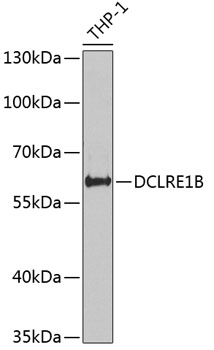
Product group Antibodies

Anti-DCLRE1B AntibodyA12021
ApplicationsWestern Blot
ReactivityHuman, Mouse
- SizePrice

Product group Antibodies

ApplicationsWestern Blot, ELISA, ImmunoHistoChemistry
ReactivityHuman, Mouse, Rat
TargetDCLRE1B
- SizePrice

Product group Antibodies

Anti-DCLRE1B AntibodyHPA064934
ApplicationsImmunoCytoChemistry
ReactivityHuman
TargetDCLRE1B
- SizePrice
Product group Antibodies

DCLRE1B AntibodyLS-C409042
ApplicationsWestern Blot
ReactivityHuman, Mouse
TargetDCLRE1B
- SizePrice
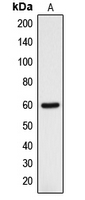
Product group Antibodies

DCLRE1B antibodyGTX55207
ApplicationsWestern Blot
ReactivityHuman
TargetDCLRE1B
- SizePrice