

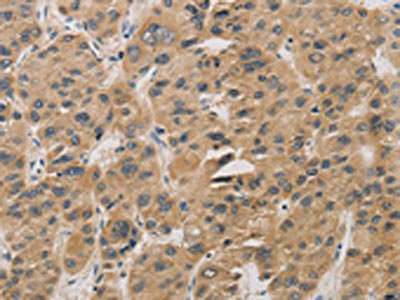
The image on the left is immunohistochemistry of paraffin-embedded Human liver cancer tissue using CSB-PA151075(DDIT4 Antibody) at dilution 1/30, on the right is treated with fusion protein. (Original magnification: x200)
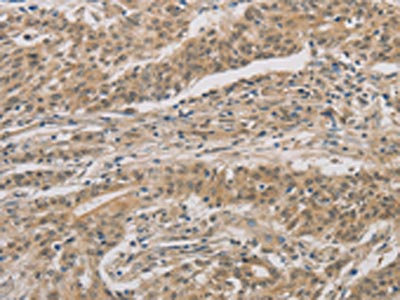
The image on the left is immunohistochemistry of paraffin-embedded Human liver cancer tissue using CSB-PA151075(DDIT4 Antibody) at dilution 1/30, on the right is treated with fusion protein. (Original magnification: x200)
DDIT4 Antibody
CSB-PA151075

ApplicationsELISA, ImmunoHistoChemistry
Product group Antibodies
ReactivityHuman, Mouse, Rat
TargetDDIT4
Overview
- SupplierCusabio
- Product NameDDIT4 Antibody
- Delivery Days Customer20
- ApplicationsELISA, ImmunoHistoChemistry
- CertificationResearch Use Only
- ClonalityPolyclonal
- ConjugateUnconjugated
- Gene ID54541
- Target nameDDIT4
- Target descriptionDNA damage inducible transcript 4
- Target synonymsDig2, REDD-1, REDD1, DNA damage-inducible transcript 4 protein, HIF-1 responsive protein RTP801, protein regulated in development and DNA damage response 1
- HostRabbit
- IsotypeIgG
- Protein IDQ9NX09
- Protein NameDNA damage-inducible transcript 4 protein
- Scientific DescriptionREDD-1, also designated DNA-damage-inducible transcript 4, dig2 or RTP801, is thought to function in the regulation of reactive oxygen species (ROS). REDD-1 expression has also been linked to apoptosis, Ab toxicity and the pathogenesis of ischemic diseases. As an HIF-1-responsive gene, REDD-1 exhibits strong hypoxia-dependent upregulation in ischemic cells of neuronal origin. In response to stress due to DNA damage and glucocorticoid treatment, REDD-1 is upregulated at the transcriptional level. REDD-1 negatively regulates the mammalian target of Rapamycin (mTOR), a serine/threonine kinase often referred to as FRAP. It is crucial in the coupling of extra- and intracellular cues to FRAP regulation. The absence of REDD-1 is associated with the development of retinopathy, a major cause of blindness.
- ReactivityHuman, Mouse, Rat
- Storage Instruction-20°C or -80°C
- UNSPSC41116161
Related products
Product group Antibodies

Anti-DDIT4 AntibodyA45992
ApplicationsImmunoHistoChemistry
ReactivityHuman
- SizePrice
Product group Antibodies

Anti-DDIT4 Antibody144-08086
ApplicationsWestern Blot
ReactivityHuman
TargetDDIT4
- SizePrice
Product group Antibodies

DDIT4 Polyclonal AntibodyBS-4240R
ApplicationsImmunoFluorescence, ELISA, ImmunoCytoChemistry, ImmunoHistoChemistry, ImmunoHistoChemistry Frozen, ImmunoHistoChemistry Paraffin
ReactivityBovine, Equine, Human, Mouse, Porcine, Rabbit, Rat
TargetDDIT4
- SizePrice
Product group Antibodies

DDIT4 / REDD1 AntibodyLS-C401594
ApplicationsELISA, ImmunoHistoChemistry
ReactivityHuman, Mouse, Rat
TargetDDIT4
- SizePrice
Product group Antibodies
References

REDD1 antibodyGTX64553
ApplicationsWestern Blot
ReactivityHuman
TargetDDIT4
- SizePrice
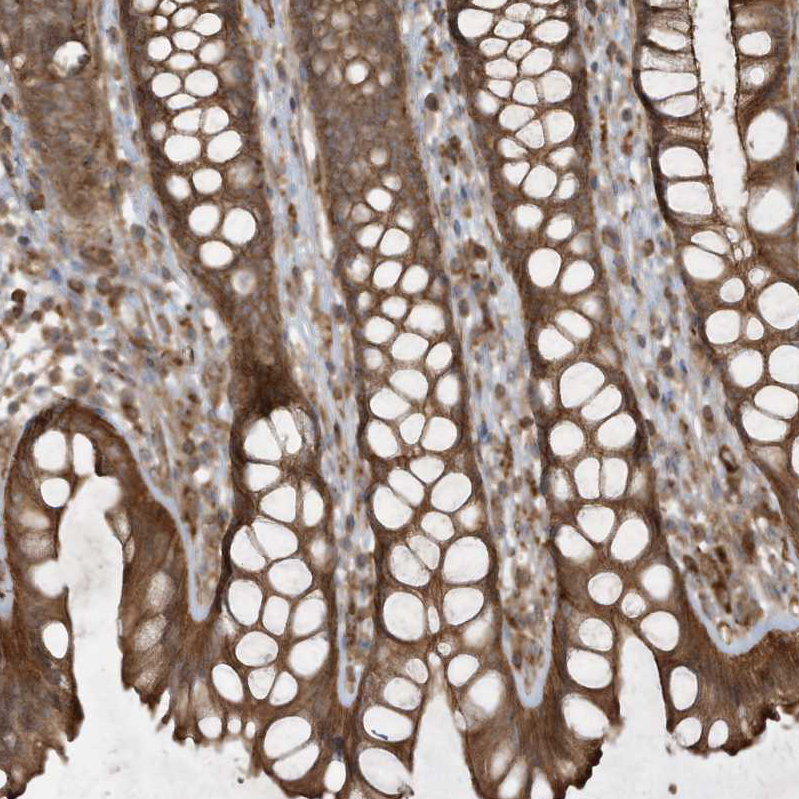
Product group Antibodies

Anti-DDIT4 AntibodyHPA034507
ApplicationsWestern Blot, ImmunoHistoChemistry
ReactivityHuman
TargetDDIT4
- SizePrice