

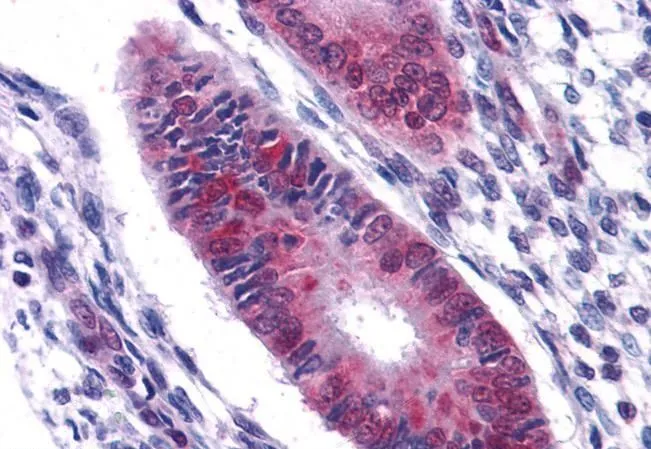
IHC-P analysis of human uterus using GTX10261 DDX5 antibody, C-term. Antigen retrieval : citrate buffer pH 6 Dilution : 2.5μg/ml
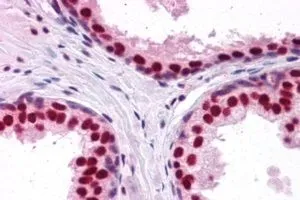
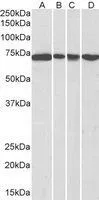
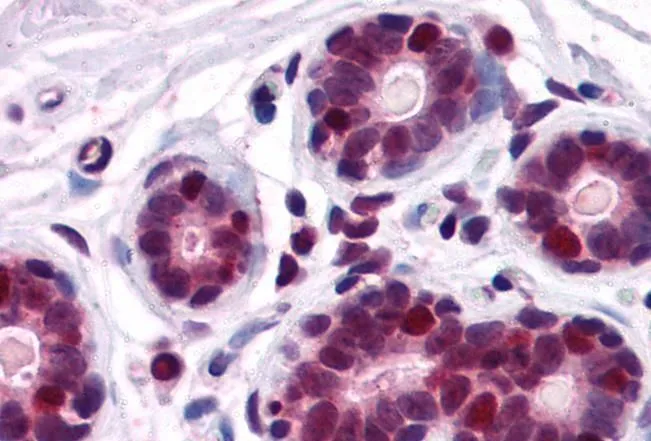
IHC-P analysis of human uterus using GTX10261 DDX5 antibody, C-term. Antigen retrieval : citrate buffer pH 6 Dilution : 2.5μg/ml
DDX5 antibody, C-term
GTX10261

ApplicationsImmunoFluorescence, Western Blot, ImmunoCytoChemistry, ImmunoHistoChemistry, ImmunoHistoChemistry Paraffin
Product group Antibodies
ReactivityHuman, Mouse
TargetDDX5
Overview
- SupplierGeneTex
- Product NameDDX5 antibody, C-term
- Delivery Days Customer7
- Application Supplier NoteWB: 0.3-1microg/ml. *Optimal dilutions/concentrations should be determined by the researcher.Not tested in other applications.
- ApplicationsImmunoFluorescence, Western Blot, ImmunoCytoChemistry, ImmunoHistoChemistry, ImmunoHistoChemistry Paraffin
- CertificationResearch Use Only
- ClonalityPolyclonal
- Concentration0.50 mg/ml
- ConjugateUnconjugated
- Gene ID1655
- Target nameDDX5
- Target descriptionDEAD-box helicase 5
- Target synonymsG17P1, HLR1, HUMP68, p68, probable ATP-dependent RNA helicase DDX5, putative ATP-dependent RNA helicase DDX5, ATP-dependent RNA helicase DDX5, DEAD (Asp-Glu-Ala-Asp) box helicase 5, DEAD (Asp-Glu-Ala-Asp) box polypeptide 5, DEAD box protein 5, DEAD box-5, DEAD/H (Asp-Glu-Ala-Asp/His) box polypeptide 5 (RNA helicase, 68kD), RNA helicase p68
- HostGoat
- IsotypeIgG
- Protein IDP17844
- Protein NameProbable ATP-dependent RNA helicase DDX5
- Scientific DescriptionThis gene encodes a member of the DEAD box family of RNA helicases that are involved in a variety of cellular processes as a result of its role as an adaptor molecule, promoting interactions with a large number of other factors. This protein is involved in pathways that include the alteration of RNA structures, plays a role as a coregulator of transcription, a regulator of splicing, and in the processing of small noncoding RNAs. Members of this family contain nine conserved motifs, including the conserved Asp-Glu-Ala-Asp (DEAD) motif, important to ATP binding and hydrolysis as well as RNA binding and unwinding activities. Dysregulation of this gene may play a role in cancer development. Alternative splicing results in multiple transcript variants. [provided by RefSeq, Sep 2017]
- ReactivityHuman, Mouse
- Storage Instruction-20°C or -80°C,2°C to 8°C
- UNSPSC41116161
Datasheet
Related products

Product group Antibodies

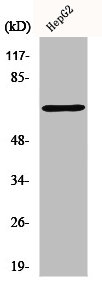
DDX5 AntibodyCSB-PA003685
ApplicationsImmunoFluorescence, Western Blot, ELISA
ReactivityHuman, Mouse, Rat
TargetDDX5
- SizePrice

Product group Antibodies

Anti-DDX5 Antibody Picoband(r)A00670-CARRIER-FREE
ApplicationsFlow Cytometry, ImmunoFluorescence, ImmunoPrecipitation, Western Blot, ELISA, ImmunoCytoChemistry, ImmunoHistoChemistry
ReactivityHuman, Mouse, Rat
TargetDDX5
- SizePrice
Product group Antibodies

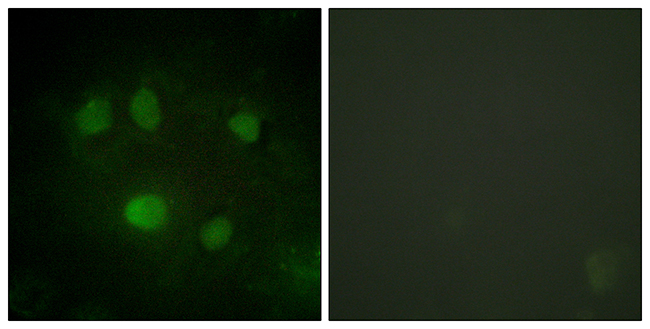
Anti-DDX5 AntibodyA97858
ApplicationsImmunoFluorescence, ELISA
ReactivityHuman, Mouse, Rat
- SizePrice
Product group Antibodies

ApplicationsWestern Blot, ELISA
ReactivityCanine, Human, Mouse, Rat
TargetDDX5
- SizePrice

Product group Antibodies

Anti-DDX5 AntibodyHPA071154
ApplicationsWestern Blot, ImmunoCytoChemistry
ReactivityHuman
TargetDDX5
- SizePrice
Product group Antibodies

DDX5 Antibody (C-Terminus)LS-C358965
ApplicationsImmunoFluorescence, Western Blot, ImmunoCytoChemistry, ImmunoHistoChemistry, ImmunoHistoChemistry Paraffin
ReactivityHuman, Monkey, Mouse, Rat
TargetDDX5
- SizePrice
Product group Antibodies

ApplicationsFlow Cytometry, ImmunoFluorescence, Western Blot
ReactivityHuman, Mouse, Rat
TargetDDX5
- SizePrice
Product group Antibodies

Ddx5 Recombinant AntibodyCAC12127
ApplicationsFlow Cytometry, ImmunoFluorescence, Western Blot, ELISA, ImmunoHistoChemistry
ReactivityMouse
TargetDDX5
- SizePrice
Product group Antibodies
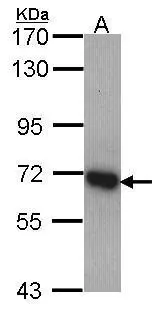
DDX5 antibody [C3], C-termGTX100234
ApplicationsImmunoFluorescence, ImmunoPrecipitation, Western Blot, ImmunoCytoChemistry, ImmunoHistoChemistry, ImmunoHistoChemistry Paraffin
ReactivityHuman
TargetDDX5
- SizePrice