

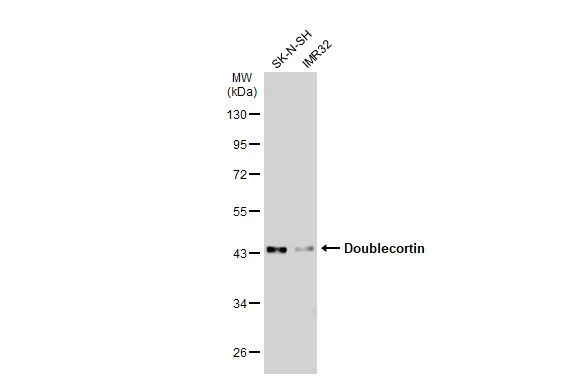
Various whole cell extracts (30 μg) were separated by 10% SDS-PAGE, and the membrane was blotted with Doublecortin antibody (GTX134052) diluted at 1:1000. The HRP-conjugated anti-rabbit IgG antibody (GTX213110-01) was used to detect the primary antibody, and the signal was developed with Trident ECL plus-Enhanced.
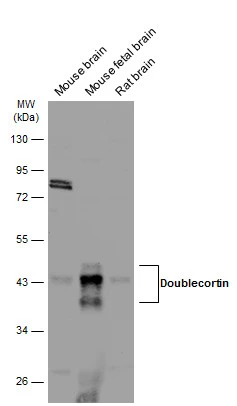
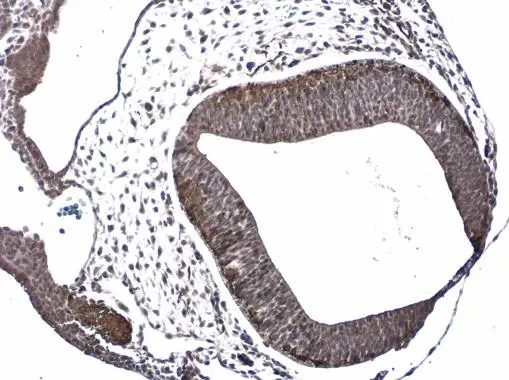
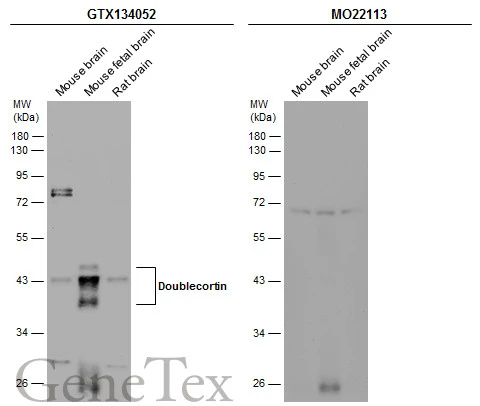
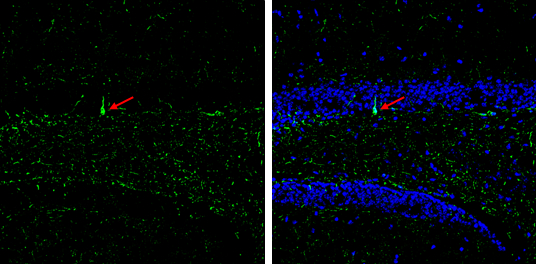
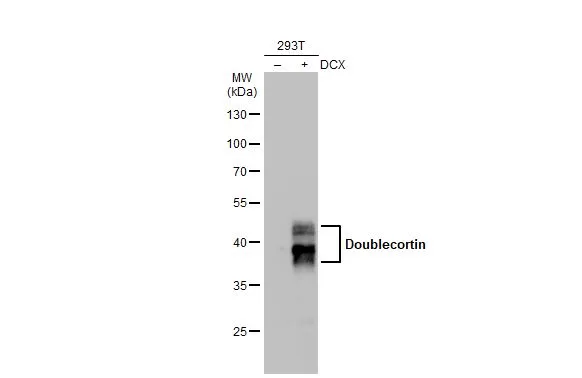
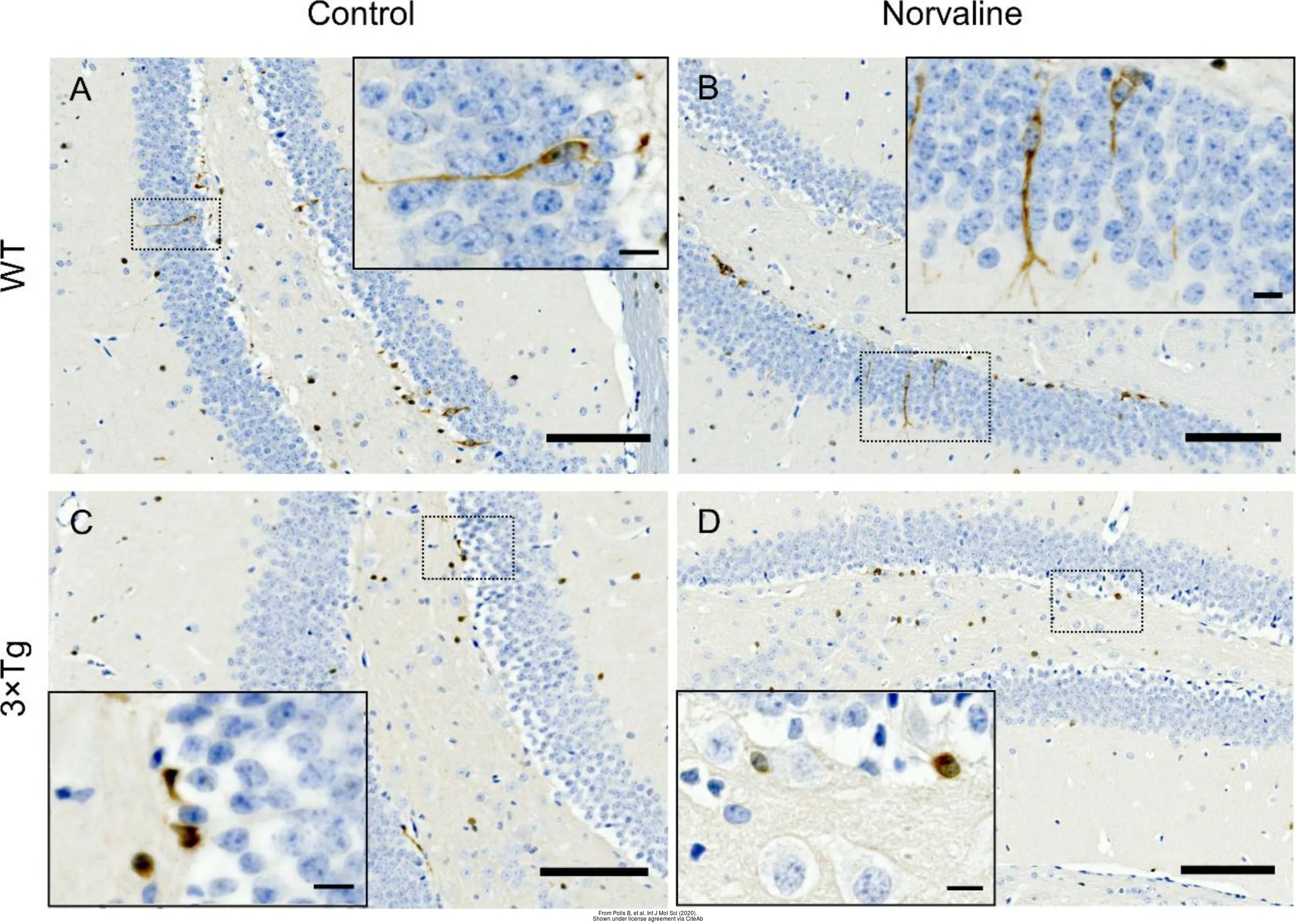
Various whole cell extracts (30 μg) were separated by 10% SDS-PAGE, and the membrane was blotted with Doublecortin antibody (GTX134052) diluted at 1:1000. The HRP-conjugated anti-rabbit IgG antibody (GTX213110-01) was used to detect the primary antibody, and the signal was developed with Trident ECL plus-Enhanced.
Doublecortin antibody
GTX134052

ApplicationsWestern Blot, ImmunoHistoChemistry, ImmunoHistoChemistry Frozen, ImmunoHistoChemistry Paraffin
Product group Antibodies
ReactivityHuman, Mouse, Rat
TargetDcx
Overview
- SupplierGeneTex
- Product NameDoublecortin antibody
- Delivery Days Customer9
- Application Supplier NoteWB: 1:500-1:3000. IHC-P: 1:100-1:1000. IHC-Fr: 1:100-1:1000. *Optimal dilutions/concentrations should be determined by the researcher.Not tested in other applications.
- ApplicationsWestern Blot, ImmunoHistoChemistry, ImmunoHistoChemistry Frozen, ImmunoHistoChemistry Paraffin
- CertificationResearch Use Only
- ClonalityPolyclonal
- Concentration0.72 mg/ml
- ConjugateUnconjugated
- Gene ID13193
- Target nameDcx
- Target descriptiondoublecortin
- Target synonymsDbct, neuronal migration protein doublecortin, doublecortex, doublin, lis-X, lissencephalin-X, lissencephaly, X-linked (doublecortin)
- HostRabbit
- IsotypeIgG
- Protein IDO88809
- Protein NameNeuronal migration protein doublecortin
- Scientific DescriptionThis gene encodes a member of the doublecortin family. The protein encoded by this gene is a cytoplasmic protein and contains two doublecortin domains, which bind microtubules. In the developing cortex, cortical neurons must migrate over long distances to reach the site of their final differentiation. The encoded protein appears to direct neuronal migration by regulating the organization and stability of microtubules. In addition, the encoded protein interacts with LIS1, the regulatory gamma subunit of platelet activating factor acetylhydrolase. Studies in knockout mice lacking this gene and the LIS1 gene suggest that the molecular interaction of these two genes is important in both in neuronal migration and neurogenesis, and there is a cortical role of this gene in nuclear translocation and positioning of the mitotic spindle in radial glial mitotic division. Multiple transcript variants encoding three different isoforms have been found for this gene. [provided by RefSeq]
- ReactivityHuman, Mouse, Rat
- Storage Instruction-20°C or -80°C,2°C to 8°C
- UNSPSC41116161
Datasheet
Related products

Product group Antibodies

ApplicationsImmunoPrecipitation, Western Blot, ImmunoCytoChemistry, ImmunoHistoChemistry
ReactivityMouse, Rat
TargetDcx
- SizePrice