

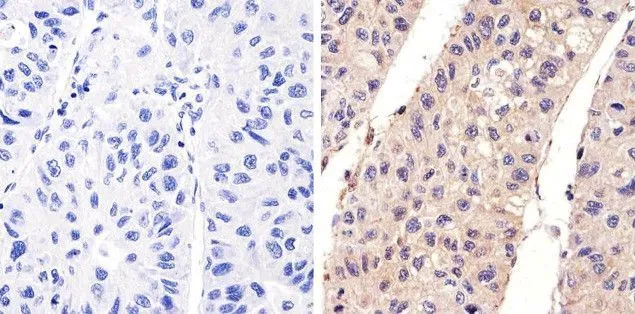
IHC-P analysis of human hepatocellular carcinoma tissue using GTX25652 EGFR (phospho Tyr1173) antibody. Right : Primary antibody Left : Negative control without primary antibody Antigen retrieval : 10mM sodium citrate (pH 6.0), microwaved for 8-15 min Dilution : 1:20
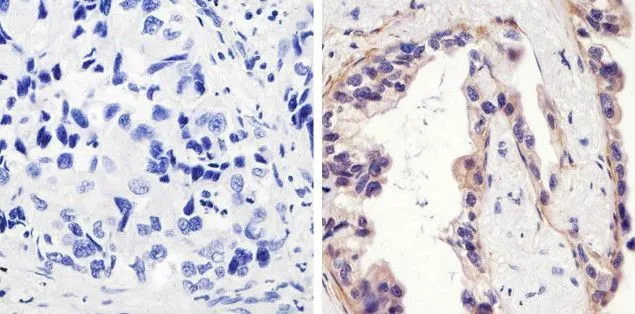
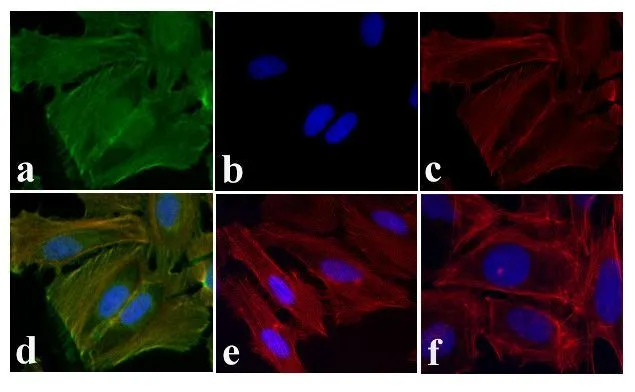
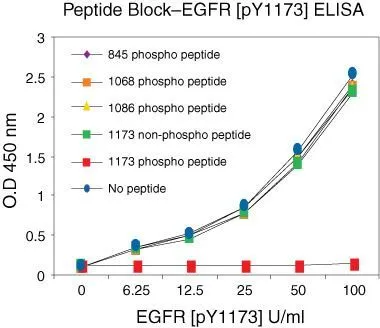
IHC-P analysis of human hepatocellular carcinoma tissue using GTX25652 EGFR (phospho Tyr1173) antibody. Right : Primary antibody Left : Negative control without primary antibody Antigen retrieval : 10mM sodium citrate (pH 6.0), microwaved for 8-15 min Dilution : 1:20
EGFR (phospho Tyr1173) antibody
GTX25652

ApplicationsFlow Cytometry, ImmunoFluorescence, Western Blot, ELISA, ImmunoCytoChemistry, ImmunoHistoChemistry, ImmunoHistoChemistry Paraffin
Product group Antibodies
ReactivityHuman, Mouse, Rat
TargetEGFR
Overview
- SupplierGeneTex
- Product NameEGFR (phospho Tyr1173) antibody
- Delivery Days Customer9
- Application Supplier NoteICC/IF: 1:100-1:500. IHC-P: 1:10-1:100. FACS: 1:20. *Optimal dilutions/concentrations should be determined by the researcher.Not tested in other applications.
- ApplicationsFlow Cytometry, ImmunoFluorescence, Western Blot, ELISA, ImmunoCytoChemistry, ImmunoHistoChemistry, ImmunoHistoChemistry Paraffin
- CertificationResearch Use Only
- ClonalityPolyclonal
- ConjugateUnconjugated
- Gene ID1956
- Target nameEGFR
- Target descriptionepidermal growth factor receptor
- Target synonymsERBB, ERBB1, ERRP, HER1, NISBD2, NNCIS, PIG61, mENA, epidermal growth factor receptor, EGFR vIII, avian erythroblastic leukemia viral (v-erb-b) oncogene homolog, cell growth inhibiting protein 40, cell proliferation-inducing protein 61, epidermal growth factor receptor tyrosine kinase domain, erb-b2 receptor tyrosine kinase 1, proto-oncogene c-ErbB-1, receptor tyrosine-protein kinase erbB-1
- HostRabbit
- IsotypeIgG
- Protein IDP00533
- Protein NameEpidermal growth factor receptor
- Scientific DescriptionThe protein encoded by this gene is a transmembrane glycoprotein that is a member of the protein kinase superfamily. This protein is a receptor for members of the epidermal growth factor family. EGFR is a cell surface protein that binds to epidermal growth factor. Binding of the protein to a ligand induces receptor dimerization and tyrosine autophosphorylation and leads to cell proliferation. Mutations in this gene are associated with lung cancer. [provided by RefSeq, Jun 2016]
- ReactivityHuman, Mouse, Rat
- Storage Instruction-20°C or -80°C,2°C to 8°C
- UNSPSC12352203
Datasheet
Related products
Product group Antibodies

Egfr Polyclonal AntibodyCAC09124
ApplicationsImmunoFluorescence, ELISA, ImmunoHistoChemistry
TargetEGFR
- SizePrice

Product group Antibodies

Anti-EGFR AntibodyA83204
ApplicationsWestern Blot, ELISA
ReactivityHuman
- SizePrice

Product group Antibodies

Anti-EGFR AntibodyAMAB90816
ApplicationsWestern Blot, ImmunoHistoChemistry
ReactivityHuman
TargetEGFR
- SizePrice
Product group Antibodies

EGFR Polyclonal AntibodyBS-0165R
ApplicationsFlow Cytometry, ImmunoFluorescence, Western Blot, ELISA, ImmunoCytoChemistry, ImmunoHistoChemistry, ImmunoHistoChemistry Frozen, ImmunoHistoChemistry Paraffin
ReactivityCanine, Human, Mouse, Porcine, Rat
TargetEGFR
- SizePrice

Product group Antibodies

ApplicationsFlow Cytometry
TargetEGFR
- SizePrice
Product group Antibodies

Anti-EGFR (N-term) Antibody131-0167
ApplicationsELISA
ReactivityHuman
TargetEGFR
- SizePrice
Product group Antibodies

Anti-EGFR [C225 (Cetuximab)]Ab00279-1.1
ApplicationsFlow Cytometry, Neutralisation/Blocking
ReactivityHuman
TargetEGFR
- SizePrice
Product group Antibodies

EGFR-S1026 AntibodyABX032521
ApplicationsFlow Cytometry, Western Blot, ELISA, ImmunoHistoChemistry
- SizePrice