

ELISA Kit for Carbonic Anhydrase VI (CA6)
SED073HU

Product group Assays
Overview
- SupplierCloud-Clone Corp.
- Product NameELISA Kit for Carbonic Anhydrase VI (CA6)
- Delivery Days Customer12
- ApplicationsELISA
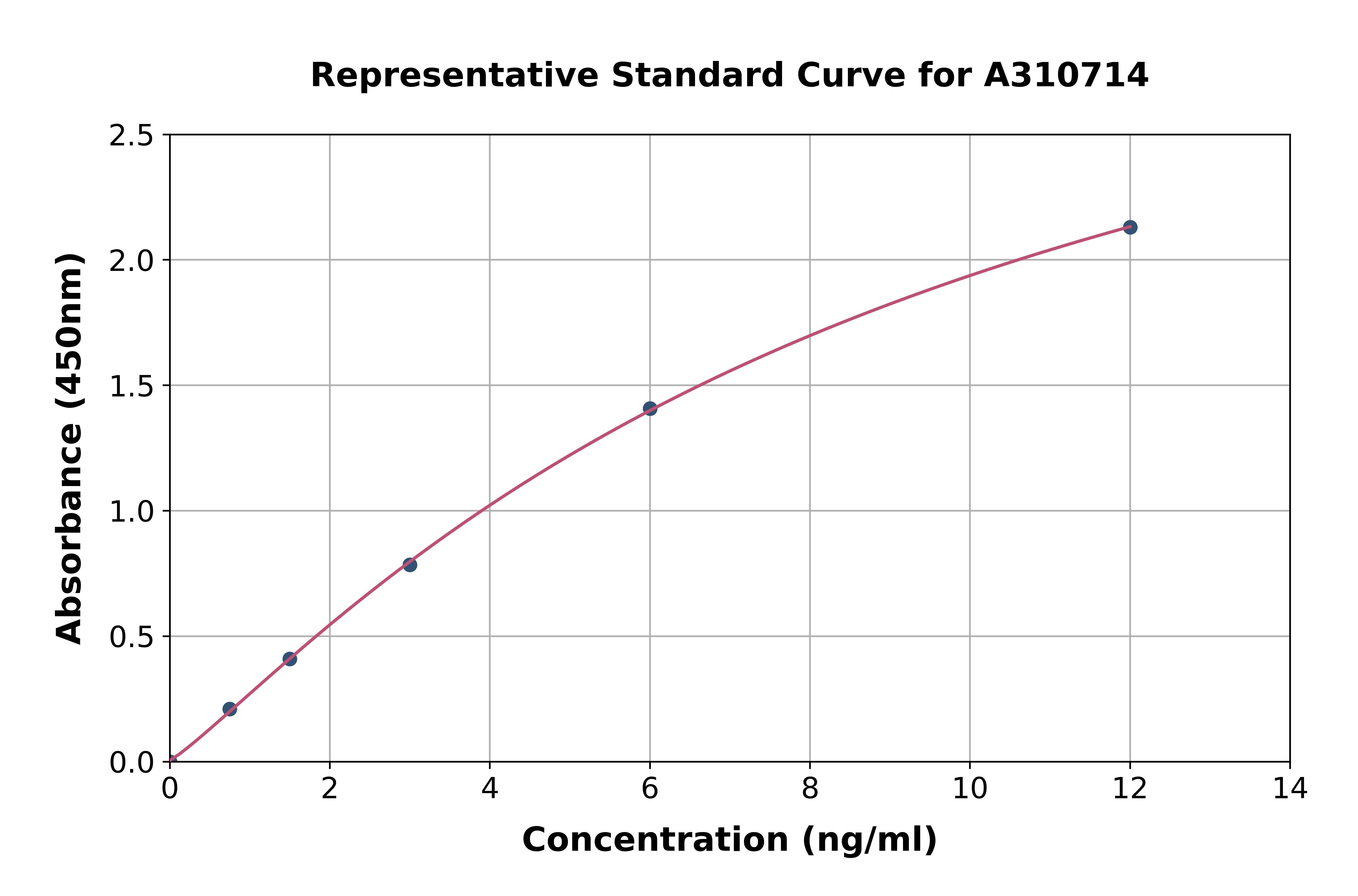
- Assay Detection Range0.78-50ng/mL
- Assay PrecisionIntra-assay Precision (Precision within an assay): 3 samples with low, middle and high level Carbonic Anhydrase VI (CA6) were tested 20 times on one plate, respectively. Inter-assay Precision (Precision between assays): 3 samples with low, middle...
- Assay SensitivityThe minimum detectable dose of this kit is typically less than 0.29ng/mL
- Assay Test PrincipleThe test principle applied in this kit is Sandwich enzyme immunoassay. The microtiter plate provided in this kit has been pre-coated with an antibody specific to Carbonic Anhydrase VI (CA6). Standards or samples are then added to the appropriate...
- Assay Time3h
- CertificationResearch Use Only
- Protein IDP23280
- Protein NameCarbonic anhydrase 6
- UNSPSC41116100
- SpeciesHuman
References
- Obese Subjects With Specific Gustatory Papillae Microbiota and Salivary Cues Display an Impairment to Sense Lipids. Besnard P et al., 2018 Apr 30, Sci RepRead this paper
- Differences in the Density of Fungiform Papillae and Composition of Saliva in Patients With Taste Disorders Compared to Healthy Controls. Walliczek-Dworschak U et al., 2017 Oct 1, Chem SensesRead this paper
- Children with a Higher Activity of Carbonic Anhydrase VI in Saliva Are More Likely to Develop Dental Caries. Picco DCR et al., 2017, Caries ResRead this paper
- Associations between food consumption patterns and saliva composition: Specificities of eating difficulties children. Morzel M et al., 2017 May 1, Physiol BehavRead this paper
Related products


Product group Assays

ReactivityHuman
- SizePrice


Product group Assays

Assay Sample TypeSerum, plasma, tissue homogenates and other biological fluids
ReactivityHuman
- SizePrice
Product group Assays

Assay Sample TypeSerum, plasma and other biological fluids
ReactivityHuman
- SizePrice
Product group Assays

ReactivityHuman
- SizePrice