

FABP4 (human) (rec.) (His)
AG-40A-0035

Protein IDP15090
Product group Proteins / Signaling Molecules
Overview
- SupplierAdipoGen Life Sciences
- Product NameFABP4 (human) (rec.) (His)
- Delivery Days Customer10
- CertificationResearch Use Only
- Concentration1 mg/ml
- Estimated Purity>90%
- Gene ID2167
- Target nameFABP4
- Target descriptionfatty acid binding protein 4
- Target synonymsA-FABP, AFABP, ALBP, HEL-S-104, aP2, fatty acid-binding protein, adipocyte, adipocyte fatty acid binding protein, adipocyte lipid-binding protein, adipocyte-type fatty acid-binding protein, epididymis secretory protein Li 104, fatty acid binding protein 4, adipocyte
- Protein IDP15090
- Protein NameFatty acid-binding protein, adipocyte
- Scientific DescriptionFABP4 is a fatty acid binding protein in adipocytes. Fatty acid binding proteins are a family of small, highly conserved, cytoplasmic proteins that bind long-chain fatty acids and other hydrophobic ligands. FABPs regulate the fatty acid uptake, transport, and metabolism. aP2, the mouse form of FABP4, seems to be central to the pathway that links obesity to insulin resistance. aP2 was shown to be an adipokine linking adipocytes to hepatic glucose production and that neutralizing secreted aP2 may represent an effective therapeutic strategy against diabetes. - Protein. Human FABP4 (aa 1-132) is fused at the C-terminus to a His-tag. Source: E. coli. Endotoxin content: 90% (SDS-PAGE). FABP4 is a fatty acid binding protein in adipocytes. Fatty acid binding proteins are a family of small, highly conserved, cytoplasmic proteins that bind long-chain fatty acids and other hydrophobic ligands. FABPs regulate the fatty acid uptake, transport, and metabolism. aP2, the mouse form of FABP4, seems to be central to the pathway that links obesity to insulin resistance. aP2 was shown to be an adipokine linking adipocytes to hepatic glucose production and that neutralizing secreted aP2 may represent an effective therapeutic strategy against diabetes.
- Storage Instruction-20°C,2°C to 8°C
- UNSPSC41116100
- SpeciesHuman
MSDS
Related products
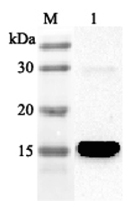
anti-FABP4 (human), pAbAG-25A-0041
ApplicationsWestern Blot, ELISA
ReactivityHuman
TargetFABP4
- SizePrice
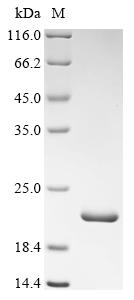
Product group Proteins / Signaling Molecules

Protein IDP15090
- SizePrice
Product group Proteins / Signaling Molecules

Protein IDP15090
- SizePrice

Product group Proteins / Signaling Molecules

Protein IDP15090
- SizePrice
Product group Proteins / Signaling Molecules

ApplicationsOther Application
- SizePrice

Product group Proteins / Signaling Molecules
References

ApplicationsWestern Blot, Other Application
Protein IDP15090
- SizePrice
Product group Proteins / Signaling Molecules

Protein IDP15090
- SizePrice