Western blot analysis of extracts of various cell lines using F13A1 Polyclonal Antibody at dilution of 1:3000.
Western blot analysis of extracts of various cell lines using F13A1 Polyclonal Antibody at dilution of 1:3000.
Factor XIIIa Polyclonal Antibody
E-AB-65050

Product group Antibodies
Overview
- SupplierElabscience
- Product NameFactor XIIIa Polyclonal Antibody
- Delivery Days Customer12
- CertificationResearch Use Only
- Scientific DescriptionThis gene encodes the coagulation factor XIII A subunit. Coagulation factor XIII is the last zymogen to become activated in the blood coagulation cascade. Plasma factor XIII is a heterotetramer composed of 2 A subunits and 2 B subunits. The A subunits have catalytic function, and the B subunits do not have enzymatic activity and may serve as plasma carrier molecules. Platelet factor XIII is comprised only of 2 A subunits, which are identical to those of plasma origin. Upon cleavage of the activation peptide by thrombin and in the presence of calcium ion, the plasma factor XIII dissociates its B subunits and yields the same active enzyme, factor XIIIa, as platelet factor XIII. This enzyme acts as a transglutaminase to catalyze the formation of gamma-glutamyl-epsilon-lysine crosslinking between fibrin molecules, thus stabilizing the fibrin clot. It also crosslinks alpha-2-plasmin inhibitor, or fibronectin, to the alpha chains of fibrin. Factor XIII deficiency is classified into two categories: type I deficiency, characterized by the lack of both the A and B subunits; and type II deficiency, characterized by the lack of the A subunit alone. These defects can result in a lifelong bleeding tendency, defective wound healing, and habitual abortion.
- UNSPSC12352203
Related products

Product group Antibodies

Anti-F13A1 Antibody144-60725
ApplicationsWestern Blot
ReactivityHuman, Mouse, Rat
TargetF13A1
- SizePrice
Product group Antibodies

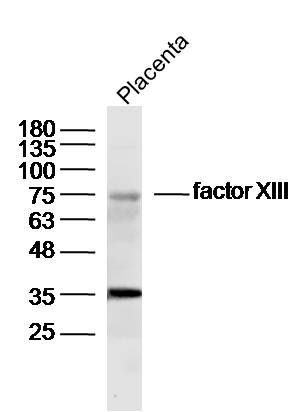
factor XIII Polyclonal AntibodyBS-1587R
ApplicationsImmunoFluorescence, Western Blot, ELISA, ImmunoCytoChemistry, ImmunoHistoChemistry, ImmunoHistoChemistry Frozen, ImmunoHistoChemistry Paraffin
ReactivityBovine, Canine, Human, Mouse, Porcine, Rabbit, Rat
TargetF13A1
- SizePrice
Product group Antibodies

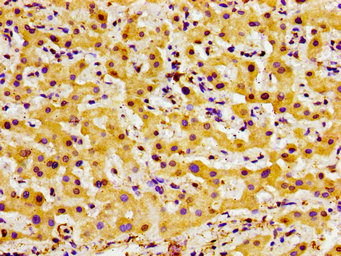
F13A1 AntibodyCSB-PA007919LA01HU
ApplicationsImmunoFluorescence, ELISA, ImmunoHistoChemistry
ReactivityHuman
TargetF13A1
- SizePrice
Product group Antibodies

ApplicationsImmunoPrecipitation, Western Blot, ImmunoCytoChemistry, ImmunoHistoChemistry
ReactivityRat
TargetF13A1
- SizePrice


Product group Antibodies

Anti-F13A1 AntibodyHPA001804
ApplicationsImmunoHistoChemistry
ReactivityHuman
TargetF13A1
- SizePrice
Product group Antibodies

ApplicationsWestern Blot, ELISA
ReactivityHuman, Mouse
TargetF13A1
- SizePrice

Product group Antibodies

ApplicationsFlow Cytometry, ImmunoFluorescence, Western Blot, ImmunoCytoChemistry, ImmunoHistoChemistry
ReactivityHuman
TargetF13A1
- SizePrice