

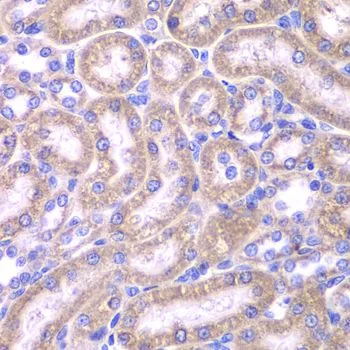
IHC-P analysis of rat kidney tissue using GTX54024 FADD antibody. Dilution : 1:200
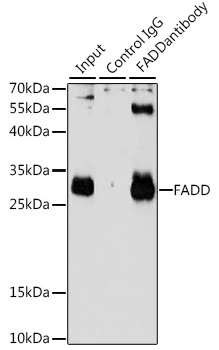
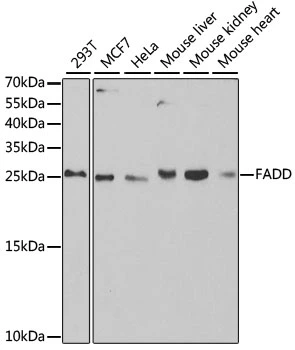
IHC-P analysis of rat kidney tissue using GTX54024 FADD antibody. Dilution : 1:200
FADD antibody
GTX54024

ApplicationsImmunoPrecipitation, Western Blot, ImmunoHistoChemistry, ImmunoHistoChemistry Paraffin
Product group Antibodies
ReactivityHuman, Mouse, Rat
TargetFADD
Overview
- SupplierGeneTex
- Product NameFADD antibody
- Delivery Days Customer7
- Application Supplier NoteWB: 1:500 - 1:2000. IHC-P: 1:50 - 1:200. IP: 1:50 - 1:200. *Optimal dilutions/concentrations should be determined by the researcher.Not tested in other applications.
- ApplicationsImmunoPrecipitation, Western Blot, ImmunoHistoChemistry, ImmunoHistoChemistry Paraffin
- CertificationResearch Use Only
- ClonalityPolyclonal
- ConjugateUnconjugated
- Gene ID8772
- Target nameFADD
- Target descriptionFas associated via death domain
- Target synonymsGIG3, IMD90, MORT1, FAS-associated death domain protein, Fas (TNFRSF6)-associated via death domain, Fas-associating death domain-containing protein, Fas-associating protein with death domain, growth-inhibiting gene 3 protein, mediator of receptor-induced toxicity
- HostRabbit
- IsotypeIgG
- Protein IDQ13158
- Protein NameFAS-associated death domain protein
- Scientific DescriptionThe protein encoded by this gene is an adaptor molecule that interacts with various cell surface receptors and mediates cell apoptotic signals. Through its C-terminal death domain, this protein can be recruited by TNFRSF6/Fas-receptor, tumor necrosis factor receptor, TNFRSF25, and TNFSF10/TRAIL-receptor, and thus it participates in the death signaling initiated by these receptors. Interaction of this protein with the receptors unmasks the N-terminal effector domain of this protein, which allows it to recruit caspase-8, and thereby activate the cysteine protease cascade. Knockout studies in mice also suggest the importance of this protein in early T cell development. [provided by RefSeq, Jul 2008]
- ReactivityHuman, Mouse, Rat
- Storage Instruction-20°C or -80°C,2°C to 8°C
- UNSPSC41116161
Datasheet
Related products
Product group Antibodies

Anti-FADD AntibodyA99898
ApplicationsWestern Blot, ELISA, ImmunoHistoChemistry
ReactivityHuman
- SizePrice
Product group Antibodies

anti-FADD (human), mAb (1C4)AG-20B-0080
ApplicationsImmunoPrecipitation, Western Blot, ELISA
ReactivityHuman
TargetFADD
- SizePrice
Product group Antibodies

FADD (Phospho-Ser191) AntibodyABX012721
ApplicationsWestern Blot, ELISA, ImmunoHistoChemistry
- SizePrice
Product group Antibodies

Anti-FADD Antibody144-05819
ApplicationsImmunoPrecipitation, Western Blot, ImmunoHistoChemistry
ReactivityHuman, Mouse, Rat
TargetFADD
- SizePrice

Product group Antibodies

ApplicationsFlow Cytometry, ImmunoFluorescence, ImmunoPrecipitation, Western Blot, ImmunoCytoChemistry, ImmunoHistoChemistry
ReactivityHuman
TargetFADD
- SizePrice
Product group Antibodies

ApplicationsWestern Blot
ReactivityHuman
TargetFADD
- SizePrice
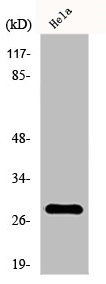
Product group Antibodies

FADD AntibodyCSB-PA002463
ApplicationsWestern Blot, ELISA, ImmunoHistoChemistry
ReactivityHuman
TargetFADD
- SizePrice
Product group Antibodies

ApplicationsImmunoPrecipitation, Western Blot, ImmunoCytoChemistry, ImmunoHistoChemistry
ReactivityPorcine
TargetFADD
- SizePrice
Product group Antibodies

FADD AntibodyLS-C403993
ApplicationsELISA, ImmunoHistoChemistry
ReactivityHuman
TargetFADD
- SizePrice
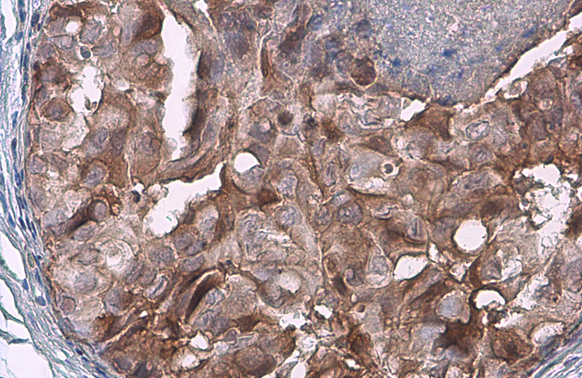
Product group Antibodies
FADD antibodyGTX100612
ApplicationsWestern Blot, ImmunoHistoChemistry, ImmunoHistoChemistry Paraffin
ReactivityHuman
TargetFADD
- SizePrice