

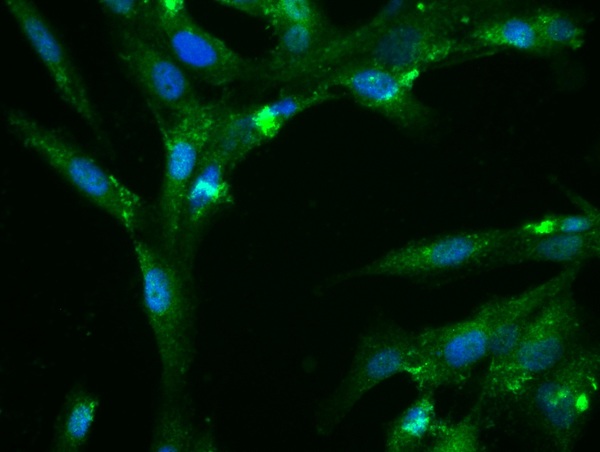
Image provided by One World Lab validation program. U138 cells probed with Rabbit Anti-Fibronectin Polyclonal Antibody (bs-0666R) at 1:50 for 60 minutes at room temperature followed by Goat Anti-Rabbit IgG (H+L) Alexa Fluor 488 Conjugated secondary antibody.
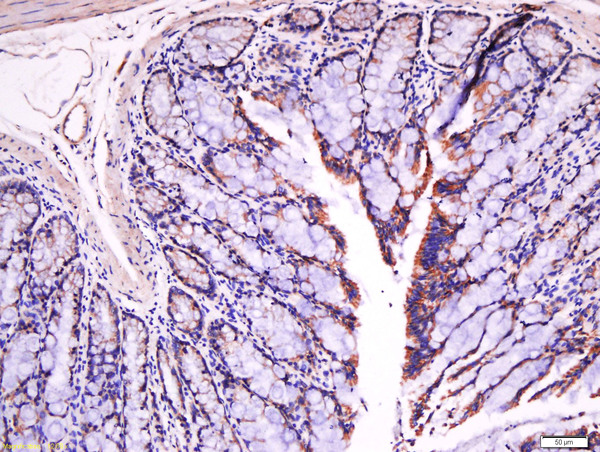
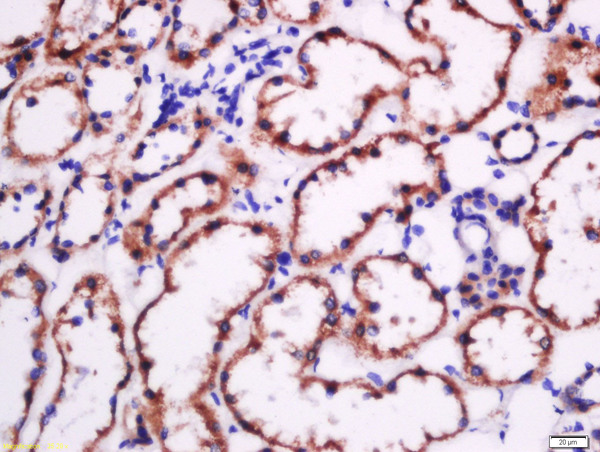
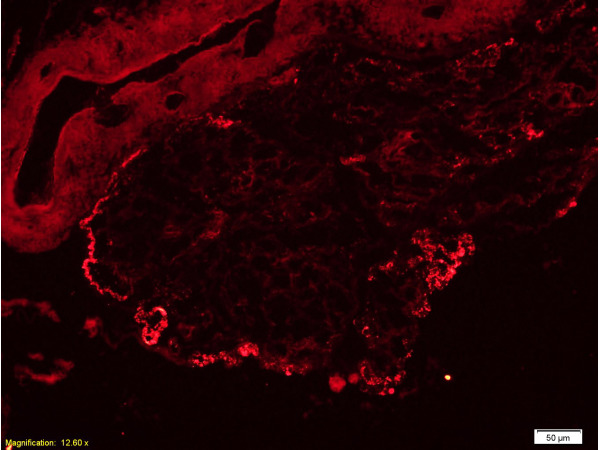
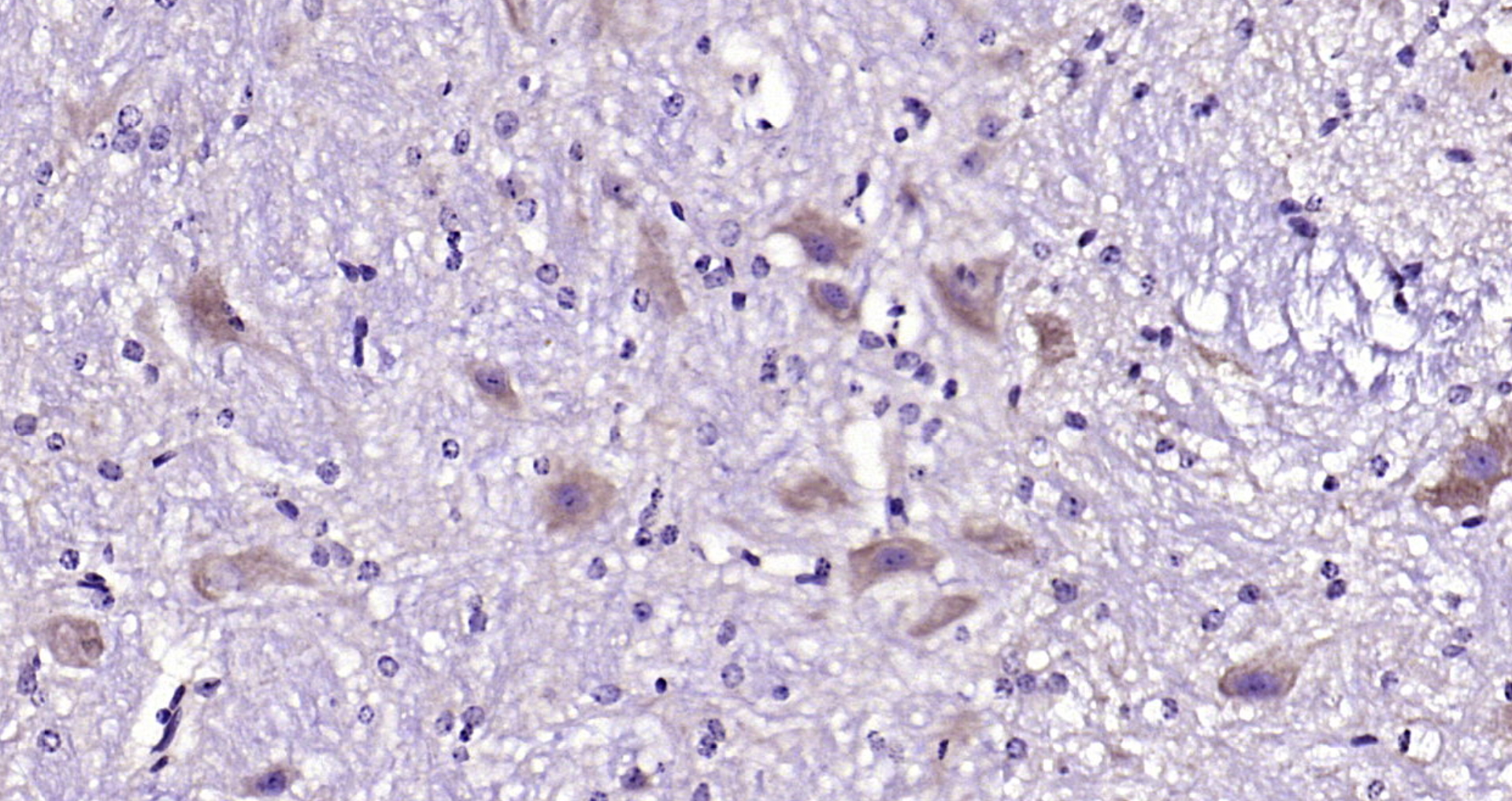
Image provided by One World Lab validation program. U138 cells probed with Rabbit Anti-Fibronectin Polyclonal Antibody (bs-0666R) at 1:50 for 60 minutes at room temperature followed by Goat Anti-Rabbit IgG (H+L) Alexa Fluor 488 Conjugated secondary antibody.
Fibronectin/FN1 Polyclonal Antibody
BS-0666R

ApplicationsImmunoFluorescence, Western Blot, ELISA, ImmunoCytoChemistry, ImmunoHistoChemistry, ImmunoHistoChemistry Frozen, ImmunoHistoChemistry Paraffin
Product group Antibodies
ReactivityBovine, Canine, Human, Mouse, Rat
TargetFn1
Overview
- SupplierBioss
- Product NameFibronectin/FN1 Polyclonal Antibody
- Delivery Days Customer16
- ApplicationsImmunoFluorescence, Western Blot, ELISA, ImmunoCytoChemistry, ImmunoHistoChemistry, ImmunoHistoChemistry Frozen, ImmunoHistoChemistry Paraffin
- Applications SupplierWB(1:300-5000), ELISA(1:500-1000), IHC-P(1:200-400), IHC-F(1:100-500), IF(IHC-P)(1:50-200), IF(IHC-F)(1:50-200), IF(ICC)(1:50-200)
- CertificationResearch Use Only
- ClonalityPolyclonal
- Concentration1 ug/ul
- ConjugateUnconjugated
- Gene ID14268
- Target nameFn1
- Target descriptionfibronectin 1
- Target synonymsE330027I09, Fn, Fn-1, fibronectin
- HostRabbit
- IsotypeIgG
- Protein IDP11276
- Protein NameFibronectin
- ReactivityBovine, Canine, Human, Mouse, Rat
- Storage Instruction-20°C
- UNSPSC12352203
References
- Fasano A, Formichi P, Taglia I, et al. HTRA1 expression profile and activity on TGF-β signaling in HTRA1 mutation carriers. J Cell Physiol. 2020,235(10):7120-7127. doi: 10.1002/jcp.29609Read this paper
- Yang W, Li X, Qi S, et al. lncRNA H19 is involved in TGF-β1-induced epithelial to mesenchymal transition in bovine epithelial cells through PI3K/AKT Signaling Pathway. PeerJ. 2017,5:e3950. doi: 10.7717/peerj.3950Read this paper
- Miyauchi Y, Yasuchika K, Fukumitsu K, et al. A novel three-dimensional culture system maintaining the physiological extracellular matrix of fibrotic model livers accelerates progression of hepatocellular carcinoma cells. Sci Rep. 2017,7(1):9827. doi: 10.1038/s41598-017-09391-yRead this paper
- Liu L, Xiao W. Notch1 signaling induces epithelial-mesenchymal transition in lens epithelium cells during hypoxia. BMC Ophthalmol. 2017,17(1):135. doi: 10.1186/s12886-017-0532-1Read this paper
- Elmas O, Erbas O, Yigitturk G. The efficacy of Aesculus hippocastanum seeds on diabetic nephropathy in a streptozotocin-induced diabetic rat model. Biomed Pharmacother. 2016,83:392-396. doi: 10.1016/j.biopha.2016.06.055Read this paper
- Wu L, Wang Q, Guo F, et al. MicroRNA-27a Induces Mesangial Cell Injury by Targeting of PPARγ, and its In Vivo Knockdown Prevents Progression of Diabetic Nephropathy. Sci Rep. 2016,6:26072. doi: 10.1038/srep26072Read this paper
- Xu ZE, Chen Y, Huang A, et al. Inflammatory stress exacerbates lipid-mediated renal injury in ApoE/CD36/SRA triple knockout mice. Am J Physiol Renal Physiol. 2011,301(4):F713-22. doi: 10.1152/ajprenal.00341.2010Read this paper
- Ma Y, Tao Y, Lu Q, et al. Intraocular expression of serum amyloid a and interleukin-6 in proliferative diabetic retinopathy. Am J Ophthalmol. 2011,152(4):678-685.e2. doi: 10.1016/j.ajo.2011.03.007Read this paper
- Jun H, Song Z, Chen W, et al. In vivo and in vitro effects of SREBP-1 on diabetic renal tubular lipid accumulation and RNAi-mediated gene silencing study. Histochem Cell Biol. 2009,131(3):327-45. doi: 10.1007/s00418-008-0528-2Read this paper
Datasheet
Related products
Product group Antibodies

ApplicationsImmunoPrecipitation, Western Blot, ImmunoCytoChemistry, ImmunoHistoChemistry
ReactivityBovine
- SizePrice
Product group Antibodies

Fibronectin, mouseFI24951-0.1
ApplicationsImmunoFluorescence, ELISA, ImmunoHistoChemistry, ImmunoHistoChemistry Frozen, ImmunoHistoChemistry Paraffin, RadioImmunoAssay
ReactivityMouse
TargetFn1
- SizePrice
Product group Antibodies

ApplicationsWestern Blot, ELISA, ImmunoHistoChemistry, ImmunoHistoChemistry Frozen
ReactivityCanine, Human
TargetFn1
- SizePrice