

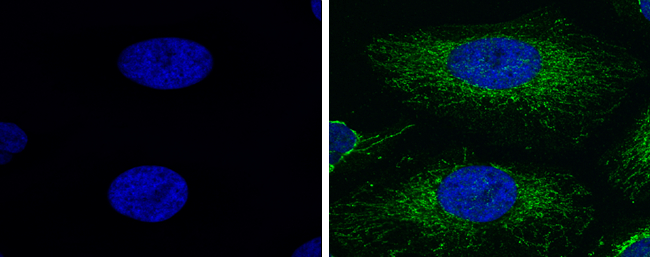
Fluoroshield? with DAPI is an aqueous mounting medium for preserving fluorescence of tissue and cell smears. This mounting medium is fortified with DAPI which is a counterstain for DNA.
Fluoroshield? with DAPI is an aqueous mounting medium for preserving fluorescence of tissue and cell smears. This mounting medium is fortified with DAPI which is a counterstain for DNA.
Fluoroshield(tm) with DAPI
GTX30920

CategoryIHC
Product group Diagnostic
Overview
- SupplierGeneTex
- Product NameFluoroshield(tm) with DAPI
- Delivery Days Customer9
- ApplicationsImmunoFluorescence, ImmunoCytoChemistry, ImmunoHistoChemistry, ImmunoHistoChemistry Frozen
- CertificationResearch Use Only
- Scientific DescriptionFluoroshield with DAPI is an aqueous mounting medium for preserving fluorescence of tissue and cell smears. This unique formula prevents rapid photobleaching of FITC, Texas Red, AMCA, Cy2, Cy3, Cy5, Alexa fluoro 488, Alexa fluoro 594, Green fluorescent protein (GFP), tetramethyly rhodamine, Redox. Phycoerythrin (RP-E), Phyocyanin (PC), and Allophycocyanin (APC). Fluorescence is retained during prolonged storage at 4oC in the dark. This medium does not contain phenylenediamine, which destroys immunofluorescence of Cy dyes, RP-E, PC and APC. This mounting medium is fortified with DAPI which is a counter-stain for DNA. This product is to be used in situ hybridization techniques or other methods where fluorescence of DNA staining is required. DAPI excites at 360nm and emits at 460nm, producing a blue fluorescence. RNA is also stained with DAPI.
- Storage Instruction2°C to 8°C
- UNSPSC41116112
References
- Local delivery of EGFR(+)NSCs-derived exosomes promotes neural regeneration post spinal cord injury via miR-34a-5p/HDAC6 pathway.Read this paper
- SIRT3 enhances the protective effect of Xyloketal B on seizure-induced brain injury by regulating AMPK/mTOR signaling-mediated autophagy.Read this paper