

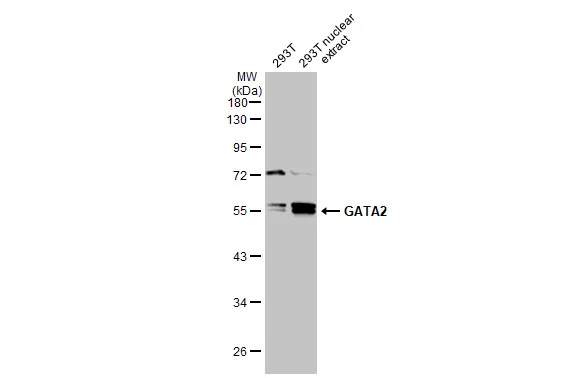
293T whole cell and nuclear extracts (30 μg) were separated by 10% SDS-PAGE, and the membrane was blotted with GATA2 antibody (GTX113441) diluted at 1:1000. The HRP-conjugated anti-rabbit IgG antibody (GTX213110-01) was used to detect the primary antibody.
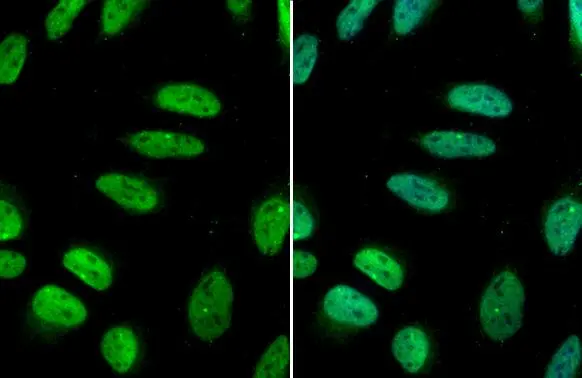
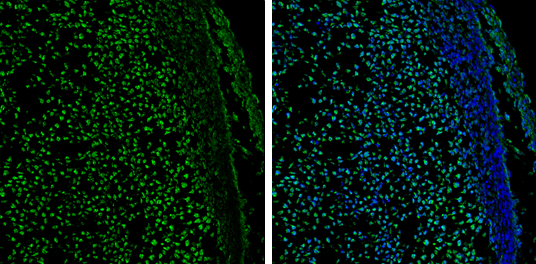
293T whole cell and nuclear extracts (30 μg) were separated by 10% SDS-PAGE, and the membrane was blotted with GATA2 antibody (GTX113441) diluted at 1:1000. The HRP-conjugated anti-rabbit IgG antibody (GTX213110-01) was used to detect the primary antibody.
GATA2 antibody
GTX113441

ApplicationsImmunoFluorescence, Western Blot, ImmunoCytoChemistry, ImmunoHistoChemistry, ImmunoHistoChemistry Frozen
Product group Antibodies
ReactivityHuman, Mouse, Rat
TargetGATA2
Overview
- SupplierGeneTex
- Product NameGATA2 antibody
- Delivery Days Customer9
- Application Supplier NoteWB: 1:500-1:3000. ICC/IF: 1:100-1:1000. IHC-Fr: 1:100-1:1000. *Optimal dilutions/concentrations should be determined by the researcher.Not tested in other applications.
- ApplicationsImmunoFluorescence, Western Blot, ImmunoCytoChemistry, ImmunoHistoChemistry, ImmunoHistoChemistry Frozen
- CertificationResearch Use Only
- ClonalityPolyclonal
- Concentration0.38 mg/ml
- ConjugateUnconjugated
- Gene ID2624
- Target nameGATA2
- Target descriptionGATA binding protein 2
- Target synonymsDCML, IMD21, MONOMAC, NFE1B, endothelial transcription factor GATA-2
- HostRabbit
- IsotypeIgG
- Protein IDP23769
- Protein NameEndothelial transcription factor GATA-2
- Scientific DescriptionThis gene encodes a member of the GATA family of zinc-finger transcription factors that are named for the consensus nucleotide sequence they bind in the promoter regions of target genes. The encoded protein plays an essential role in regulating transcription of genes involved in the development and proliferation of hematopoietic and endocrine cell lineages. Alternative splicing results in multiple transcript variants.
- ReactivityHuman, Mouse, Rat
- Storage Instruction-20°C or -80°C,2°C to 8°C
- UNSPSC41116161
Datasheet
Related products

Product group Antibodies

Phospho-GATA2 (S401) AntibodyCSB-PA008708
ApplicationsWestern Blot, ELISA
ReactivityHuman, Monkey
TargetGATA2
- SizePrice

Product group Antibodies

Anti-GATA2 Antibody Picoband(r)A01415-1-CARRIER-FREE
ApplicationsFlow Cytometry, ImmunoFluorescence, Western Blot, ELISA, ImmunoCytoChemistry
ReactivityHuman
TargetGATA2
- SizePrice
Product group Antibodies

GATA2 (Phospho-Ser401) AntibodyABX012483
ApplicationsWestern Blot, ELISA
- SizePrice
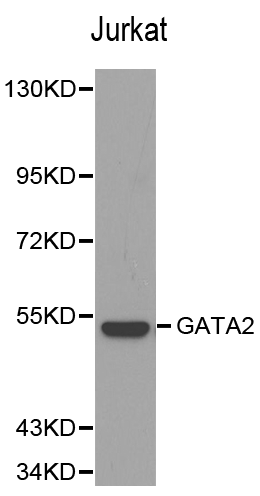
Product group Antibodies

Anti-GATA2 AntibodyA28361
ApplicationsWestern Blot, ImmunoHistoChemistry
ReactivityHuman, Mouse, Rat
- SizePrice

Product group Antibodies

Anti-GATA2 AntibodyHPA005633
ApplicationsWestern Blot, ImmunoCytoChemistry, ImmunoHistoChemistry
ReactivityHuman
TargetGATA2
- SizePrice
Product group Antibodies

GATA2 AntibodyLS-C331057
ApplicationsWestern Blot, ImmunoHistoChemistry
ReactivityHuman, Mouse, Rat
TargetGATA2
- SizePrice
Product group Antibodies

ApplicationsImmunoPrecipitation, Western Blot, ImmunoCytoChemistry, ImmunoHistoChemistry
ReactivityMouse, Porcine, Rat
TargetGATA2
- SizePrice
![Non-transfected (–) and transfected (+) 293T whole cell extracts were separated by 10% SDS-PAGE, and the membranes were blotted with GATA2 antibody [HL2127] (GTX638099) diluted at 1:5000 and competitor's antibody (Highly Cited Antibody) diluted at 1:5000. The HRP-conjugated anti-rabbit IgG antibody (GTX213110-01) was used to detect the primary antibody. *The competitor is not affiliated with GeneTex and does not endorse this product.](https://www.genetex.com/upload/website/prouct_img/normal/GTX638099/GTX638099_45166_20240126_WB_B_competitor_watermark_24022619_643.webp)
Product group Antibodies
GATA2 antibody [HL2127]GTX638099
ApplicationsImmunoFluorescence, Western Blot, ImmunoCytoChemistry
ReactivityHuman
TargetGATA2
- SizePrice
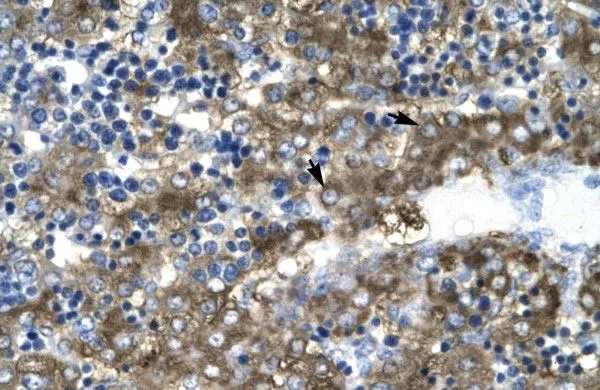
Product group Antibodies
GATA2 antibody, N-termGTX77904
ApplicationsWestern Blot, ImmunoHistoChemistry, ImmunoHistoChemistry Paraffin
ReactivityHuman, Mouse
TargetGATA2
- SizePrice