

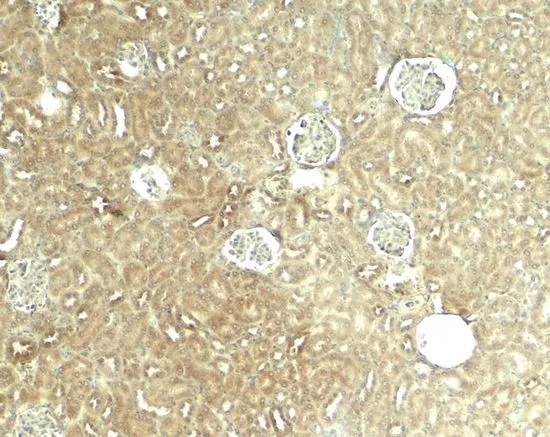
IHC-P analysis of mouse kidney tissue using GTX32148 GLIS2 antibody. Working concentration : 5 μg/ml
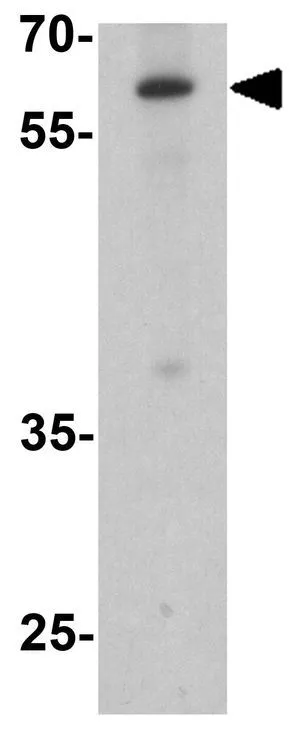
IHC-P analysis of mouse kidney tissue using GTX32148 GLIS2 antibody. Working concentration : 5 μg/ml
GLIS2 antibody
GTX32148

ApplicationsWestern Blot, ELISA, ImmunoHistoChemistry, ImmunoHistoChemistry Paraffin
Product group Antibodies
ReactivityHuman, Mouse, Rat
TargetGLIS2
Overview
- SupplierGeneTex
- Product NameGLIS2 antibody
- Delivery Days Customer9
- Application Supplier NoteWB: 1 - 2 microg/mL. IHC-P: 5 microg/mL. *Optimal dilutions/concentrations should be determined by the researcher.Not tested in other applications.
- ApplicationsWestern Blot, ELISA, ImmunoHistoChemistry, ImmunoHistoChemistry Paraffin
- CertificationResearch Use Only
- ClonalityPolyclonal
- Concentration1 mg/ml
- ConjugateUnconjugated
- Gene ID84662
- Target nameGLIS2
- Target descriptionGLIS family zinc finger 2
- Target synonymsNKL, NPHP7, zinc finger protein GLIS2, GLI-similar 2, Kruppel-like zinc finger protein GLIS2, nephrocystin-7, neuronal Krueppel-like protein
- HostRabbit
- IsotypeIgG
- Protein IDQ9BZE0
- Protein NameZinc finger protein GLIS2
- Scientific DescriptionThis gene is a member of the GLI-similar zinc finger protein family and encodes a nuclear transcription factor with five C2H2-type zinc finger domains. The protein encoded by this gene is widely expressed at low levels in the neural tube and peripheral nervous system and likely promotes neuronal differentiation. It is abundantly expressed in the kidney and may have a role in the regulation of kidney morphogenesis. p120 regulates the expression level of this protein and induces the cleavage of this proteins C-terminal zinc finger domain. This protein also promotes the nuclear translocation of p120. Mutations in this gene cause nephronophthisis (NPHP), an autosomal recessive kidney disease characterized by tubular basement membrane disruption, interstitial lymphohistiocytic cell infiltration, and development of cysts at the corticomedullary border of the kidneys.[provided by RefSeq, Jan 2010]
- ReactivityHuman, Mouse, Rat
- Storage Instruction-20°C or -80°C,2°C to 8°C
- UNSPSC41116161
Datasheet
Related products

Product group Antibodies

ApplicationsWestern Blot, ELISA, ImmunoHistoChemistry, ImmunoHistoChemistry Paraffin
ReactivityHuman, Mouse, Rat
TargetGLIS2
- SizePrice
Product group Antibodies

GLIS2 Antibody (aa173-202)LS-C166504
ApplicationsWestern Blot
ReactivityHuman
TargetGLIS2
- SizePrice
![Lane 1: Marker [kDa] 250, 130, 95, 72, 55, 36, 28, 17, 10 | Lane 2: RT4 | Lane 3: U-251 MG | Lane 4: Human Plasma | Lane 5: Liver | Lane 6: Tonsil](https://atlasantibodies.s3.amazonaws.com/images/wb/hpa062755-wb-1.jpg)
Product group Antibodies

Anti-GLIS2 AntibodyHPA062755
ApplicationsWestern Blot
ReactivityHuman
TargetGLIS2
- SizePrice
Product group Antibodies

GLIS2 AntibodyCSB-PA861185LA01HU
ApplicationsImmunoFluorescence, ELISA, ImmunoHistoChemistry
ReactivityHuman
TargetGLIS2
- SizePrice
Product group Antibodies

Glis2 Polyclonal AntibodyCAC11567
ApplicationsImmunoFluorescence, ELISA, ImmunoHistoChemistry
TargetGLIS2
- SizePrice
Product group Antibodies

GLIS2 AntibodyPACO61141
ApplicationsImmunoFluorescence, ELISA, ImmunoHistoChemistry
ReactivityHuman
TargetGLIS2
- SizePrice
Product group Antibodies

Anti-GLIS2 (Center) Antibody102-22333
ApplicationsWestern Blot
TargetGLIS2
- SizePrice
Product group Antibodies

GLIS2 Polyclonal Antibodybs-11566R
ApplicationsImmunoFluorescence, Western Blot, ELISA, ImmunoCytoChemistry, ImmunoHistoChemistry, ImmunoHistoChemistry Frozen, ImmunoHistoChemistry Paraffin
ReactivityBovine, Canine, Chicken, Human, Mouse, Porcine, Rabbit, Rat, Sheep
- SizePrice