

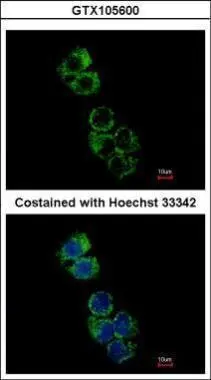
Immunofluorescence analysis of methanol-fixed Hep G2, using GSTA1 / GSTA2 / GSTA3 antibody (GTX105600) at 1:500 dilution.
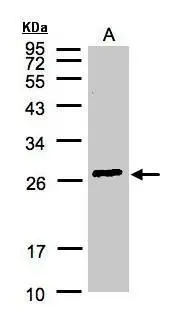
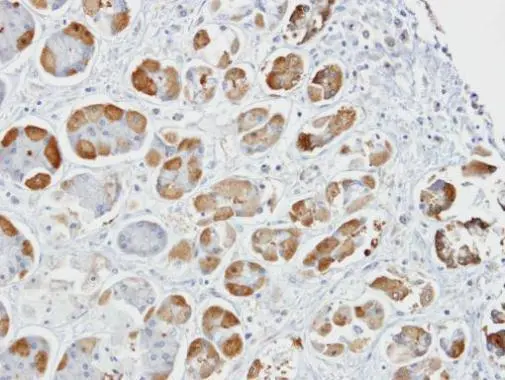
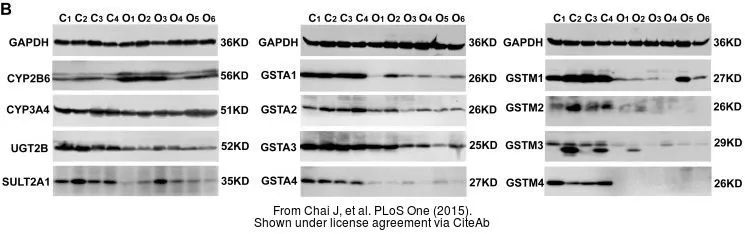
Immunofluorescence analysis of methanol-fixed Hep G2, using GSTA1 / GSTA2 / GSTA3 antibody (GTX105600) at 1:500 dilution.
GSAT1 / GSAT2 / GSAT3 antibody
GTX105600

ApplicationsImmunoFluorescence, Western Blot, ImmunoCytoChemistry, ImmunoHistoChemistry, ImmunoHistoChemistry Paraffin
Product group Antibodies
ReactivityHuman, Rat
TargetGSTA2
Overview
- SupplierGeneTex
- Product NameGSAT1 / GSAT2 / GSAT3 antibody
- Delivery Days Customer9
- Application Supplier NoteWB: 1:500-1:3000. ICC/IF: 1:100-1:1000. IHC-P: 1:100-1:1000. *Optimal dilutions/concentrations should be determined by the researcher.Not tested in other applications.
- ApplicationsImmunoFluorescence, Western Blot, ImmunoCytoChemistry, ImmunoHistoChemistry, ImmunoHistoChemistry Paraffin
- CertificationResearch Use Only
- ClonalityPolyclonal
- Concentration1 mg/ml
- ConjugateUnconjugated
- Gene ID2939
- Target nameGSTA2
- Target descriptionglutathione S-transferase alpha 2
- Target synonymsGST2, GSTA2-2, GTA2, GTH2, glutathione S-transferase A2, GST HA subunit 2, GST class-alpha member 2, GST-gamma, S-(hydroxyalkyl)glutathione lyase A2, glutathione S-alkyltransferase A2, glutathione S-aralkyltransferase A2, glutathione S-aryltransferase A2, liver GST2, testis tissue sperm-binding protein Li 59n
- HostRabbit
- IsotypeIgG
- Protein IDP09210
- Protein NameGlutathione S-transferase A2
- Scientific DescriptionCytosolic and membrane-bound forms of glutathione S-transferase are encoded by two distinct supergene families. These enzymes function in the detoxification of electrophilic compounds, including carcinogens, therapeutic drugs, environmental toxins and products of oxidative stress, by conjugation with glutathione. The genes encoding these enzymes are known to be highly polymorphic. These genetic variations can change an individuals susceptibility to carcinogens and toxins as well as affect the toxicity and efficacy of some drugs. At present, eight distinct classes of the soluble cytoplasmic mammalian glutathione S-transferases have been identified: alpha, kappa, mu, omega, pi, sigma, theta and zeta. This gene encodes a glutathione S-tranferase belonging to the alpha class. The alpha class genes, located in a cluster mapped to chromosome 6, are the most abundantly expressed glutathione S-transferases in liver. In addition to metabolizing bilirubin and certain anti-cancer drugs in the liver, the alpha class of these enzymes exhibit glutathione peroxidase activity thereby protecting the cells from reactive oxygen species and the products of peroxidation. [provided by RefSeq]
- ReactivityHuman, Rat
- Storage Instruction-20°C or -80°C,2°C to 8°C
- UNSPSC41116161
Datasheet
Related products
Product group Antibodies

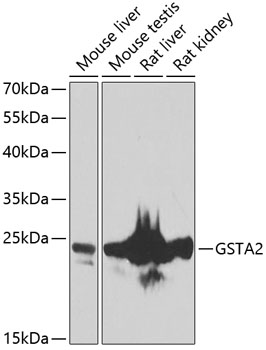
Anti-GSTA2 AntibodyA10192
ApplicationsWestern Blot
ReactivityHuman, Mouse, Rat
- SizePrice
Product group Antibodies

Anti-GSTA2 Antibody144-07678
ApplicationsWestern Blot, ImmunoHistoChemistry
ReactivityHuman, Mouse, Rat
TargetGSTA2
- SizePrice
Product group Antibodies

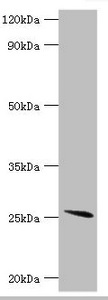
GSTA2 AntibodyCSB-PA009971ESR2HU
ApplicationsWestern Blot, ELISA, ImmunoHistoChemistry
ReactivityHuman, Mouse
TargetGSTA2
- SizePrice
Product group Antibodies

ApplicationsImmunoPrecipitation, Western Blot, ImmunoCytoChemistry, ImmunoHistoChemistry
TargetGSTA2
- SizePrice
Product group Antibodies

GSTA2 AntibodyLS-C401388
ApplicationsELISA, ImmunoHistoChemistry
ReactivityHuman
TargetGSTA2
- SizePrice
Product group Antibodies
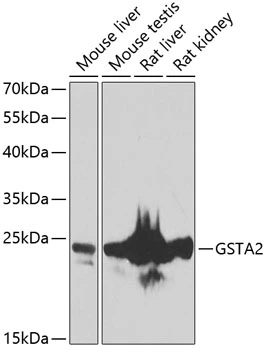
GSTA2 antibodyGTX55651
ApplicationsWestern Blot, ImmunoHistoChemistry, ImmunoHistoChemistry Paraffin
ReactivityHuman, Mouse, Rat
TargetGSTA2
- SizePrice
Product group Antibodies

Anti-GSTA2 AntibodyCAB7678
ApplicationsWestern Blot, ELISA
ReactivityHuman
TargetGSTA2
- SizePrice