

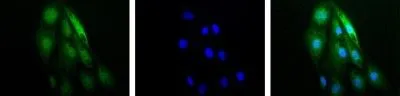
ICC/IF analysis of RCC4 cells using GTX30647 HIF1 alpha antibody. Green : primary antibody Blue : Hoechst 33258
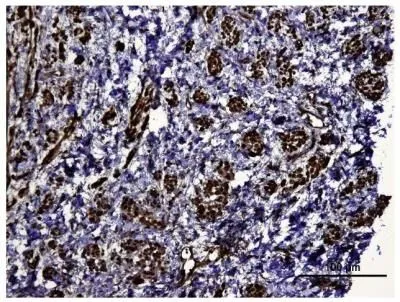
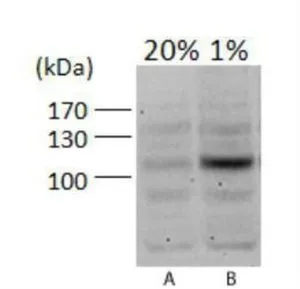
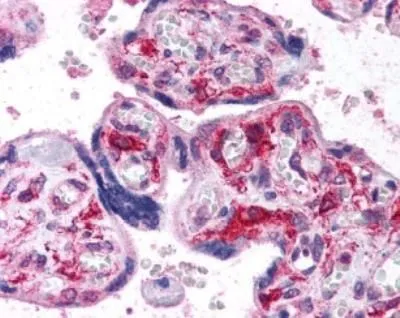
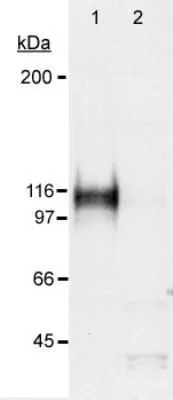
ICC/IF analysis of RCC4 cells using GTX30647 HIF1 alpha antibody. Green : primary antibody Blue : Hoechst 33258
HIF1 alpha antibody
GTX30647

ApplicationsFlow Cytometry, ImmunoFluorescence, ImmunoPrecipitation, Western Blot, ChIP Chromatin ImmunoPrecipitation, ImmunoCytoChemistry, ImmunoHistoChemistry, ImmunoHistoChemistry Frozen, ImmunoHistoChemistry Paraffin
Product group Antibodies
ReactivityGoat, Hamster, Human, Monkey, Mouse, Primate, Rabbit, Rat
TargetHif1a
Overview
- SupplierGeneTex
- Product NameHIF1 alpha antibody
- Delivery Days Customer9
- Application Supplier NoteWB: 1:500 - 1:2000. ICC/IF: 1:100. IHC-P: 5 - 10 microg/ml. IHC-Fr: 5 - 10 microg/ml. FACS: 1:10 - 1:1000. IP: 1:10 - 1:500. ChIP assay: 1:10 - 1:500. *Optimal dilutions/concentrations should be determined by the researcher.Not tested in other applications.
- ApplicationsFlow Cytometry, ImmunoFluorescence, ImmunoPrecipitation, Western Blot, ChIP Chromatin ImmunoPrecipitation, ImmunoCytoChemistry, ImmunoHistoChemistry, ImmunoHistoChemistry Frozen, ImmunoHistoChemistry Paraffin
- CertificationResearch Use Only
- ClonalityPolyclonal
- Concentration1 mg/ml
- ConjugateUnconjugated
- Gene ID15251
- Target nameHif1a
- Target descriptionhypoxia inducible factor 1, alpha subunit
- Target synonymsHIF-1-alpha, HIF1-alpha, HIF1alpha, MOP1, bHLHe78, hypoxia-inducible factor 1-alpha, ARNT-interacting protein
- HostRabbit
- IsotypeIgG
- Protein IDQ61221
- Protein NameHypoxia-inducible factor 1-alpha
- Scientific DescriptionFunctions as a master transcriptional regulator of the adaptive response to hypoxia. Under hypoxic conditions activates the transcription of over 40 genes, including, erythropoietin, glucose transporters, glycolytic enzymes, vascular endothelial growth factor, and other genes whose protein products increase oxygen delivery or facilitate metabolic adaptation to hypoxia. Plays an essential role in embryonic vascularization, tumor angiogenesis and pathophysiology of ischemic disease. Binds to core DNA sequence 5-[AG]CGTG-3 within the hypoxia response element (HRE) of target gene promoters. Activation requires recruitment of transcriptional coactivators such as CREBPB and EP300. Activity is enhanced by interaction with both, NCOA1 or NCOA2. Interaction with redox regulatory protein APEX seems to activate CTAD and potentiates activation by NCOA1 and CREBBP.
- ReactivityGoat, Hamster, Human, Monkey, Mouse, Primate, Rabbit, Rat
- Storage Instruction2°C to 8°C
- UNSPSC12352203
References
- Zeng H, He X, Chen JX. Endothelial Sirtuin 3 Dictates Glucose Transport to Cardiomyocyte and Sensitizes Pressure Overload-Induced Heart Failure. J Am Heart Assoc. 2020,9(11):e015895. doi: 10.1161/JAHA.120.015895Read this paper
- Jing L, Li S, Li Q. Akt/hypoxia-inducible factor-1α signaling deficiency compromises skin wound healing in a type 1 diabetes mouse model. Exp Ther Med. 2015,9(6):2141-2146.Read this paper
- Weir L, Robertson D, Leigh IM, et al. Hypoxia-mediated control of HIF/ARNT machinery in epidermal keratinocytes. Biochim Biophys Acta. 2011,1813(1):60-72. doi: 10.1016/j.bbamcr.2010.11.014Read this paper
Datasheet
Related products
Product group Antibodies

ApplicationsImmunoPrecipitation, Western Blot, ImmunoCytoChemistry, ImmunoHistoChemistry
ReactivityMouse, Rat
TargetHif1a
- SizePrice