

HMGB1 ELISA Kit (Human)
OKCD04074

ReactivityHuman
Product group Assays
Overview
- SupplierAviva Systems Biology
- Product NameHMGB1 ELISA Kit (Human)
- Delivery Days Customer23
- Application Supplier NoteAssay Methodology: Quantitative Sandwich ELISA
- ApplicationsELISA
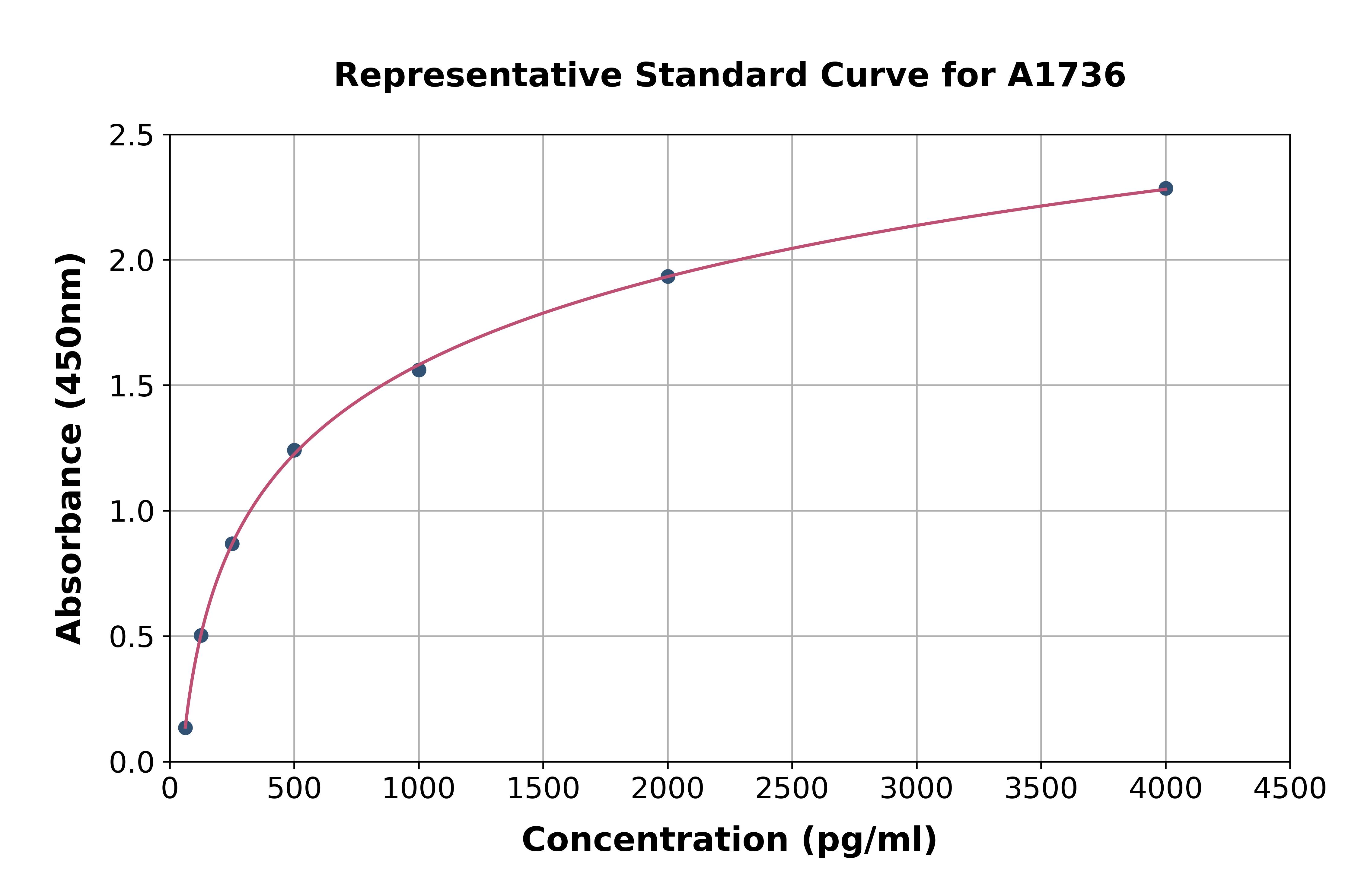
- Assay Detection Range62.5-4,000pg/mL
- Assay Sensitivity28.3 pg/mL
- Assay Test PrincipleThe test principle applied in this kit is Sandwich enzyme immunoassay. The microtiter plate provided in this kit has been pre-coated with an antibody specific to High Mobility Group Protein 1 (HMGB1). Standards or samples are then added to the...
- Assay Time3h
- CertificationResearch Use Only
- Scientific DescriptionMultifunctional redox sensitive protein with various roles in different cellular compartments. In the nucleus is one of the major chromatin-associated non-histone proteins and acts as a DNA chaperone involved in replication, transcription, chromatin remodeling, V(D)J recombination, DNA repair and genome stability. Proposed to be an universal biosensor for nucleic acids. Promotes host inflammatory response to sterile and infectious signals and is involved in the coordination and integration of innate and adaptive immune responses. In the cytoplasm functions as sensor and/or chaperone for immunogenic nucleic acids implicating the activation of TLR9-mediated immune responses, and mediates autophagy. Acts as danger associated molecular pattern (DAMP) molecule that amplifies immune responses during tissue injury (PubMed:27362237). Released to the extracellular environment can bind DNA, nucleosomes, IL-1 beta, CXCL12, AGER isoform 2/sRAGE, lipopolysaccharide (LPS) and lipoteichoic acid (LTA), and activates cells through engagement of multiple surface receptors. In the extracellular compartment fully reduced HMGB1 (released by necrosis) acts as a chemokine, disulfide HMGB1 (actively secreted) as a cytokine, and sulfonyl HMGB1 (released from apoptotic cells) promotes immunological tolerance (PubMed:23519706, PubMed:23446148, PubMed:23994764, PubMed:25048472). Has proangiogdenic activity (By similarity). May be involved in platelet activation (By similarity). Binds to phosphatidylserine and phosphatidylethanolamide (By similarity). Bound to RAGE mediates signaling for neuronal outgrowth (By similarity). May play a role in accumulation of expanded polyglutamine (polyQ) proteins such as huntingtin (HTT) or TBP (PubMed:23303669, PubMed:25549101).
- ReactivityHuman
- Storage Instruction-20°C,2°C to 8°C
- UNSPSC41116100
- SpeciesHuman
Related products
Product group Assays

Assay Sample TypeSerum, plasma and other biological fluids.
ReactivityHuman
- SizePrice
Product group Assays

ReactivityMouse
- SizePrice
Product group Assays

Dog High mobility group protein B1(HMGB1) ELISA kitCSB-EL010553DO
ReactivityCanine
- SizePrice
Product group Assays

Assay Sample TypeSerum, plasma, tissue homogenates and other biological fluids
ReactivityHuman
- SizePrice

Product group Assays

Human HMGB1 ELISA KitHUFI00660
Assay Sample TypeSerum, Plasma
ReactivityHuman
- SizePrice