

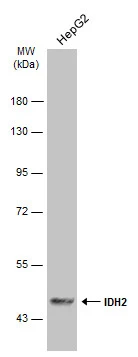
Whole cell extract (30 μg) was separated by 7.5% SDS-PAGE, and the membrane was blotted with IDH2 antibody (GTX133078) diluted at 1:1000. The HRP-conjugated anti-rabbit IgG antibody (GTX213110-01) was used to detect the primary antibody.

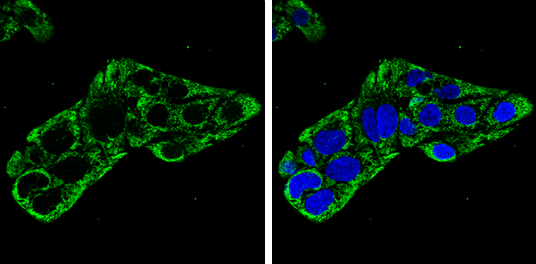
Whole cell extract (30 μg) was separated by 7.5% SDS-PAGE, and the membrane was blotted with IDH2 antibody (GTX133078) diluted at 1:1000. The HRP-conjugated anti-rabbit IgG antibody (GTX213110-01) was used to detect the primary antibody.
IDH2 antibody
GTX133078

ApplicationsImmunoFluorescence, Western Blot, ImmunoCytoChemistry
Product group Antibodies
ReactivityHuman
TargetIDH2
Overview
- SupplierGeneTex
- Product NameIDH2 antibody
- Delivery Days Customer9
- Application Supplier NoteWB: 1:500-1:3000. ICC/IF: 1:100-1:1000. *Optimal dilutions/concentrations should be determined by the researcher.Not tested in other applications.
- ApplicationsImmunoFluorescence, Western Blot, ImmunoCytoChemistry
- CertificationResearch Use Only
- ClonalityPolyclonal
- Concentration1.33 mg/ml
- ConjugateUnconjugated
- Gene ID3418
- Target nameIDH2
- Target descriptionisocitrate dehydrogenase (NADP(+)) 2
- Target synonymsD2HGA2, ICD-M, IDH, IDH-2, IDHM, IDP, IDPM, mNADP-IDH, isocitrate dehydrogenase [NADP], mitochondrial, NADP(+)-specific ICDH, isocitrate dehydrogenase (NADP(+)) 2, mitochondrial, isocitrate dehydrogenase 2 (NADP+), mitochondrial, oxalosuccinate decarboxylase
- HostRabbit
- IsotypeIgG
- Protein IDP48735
- Protein NameIsocitrate dehydrogenase [NADP], mitochondrial
- Scientific DescriptionIsocitrate dehydrogenases catalyze the oxidative decarboxylation of isocitrate to 2-oxoglutarate. These enzymes belong to two distinct subclasses, one of which utilizes NAD(+) as the electron acceptor and the other NADP(+). Five isocitrate dehydrogenases have been reported: three NAD(+)-dependent isocitrate dehydrogenases, which localize to the mitochondrial matrix, and two NADP(+)-dependent isocitrate dehydrogenases, one of which is mitochondrial and the other predominantly cytosolic. Each NADP(+)-dependent isozyme is a homodimer. The protein encoded by this gene is the NADP(+)-dependent isocitrate dehydrogenase found in the mitochondria. It plays a role in intermediary metabolism and energy production. This protein may tightly associate or interact with the pyruvate dehydrogenase complex. [provided by RefSeq]
- ReactivityHuman
- Storage Instruction-20°C or -80°C,2°C to 8°C
- UNSPSC41116161
Datasheet
Related products
Product group Antibodies

Anti-IDH2 AntibodyA98086
ApplicationsWestern Blot, ELISA
ReactivityHuman, Mouse, Rat
- SizePrice
Product group Antibodies

Anti-IDH2 Antibody144-07190
ApplicationsImmunoFluorescence, ImmunoPrecipitation, Western Blot, ChIP Chromatin ImmunoPrecipitation, ImmunoHistoChemistry
ReactivityHuman, Mouse, Rat
TargetIDH2
- SizePrice
Product group Antibodies

IDH2 Recombinant Antibody, Biotin ConjugatedBSM-61585R-BIOTIN
ApplicationsWestern Blot, ImmunoHistoChemistry, ImmunoHistoChemistry Frozen, ImmunoHistoChemistry Paraffin
ReactivityHuman, Mouse, Rat
TargetIDH2
- SizePrice
Product group Antibodies

IDH2 AntibodyCSB-PA010990ESR1HU
ApplicationsWestern Blot, ELISA, ImmunoHistoChemistry
ReactivityHuman
TargetIDH2
- SizePrice
Product group Antibodies

Goat anti-IDH2EB10529
ApplicationsWestern Blot, ELISA, ImmunoHistoChemistry
ReactivityBovine, Canine, Human, Mouse, Porcine, Rat
TargetIDH2
- SizePrice
Product group Antibodies

ApplicationsWestern Blot, ImmunoHistoChemistry
ReactivityPorcine
TargetIDH2
- SizePrice
Product group Antibodies

IDH2 AntibodyLS-C401765
ApplicationsWestern Blot, ELISA, ImmunoHistoChemistry
ReactivityHuman, Mouse, Rat
TargetIDH2
- SizePrice
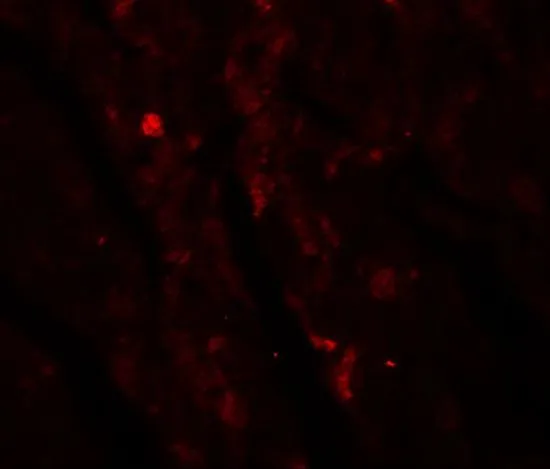
Product group Antibodies
IDH2 antibodyGTX17090
ApplicationsWestern Blot, ELISA, ImmunoHistoChemistry, ImmunoHistoChemistry Paraffin
ReactivityHuman, Mouse, Rat
TargetIDH2
- SizePrice
![IDH2 antibody [GT673] detects IDH2 protein by western blot analysis. A. 50 μg mouse brain lysate/extract 10% SDS-PAGE IDH2 antibody [GT673] (GTX628487) dilution: 1:1000 The HRP-conjugated anti-mouse IgG antibody (GTX213111-01) was used to detect the primary antibody.](https://www.genetex.com/upload/website/prouct_img/normal/GTX628487/GTX628487_41148_WB_M_brain_w_23061202_695.webp)
Product group Antibodies
IDH2 antibody [GT673]GTX628487
ApplicationsImmunoFluorescence, Western Blot, ImmunoCytoChemistry, ImmunoHistoChemistry, ImmunoHistoChemistry Paraffin
ReactivityHuman, Mouse, Rat
TargetIDH2
- SizePrice
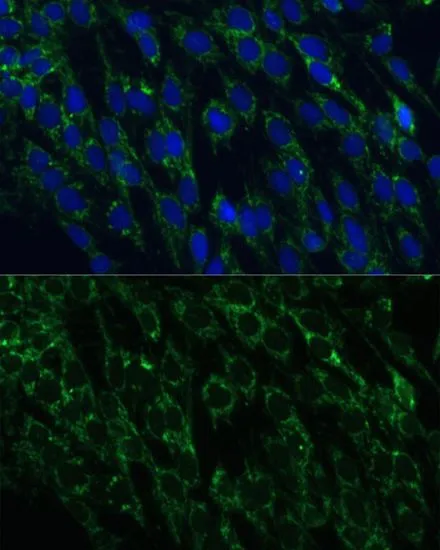
Product group Antibodies
IDH2 antibodyGTX32666
ApplicationsImmunoFluorescence, ImmunoPrecipitation, Western Blot, ChIP Chromatin ImmunoPrecipitation, ImmunoCytoChemistry, ImmunoHistoChemistry, ImmunoHistoChemistry Paraffin
ReactivityHuman, Mouse, Rat
TargetIDH2
- SizePrice