

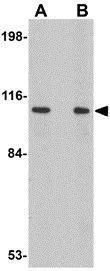
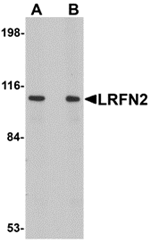
WB analysis of rat brain tissue lysate using GTX85344 LRFN2 antibody. Working concentration : (A) 1 and (B) 2 μg/ml
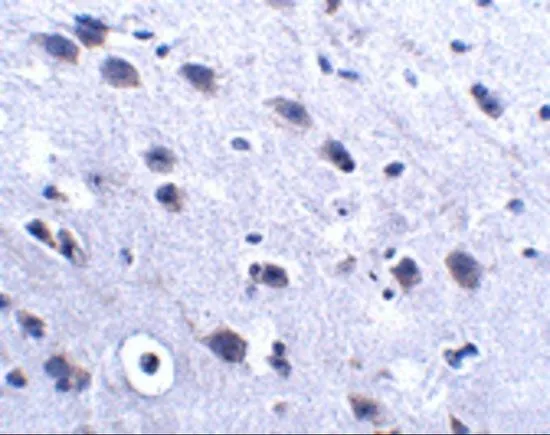
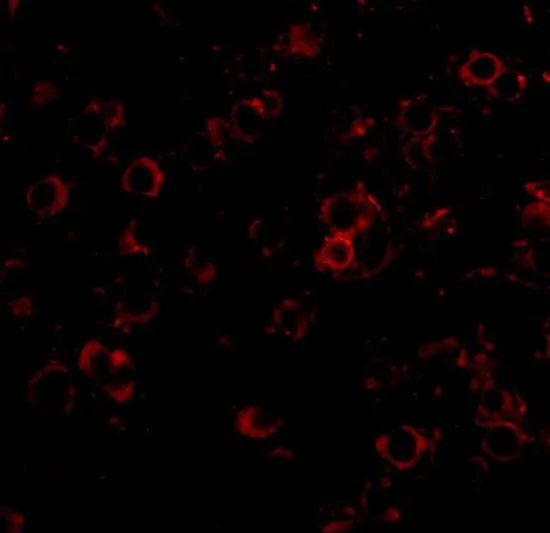
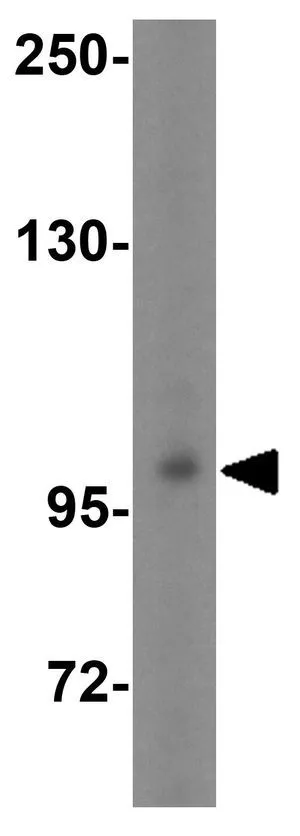
WB analysis of rat brain tissue lysate using GTX85344 LRFN2 antibody. Working concentration : (A) 1 and (B) 2 μg/ml
LRFN2 antibody
GTX85344

ApplicationsWestern Blot, ELISA, ImmunoHistoChemistry, ImmunoHistoChemistry Paraffin
Product group Antibodies
ReactivityHuman, Mouse, Rat
TargetLRFN2
Overview
- SupplierGeneTex
- Product NameLRFN2 antibody
- Delivery Days Customer9
- Application Supplier NoteWB: 1 microg/mL. IHC-P: 2.5 microg/mL. *Optimal dilutions/concentrations should be determined by the researcher.Not tested in other applications.
- ApplicationsWestern Blot, ELISA, ImmunoHistoChemistry, ImmunoHistoChemistry Paraffin
- CertificationResearch Use Only
- ClonalityPolyclonal
- Concentration1 mg/ml
- ConjugateUnconjugated
- Gene ID57497
- Target nameLRFN2
- Target descriptionleucine rich repeat and fibronectin type III domain containing 2
- Target synonymsFIGLER2, KIAA1246, SALM1, leucine-rich repeat and fibronectin type-III domain-containing protein 2, fibronectin type III, immunoglobulin and leucine rich repeat domains 2, synaptic adhesion-like molecule 1
- HostRabbit
- IsotypeIgG
- Protein IDQ9ULH4
- Protein NameLeucine-rich repeat and fibronectin type-III domain-containing protein 2
- Scientific DescriptionLRFN2 is one of a family of five transmembrane glycoproteins that are highly expressed in neuronal tissues. LRFN proteins share leucine-rich repeat (LRR)-immunoglobulin-like (Ig)-fibronectin type III (Fn)-transmembrane domain structure with other members of the LRR-Ig-Fn protein superfamily such as the Slitrk family of proteins. Expression of LRFN1, -3, and -4 mRNA was detected in embryonic neuronal cells, while Lrfn2 and Lrfn5 expression was primarily restricted to more mature cells. LRFN1, -2, and -4 bound to PDZ domains of postsynaptic PSD95, re-distributing PSD95 to the cell periphery. It has been suggested that the Lrfn proteins play a role in the developing and/or mature vertebrate nervous system. At least two isoforms of LRFN2 are known to exist. This antibody is predicted to not cross-react with other members of the LRFN family.
- ReactivityHuman, Mouse, Rat
- Storage Instruction-20°C or -80°C,2°C to 8°C
- UNSPSC12352203
Datasheet
Related products
Product group Antibodies

Anti-LRFN2 (C-term) Antibody102-22799
ApplicationsWestern Blot
TargetLRFN2
- SizePrice
Product group Antibodies

Anti-LRFN2 AntibodyA47988
ApplicationsWestern Blot, ELISA, ImmunoHistoChemistry
ReactivityHuman, Mouse, Rat
- SizePrice
Product group Antibodies

LRFN2 Antibody (aa630-659)LS-C160068
ApplicationsWestern Blot
ReactivityHuman
TargetLRFN2
- SizePrice

Product group Antibodies

Anti-LRFN2 AntibodyHPA076660
ApplicationsImmunoCytoChemistry, ImmunoHistoChemistry
ReactivityHuman
TargetLRFN2
- SizePrice