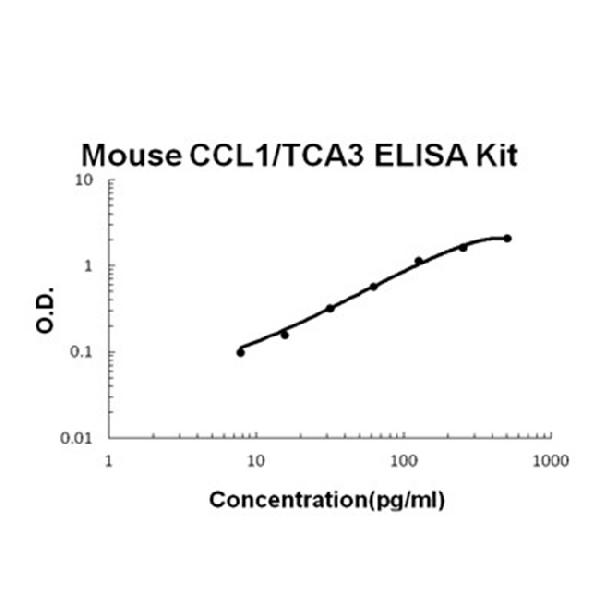
Mouse CCL1/TCA3 PicoKine ELISA Kit standard curve
Mouse CCL1/TCA3 PicoKine ELISA Kit standard curve
Mouse CCL1/I 309 ELISA Kit PicoKine(r)
EK0566

ReactivityMouse
Product group Assays
Overview
- SupplierBoster Bio
- Product NameMouse CCL1/I 309 ELISA Kit PicoKine(r)
- Delivery Days Customer9
- ApplicationsELISA
- Applications SupplierELI
- Assay Detection Range7.8 pg/ml - 500 pg/ml
- Assay Sensitivity<1 pg/ml
- Assay Time15-20
- CertificationResearch Use Only
- Scientific DescriptionMouse CCL1/I 309 ELISA Kit PicoKine® (96 Tests). Quantitate Mouse Ccl1 in cell culture supernatants, cell lysates, serum and plasma (heparin, EDTA). Sensitivity: 1pg/ml. The brand Picokine indicates this is a premium quality ELISA kit. Each Picokine kit delivers precise quantification, high sensitivity, and excellent reproducibility. Only our most reliable and effective kits qualify as Picokine, guaranteeing top-tier results for your assays.
- ReactivityMouse
- Reactivity SupplierMouse CCL1
- Storage Instruction-20°C,2°C to 8°C
- UNSPSC41116158
References
- Christie JD, Appel N, Canter H, et al. Systemic delivery of TNF-armed myxoma virus plus immune checkpoint inhibitor eliminates lung metastatic mouse osteosarcoma. Mol Ther Oncolytics. 2021,22:539-554. doi: 10.1016/j.omto.2021.07.014Read this paper
- Yuan P , Luo Y , et al. A "sandwich" cell culture platform with NIR-responsive dynamic stiffness to modulate macrophage phenotypes. Biomater Sci. 2021,9(7):2553-2561. doi: 10.1039/d0bm02194fRead this paper
- Liu W, Zeng A, Tang H, et al. Blockage of C-C Chemokine Ligand 2 Alleviated the Appendicitis-Induced Injury in Rabbit Model. J Interferon Cytokine Res. 2020,40(9):446-453. doi: 10.1089/jir.2020.0050Read this paper
- Zheng X, Xin L, Luo Y, et al. Near-Infrared-Triggered Dynamic Surface Topography for Sequential Modulation of Macrophage Phenotypes. ACS Appl Mater Interfaces. 2019,11(46):43689-43697. doi: 10.1021/acsami.9b14808Read this paper
- Yousefipour Z, Chug N, Marek K, et al. Contribution of PPARγ in modulation of acrolein-induced inflammatory signaling in gp91(phox) knock-out mice. Biochem Cell Biol. 2017,95(4):482-490. doi: 10.1139/bcb-2016-0198Read this paper
Datasheet
MSDS
Related products
Product group Assays

ReactivityHuman, Mouse
- SizePrice

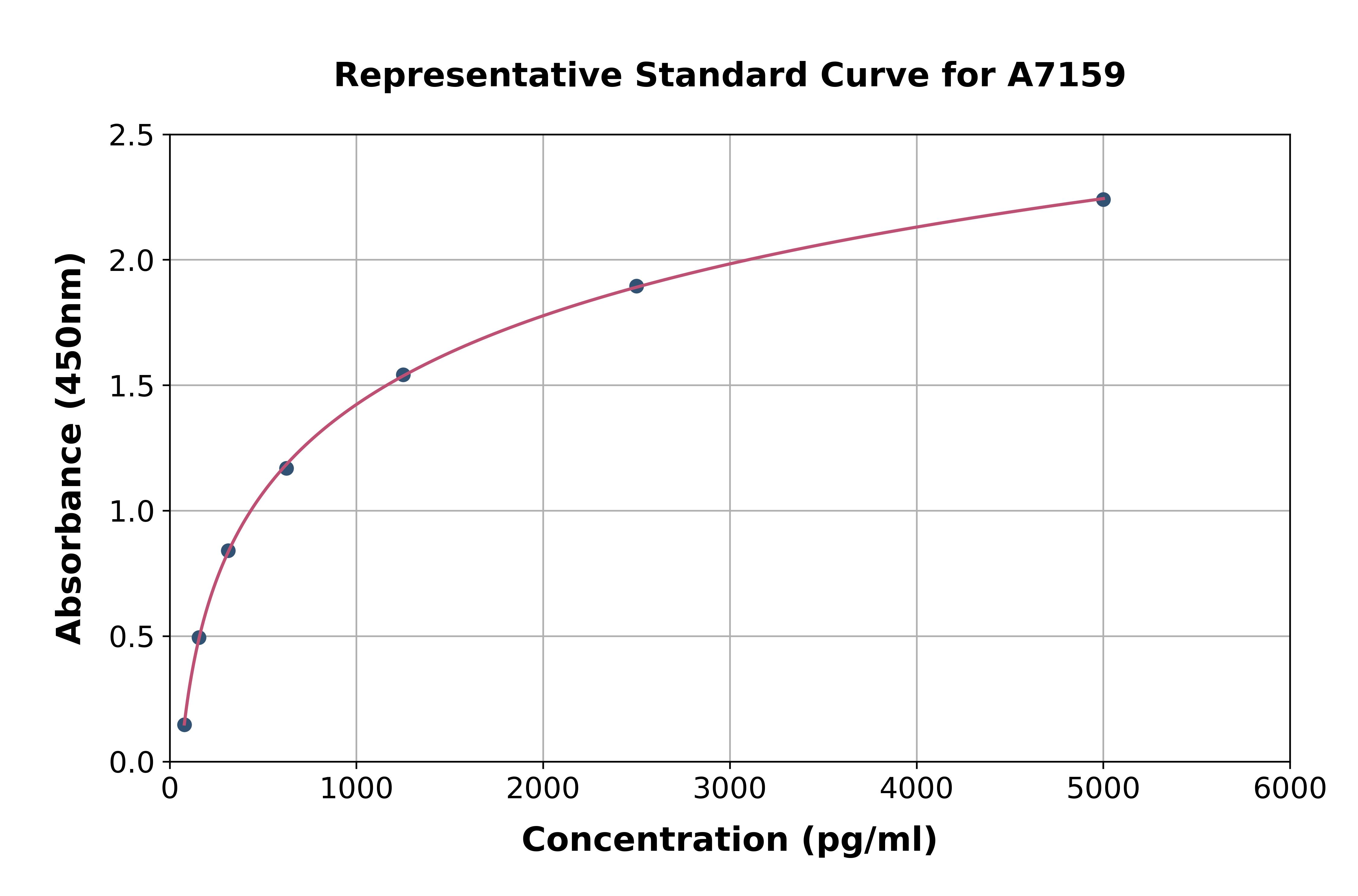
Product group Assays

Human CCL1 ELISA KitA7159
Assay Sample TypeSerum, plasma, tissue homogenates, cell lysates, cell culture supernates and other biological fluids.
ReactivityHuman
- SizePrice
Product group Assays

ReactivityHuman
- SizePrice
Product group Assays

ReactivityHuman
- SizePrice
Product group Assays

ReactivityMouse
- SizePrice
Product group Assays

Assay Sample TypeSerum, Plasma, Tissue Homogenates, Cell Lysates, Cell Culture Supernatants And Other Biological Fluids
ReactivityHuman
- SizePrice