

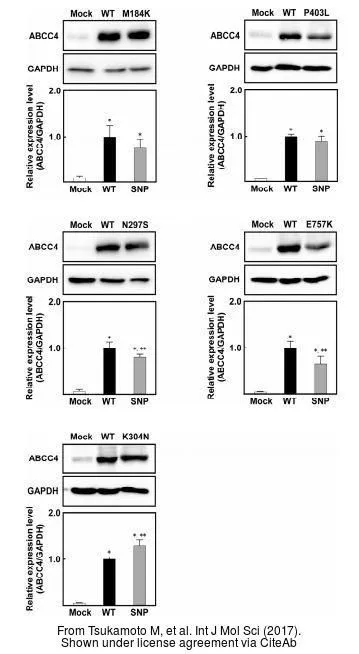
The data was published in the journal Int J Mol Sci in 2017.
The data was published in the journal Int J Mol Sci in 2017.
MRP4 antibody [M4I-10]
GTX15602

ApplicationsFlow Cytometry, ImmunoFluorescence, Western Blot, ImmunoCytoChemistry, ImmunoHistoChemistry, ImmunoHistoChemistry Frozen
Product group Antibodies
ReactivityHuman, Mouse
TargetABCC4
Overview
- SupplierGeneTex
- Product NameMRP4 antibody [M4I-10]
- Delivery Days Customer9
- Application Supplier NoteFACS: Use at a dilution of 1/20 - 1/50. ICC: Use at a dilution of 1/20 - 1/50. IHC-Fr (acetone fixed): Use at a dilution of 1/20. WB: Use at an assay dependent dilution. Predicted molecular weight: 159 kDa. Optimal dilutions/concentrations should be determined by the end user.
- ApplicationsFlow Cytometry, ImmunoFluorescence, Western Blot, ImmunoCytoChemistry, ImmunoHistoChemistry, ImmunoHistoChemistry Frozen
- CertificationResearch Use Only
- ClonalityMonoclonal
- Clone IDM4I-10
- Concentration0.15 mg/ml
- ConjugateUnconjugated
- Gene ID10257
- Target nameABCC4
- Target descriptionATP binding cassette subfamily C member 4 (PEL blood group)
- Target synonymsMOAT-B, MOATB, MRP4, ATP-binding cassette sub-family C member 4, MRP/cMOAT-related ABC transporter, bA464I2.1 (ATP-binding cassette, sub-family C (CFTR/MRP), member 4), canalicular multispecific organic anion transporter (ABC superfamily), multi-specific organic anion transporter B, multidrug resistance-associated protein 4
- HostRat
- IsotypeIgG2a
- Protein IDO15439
- Protein NameATP-binding cassette sub-family C member 4
- Scientific DescriptionThe protein encoded by this gene is a member of the superfamily of ATP-binding cassette (ABC) transporters. ABC proteins transport various molecules across extra- and intra-cellular membranes. ABC genes are divided into seven distinct subfamilies (ABC1, MDR/TAP, MRP, ALD, OABP, GCN20, White). This protein is a member of the MRP subfamily which is involved in multi-drug resistance. This family member plays a role in cellular detoxification as a pump for its substrate, organic anions. It may also function in prostaglandin-mediated cAMP signaling in ciliogenesis. Alternative splicing of this gene results in multiple transcript variants. [provided by RefSeq, Sep 2014]
- ReactivityHuman, Mouse
- Storage Instruction-20°C or -80°C,2°C to 8°C
- UNSPSC12352203
References
- Mariscal J, Vagner T, Kim M, et al. Comprehensive palmitoyl-proteomic analysis identifies distinct protein signatures for large and small cancer-derived extracellular vesicles. J Extracell Vesicles. 2020,9(1):1764192. doi: 10.1080/20013078.2020.1764192Read this paper
- Tsukamoto M, Yamashita M, Nishi T, et al. A Human ABC Transporter ABCC4 Gene SNP (rs11568658, 559 G > T, G187W) Reduces ABCC4-Dependent Drug Resistance. Cells. 2019,8(1). doi: 10.3390/cells8010039Read this paper
- Tsukamoto M, Sato S, Satake K, et al. Quantitative Evaluation of Drug Resistance Profile of Cells Expressing Wild-Type or Genetic Polymorphic Variants of the Human ABC Transporter ABCC4. Int J Mol Sci. 2017,18(7). doi: 10.3390/ijms18071435Read this paper
- Hazen M, Bhakta S, Vij R, et al. An improved and robust DNA immunization method to develop antibodies against extracellular loops of multi-transmembrane proteins. MAbs. 2014,6(1):95-107.Read this paper
- Bebes A, Kis K, Nagy T, et al. The expressions of ABCC4 and ABCG2 xenobiotic transporters in human keratinocytes are proliferation-related. Arch Dermatol Res. 2012,304(1):57-63. doi: 10.1007/s00403-011-1174-4Read this paper
- Pelis RM, Shahidullah M, Ghosh S, et al. Localization of multidrug resistance-associated protein 2 in the nonpigmented ciliary epithelium of the eye. J Pharmacol Exp Ther. 2009,329(2):479-85. doi: 10.1124/jpet.108.149625Read this paper
Datasheet
Related products
Product group Antibodies

Anti-ABCC4 Antibody144-02198
ApplicationsImmunoFluorescence, Western Blot, ImmunoHistoChemistry
ReactivityHuman, Mouse, Rat
TargetABCC4
- SizePrice
Product group Antibodies

ApplicationsImmunoPrecipitation, Western Blot, ImmunoCytoChemistry, ImmunoHistoChemistry
ReactivityMouse, Rat
TargetABCC4
- SizePrice
Product group Antibodies

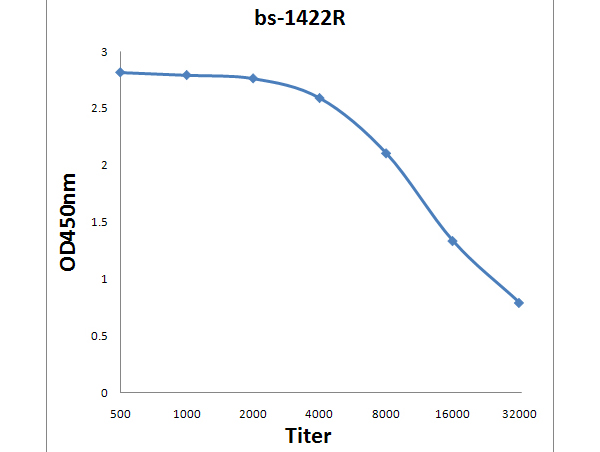
MRP4/ABCC4 Polyclonal AntibodyBS-1422R
ApplicationsImmunoFluorescence, ELISA, ImmunoHistoChemistry, ImmunoHistoChemistry Frozen, ImmunoHistoChemistry Paraffin
ReactivityBovine, Chicken, Equine, Guinea Pig, Human, Mouse, Porcine, Rabbit, Rat, Other Species
TargetABCC4
- SizePrice
Product group Antibodies

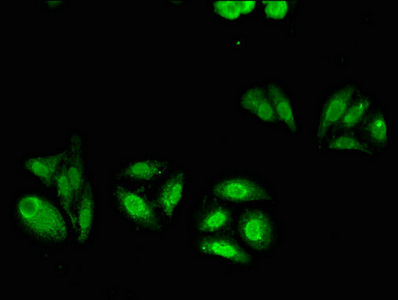
ABCC4 AntibodyCSB-PA001063LA01HU
ApplicationsImmunoFluorescence, ELISA
ReactivityHuman
TargetABCC4
- SizePrice

Product group Antibodies

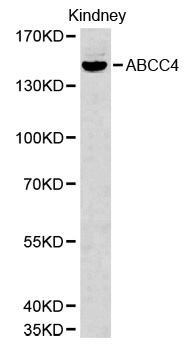
Anti-ABCC4 AntibodyA37588
ApplicationsWestern Blot, ImmunoHistoChemistry
ReactivityHuman, Mouse, Rat
- SizePrice
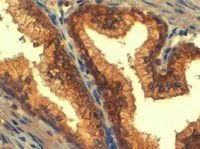
Product group Antibodies
MRP4 antibody, C-termGTX89659
ApplicationsImmunoFluorescence, Western Blot, ImmunoCytoChemistry, ImmunoHistoChemistry, ImmunoHistoChemistry Paraffin
ReactivityHuman, Mouse
TargetABCC4
- SizePrice
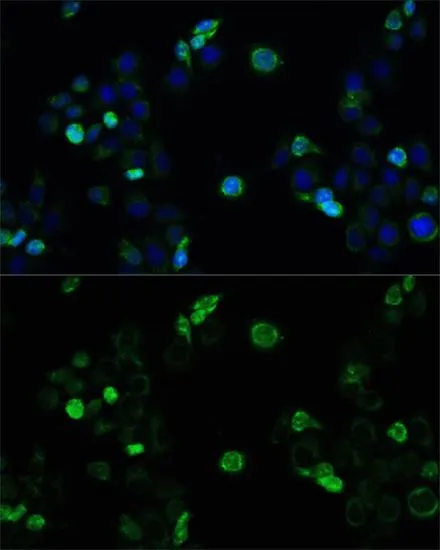
Product group Antibodies
MRP4 antibodyGTX30016
ApplicationsImmunoFluorescence, Western Blot, ImmunoCytoChemistry, ImmunoHistoChemistry, ImmunoHistoChemistry Paraffin
ReactivityHuman, Mouse, Rat
TargetABCC4
- SizePrice

Product group Antibodies

Anti-ABCC4 AntibodyHPA002476
ApplicationsImmunoHistoChemistry
ReactivityHuman
TargetABCC4
- SizePrice
Product group Antibodies
MRP4 antibody [M4I-80]GTX15598
ApplicationsImmunoFluorescence, Western Blot, ImmunoCytoChemistry, ImmunoHistoChemistry, ImmunoHistoChemistry Frozen
ReactivityHuman, Mouse
TargetABCC4
- SizePrice