

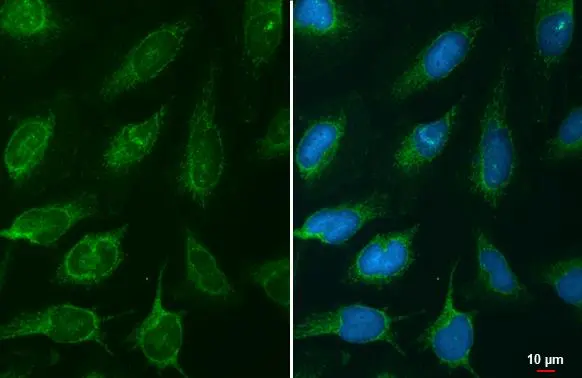
NNT antibody detects NNT protein at mitochondria by immunofluorescent analysis. Sample: HeLa cells were fixed in ice-cold MeOH for 5 min. Green: NNT stained by NNT antibody (GTX103015) diluted at 1:500.
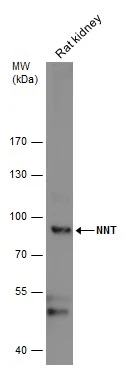
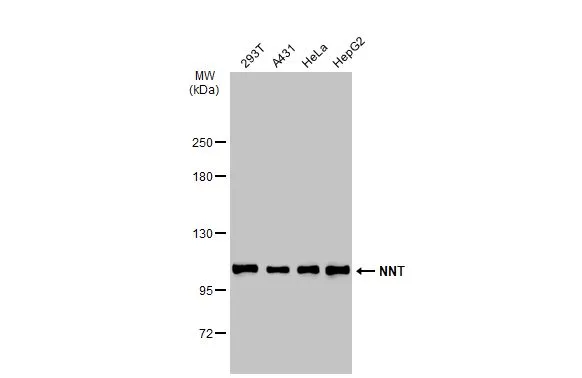
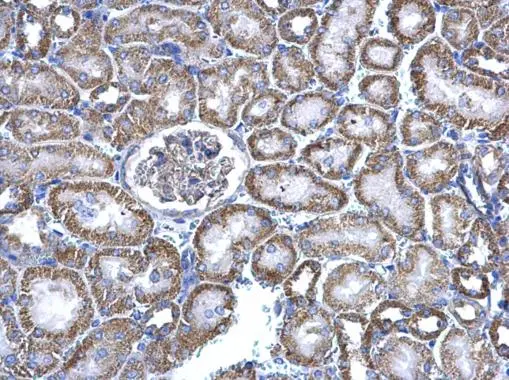
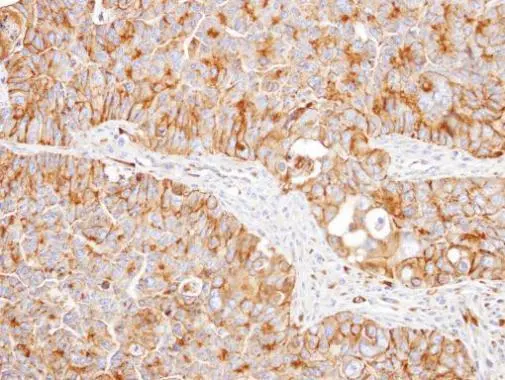
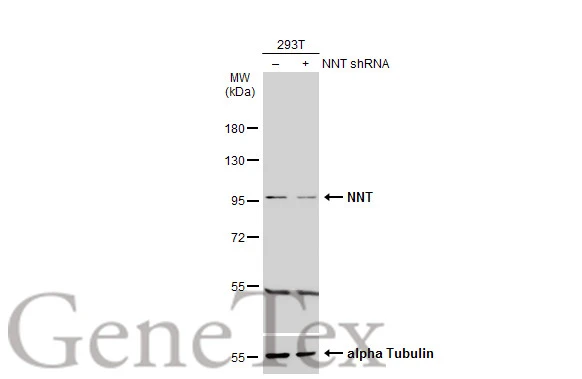
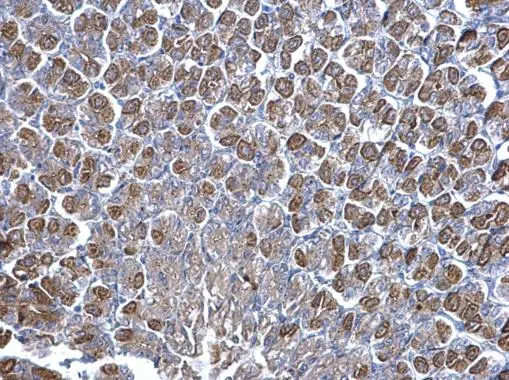
NNT antibody detects NNT protein at mitochondria by immunofluorescent analysis. Sample: HeLa cells were fixed in ice-cold MeOH for 5 min. Green: NNT stained by NNT antibody (GTX103015) diluted at 1:500.
NNT antibody
GTX103015

ApplicationsImmunoFluorescence, Western Blot, ImmunoCytoChemistry, ImmunoHistoChemistry, ImmunoHistoChemistry Paraffin
Product group Antibodies
ReactivityHuman, Mouse, Rat
TargetNNT
Overview
- SupplierGeneTex
- Product NameNNT antibody
- Delivery Days Customer9
- Application Supplier NoteWB: 1:500-1:3000. ICC/IF: 1:100-1:1000. IHC-P: 1:100-1:1000. *Optimal dilutions/concentrations should be determined by the researcher.Not tested in other applications.
- ApplicationsImmunoFluorescence, Western Blot, ImmunoCytoChemistry, ImmunoHistoChemistry, ImmunoHistoChemistry Paraffin
- CertificationResearch Use Only
- ClonalityPolyclonal
- Concentration0.23 mg/ml
- ConjugateUnconjugated
- Gene ID23530
- Target nameNNT
- Target descriptionnicotinamide nucleotide transhydrogenase
- Target synonymsGCCD4, NAD(P) transhydrogenase, mitochondrial, pyridine nucleotide transhydrogenase
- HostRabbit
- IsotypeIgG
- Protein IDQ13423
- Protein NameNAD(P) transhydrogenase, mitochondrial
- Scientific DescriptionThis gene encodes an integral protein of the inner mitochondrial membrane. The enzyme couples hydride transfer between NAD(H) and NADP(+) to proton translocation across the inner mitochondrial membrane. Under most physiological conditions, the enzyme uses energy from the mitochondrial proton gradient to produce high concentrations of NADPH. The resulting NADPH is used for biosynthesis and in free radical detoxification. Two alternatively spliced variants, encoding the same protein, have been found for this gene. [provided by RefSeq]
- ReactivityHuman, Mouse, Rat
- Storage Instruction-20°C or -80°C,2°C to 8°C
- UNSPSC41116161
Datasheet
Related products
Product group Antibodies

NNT AntibodyCSB-PA015908GA01HU
ApplicationsWestern Blot, ELISA, ImmunoHistoChemistry
ReactivityHuman, Mouse, Rat
TargetNNT
- SizePrice

Product group Antibodies

Anti-NNT Antibody Picoband(r)A00887-3-CARRIER-FREE
ApplicationsFlow Cytometry, ImmunoFluorescence, Western Blot, ELISA, ImmunoCytoChemistry
ReactivityHuman, Monkey, Mouse, Porcine, Rat
TargetNNT
- SizePrice
Product group Antibodies

Anti-NNT AntibodyA28377
ApplicationsWestern Blot
ReactivityHuman, Mouse
- SizePrice

Product group Antibodies

Anti-NNT AntibodyHPA004829
ApplicationsWestern Blot, ImmunoHistoChemistry
ReactivityHuman
TargetNNT
- SizePrice
Product group Antibodies

NNT Antibody (Internal)LS-C353821
ApplicationsWestern Blot
ReactivityBovine, Human, Mouse, Porcine, Rat, Zebra Fish
TargetNNT
- SizePrice
Product group Antibodies
References

NNT Polyclonal AntibodyBS-5097R
ApplicationsImmunoFluorescence, Western Blot, ELISA, ImmunoCytoChemistry, ImmunoHistoChemistry, ImmunoHistoChemistry Frozen, ImmunoHistoChemistry Paraffin
ReactivityBovine, Canine, Chicken, Equine, Human, Mouse, Porcine, Rabbit, Rat
TargetNNT
- SizePrice