

NOP53 Antibody, FITC conjugated
CSB-PA885778LC01HU

ReactivityHuman
Product group Antibodies
TargetNOP53
Overview
- SupplierCusabio
- Product NameNOP53 Antibody, FITC conjugated
- Delivery Days Customer20
- CertificationResearch Use Only
- ClonalityPolyclonal
- ConjugateFITC
- Gene ID29997
- Target nameNOP53
- Target descriptionNOP53 ribosome biogenesis factor
- Target synonymsGLTSCR2, PICT-1, PICT1, ribosome biogenesis protein NOP53, glioma tumor suppressor candidate region gene 2 protein, p60, protein interacting with carboxyl terminus 1
- HostRabbit
- IsotypeIgG
- Protein IDQ9NZM5
- Protein NameRibosome biogenesis protein NOP53
- Scientific DescriptionNucleolar protein which is involved in the integration of the 5S RNP into the ribosomal large subunit during ribosome biogenesis (PubMed:24120868). In ribosome biogenesis, may also play a role in rRNA transcription (PubMed:27729611). Also functions as a nucleolar sensor that regulates the activation of p53/TP53 in response to ribosome biogenesis perturbation, DNA damage and other stress conditions (PubMed:21741933, PubMed:24120868, PubMed:27829214). DNA damage or perturbation of ribosome biogenesis disrupt the interaction between NOP53 and RPL11 allowing RPL11 transport to the nucleoplasm where it can inhibit MDM2 and allow p53/TP53 activation (PubMed:24120868, PubMed:27829214). It may also positively regulate the function of p53/TP53 in cell cycle arrest and apoptosis through direct interaction, preventing its MDM2-dependent ubiquitin-mediated proteasomal degradation (PubMed:22522597). Originally identified as a tumor suppressor, it may also play a role in cell proliferation and apoptosis by positively regulating the stability of PTEN, thereby antagonizing the PI3K-AKT/PKB signaling pathway (PubMed:15355975, PubMed:16971513, PubMed:27729611). May also inhibit cell proliferation and increase apoptosis through its interaction with NF2 (PubMed:21167305). May negatively regulate NPM1 by regulating its nucleoplasmic localization, oligomerization and ubiquitin-mediated proteasomal degradation (PubMed:25818168). Thereby, may prevent NPM1 interaction with MYC and negatively regulate transcription mediated by the MYC-NPM1 complex (PubMed:25956029). May also regulate cellular aerobic respiration (PubMed:24556985). In the cellular response to viral infection, may play a role in the attenuation of interferon-beta through the inhibition of DDX58/RIG-1 (PubMed:27824081).
- ReactivityHuman
- Storage Instruction-20°C or -80°C
- UNSPSC41116161
Related products
Product group Antibodies

Anti-GLTSCR2 (C-term) Antibody102-22713
ApplicationsWestern Blot
TargetNOP53
- SizePrice
Product group Antibodies

Nop53 Polyclonal AntibodyCAC11477
ApplicationsWestern Blot, ELISA, ImmunoHistoChemistry
ReactivityRat
TargetNOP53
- SizePrice
Product group Antibodies

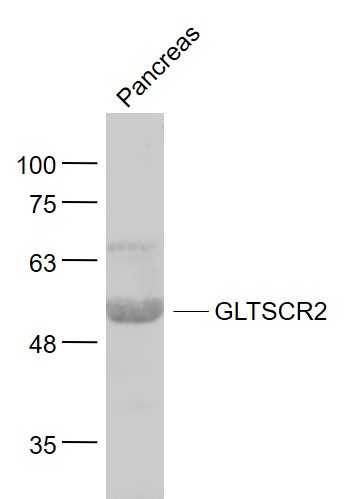
GLTSCR2 Polyclonal AntibodyBS-13382R
ApplicationsImmunoFluorescence, Western Blot, ELISA, ImmunoCytoChemistry, ImmunoHistoChemistry, ImmunoHistoChemistry Frozen, ImmunoHistoChemistry Paraffin
ReactivityBovine, Canine, Equine, Human, Mouse, Porcine, Rat, Sheep
TargetNOP53
- SizePrice
Product group Antibodies

NOP53 AntibodyPACO59493
ApplicationsWestern Blot, ELISA, ImmunoHistoChemistry
ReactivityHuman, Rat
TargetNOP53
- SizePrice
Product group Antibodies

GLTSCR2 Antibody (Biotin)LS-C680959
ApplicationsELISA
ReactivityHuman
TargetNOP53
- SizePrice

Product group Antibodies

Anti-GLTSCR2 AntibodyHPA018999
ApplicationsImmunoCytoChemistry, ImmunoHistoChemistry
ReactivityHuman
TargetNOP53
- SizePrice
Product group Antibodies
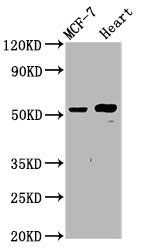
NOP53 AntibodyCSB-PA885778LA01HU
ApplicationsWestern Blot, ELISA, ImmunoHistoChemistry
ReactivityHuman, Rat
TargetNOP53
- SizePrice