

p53 antibody
GTX102965

ApplicationsImmunoFluorescence, ImmunoPrecipitation, Western Blot, ChIP Chromatin ImmunoPrecipitation, ImmunoCytoChemistry, ImmunoHistoChemistry, ImmunoHistoChemistry Paraffin
Product group Antibodies
ReactivityHuman, Zebra Fish
TargetTP53
Overview
- SupplierGeneTex
- Product Namep53 antibody
- Delivery Days Customer9
- Application Supplier NoteWB: 1:500-1:3000. ICC/IF: 1:100-1:1000. IHC-P: 1:100-1:1000. IP: 1:100-1:500. *Optimal dilutions/concentrations should be determined by the researcher.Not tested in other applications.
- ApplicationsImmunoFluorescence, ImmunoPrecipitation, Western Blot, ChIP Chromatin ImmunoPrecipitation, ImmunoCytoChemistry, ImmunoHistoChemistry, ImmunoHistoChemistry Paraffin
- CertificationResearch Use Only
- ClonalityPolyclonal
- Concentration1.28 mg/ml
- ConjugateUnconjugated
- Gene ID7157
- Target nameTP53
- Target descriptiontumor protein p53
- Target synonymsBCC7, BMFS5, LFS1, P53, TRP53, cellular tumor antigen p53, antigen NY-CO-13, mutant tumor protein 53, phosphoprotein p53, transformation-related protein 53, tumor protein 53, tumor supressor p53
- HostRabbit
- IsotypeIgG
- Protein IDP04637
- Protein NameCellular tumor antigen p53
- Scientific DescriptionThis gene encodes tumor protein p53, which responds to diverse cellular stresses to regulate target genes that induce cell cycle arrest, apoptosis, senescence, DNA repair, or changes in metabolism. p53 protein is expressed at low level in normal cells and at a high level in a variety of transformed cell lines, where its believed to contribute to transformation and malignancy. p53 is a DNA-binding protein containing transcription activation, DNA-binding, and oligomerization domains. It is postulated to bind to a p53-binding site and activate expression of downstream genes that inhibit growth and/or invasion, and thus function as a tumor suppressor. Mutants of p53 that frequently occur in a number of different human cancers fail to bind the consensus DNA binding site, and hence cause the loss of tumor suppressor activity. Alterations of this gene occur not only as somatic mutations in human malignancies, but also as germline mutations in some cancer-prone families with Li-Fraumeni syndrome. Multiple p53 variants due to alternative promoters and multiple alternative splicing have been found. These variants encode distinct isoforms, which can regulate p53 transcriptional activity. [provided by RefSeq]
- ReactivityHuman, Zebra Fish
- Storage Instruction-20°C or -80°C,2°C to 8°C
- UNSPSC12352203
References
- Lee CY, Cheng WF, Lin PH, et al. An activity-based functional test for identifying homologous recombination deficiencies across cancer types in real time. Cell Rep Med. 2023,4(11):101247. doi: 10.1016/j.xcrm.2023.101247Read this paper
- Phan TTT, Truong NV, Wu WG, et al. Tumor suppressor p53 mediates interleukin-6 expression to enable cancer cell evasion of genotoxic stress. Cell Death Discov. 2023,9(1):340. doi: 10.1038/s41420-023-01638-0Read this paper
- Hung JC, Wu JL, Li HC, et al. The Proapoptotic Gene Bad Regulates Brain Development via p53-Mediated Stress Signals in Zebrafish. Cells. 2021,10(11). doi: 10.3390/cells10112820Read this paper
- Chen SM, Hee SW, Chou SY, et al. Activation of Aldehyde Dehydrogenase 2 Ameliorates Glucolipotoxicity of Pancreatic Beta Cells. Biomolecules. 2021,11(10). doi: 10.3390/biom11101474Read this paper
- Lai ZY, Tsai KY, Chang SJ, et al. Gain-of-Function Mutant TP53 R248Q Overexpressed in Epithelial Ovarian Carcinoma Alters AKT-Dependent Regulation of Intercellular Trafficking in Responses to EGFR/MDM2 Inhibitor. Int J Mol Sci. 2021,22(16). doi: 10.3390/ijms22168784Read this paper
- Ocklenburg T, Neumann F, Wolf A, et al. In oxygen-deprived tumor cells ERp57 provides radioprotection and ensures proliferation via c-Myc, PLK1 and the AKT pathway. Sci Rep. 2021,11(1):7199. doi: 10.1038/s41598-021-86658-5Read this paper
- Kazimova T, Tschanz F, Sharma A, et al. Paracrine Placental Growth Factor Signaling in Response to Ionizing Radiation Is p53-Dependent and Contributes to Radioresistance. Mol Cancer Res. 2021,19(6):1051-1062. doi: 10.1158/1541-7786.MCR-20-0403Read this paper
- Chang YC, Cheung CHA, Kuo YL. Tamoxifen Rechallenge Decreases Metastatic Potential but Increases Cell Viability and Clonogenicity in a Tamoxifen-Mediated Cytotoxicity-Resistant Subline of Human Breast MCF7 Cancer Cells. Front Cell Dev Biol. 2020,8:485. doi: 10.3389/fcell.2020.00485Read this paper
- Chen RY, Lin CJ, Liang ST, et al. UVB Irradiation Induced Cell Damage and Early Onset of Junbb Expression in Zebrafish. Animals (Basel). 2020,10(6). doi: 10.3390/ani10061096Read this paper
- Yang Y, Ding L, Zhou Q, et al. Silencing of AURKA augments the antitumor efficacy of the AURKA inhibitor MLN8237 on neuroblastoma cells. Cancer Cell Int. 2020,20:9. doi: 10.1186/s12935-019-1072-yRead this paper
Datasheet
Related products

Product group Antibodies

Anti-TP53 Antibody Picoband(r)A00001-2-CARRIER-FREE
ApplicationsFlow Cytometry, Western Blot, ELISA, ImmunoHistoChemistry
ReactivityHuman
TargetTP53
- SizePrice
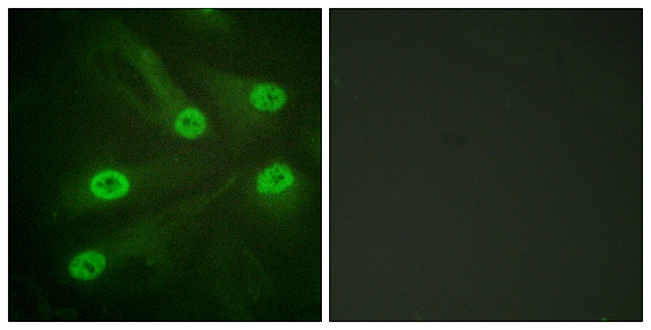
Product group Antibodies
p53 (acetyl Lys386) antibodyGTX88009
ApplicationsImmunoFluorescence, ImmunoCytoChemistry, ImmunoHistoChemistry, ImmunoHistoChemistry Paraffin
ReactivityHuman
TargetTP53
- SizePrice
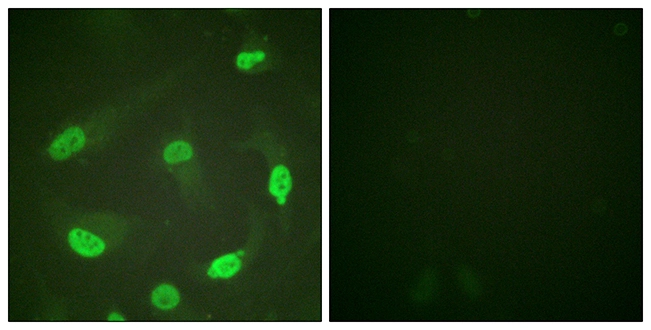
Product group Antibodies
References
p53 (acetyl Lys379) antibodyGTX88013
ApplicationsImmunoFluorescence, ImmunoCytoChemistry, ImmunoHistoChemistry, ImmunoHistoChemistry Paraffin
ReactivityHuman, Mouse
TargetTP53
- SizePrice
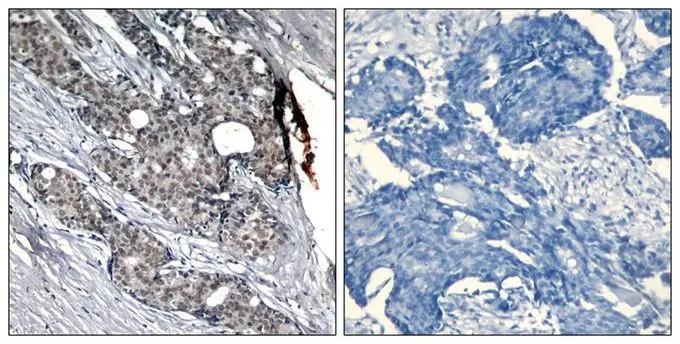
Product group Antibodies
p53 (phospho Ser6) antibodyGTX50157
ApplicationsWestern Blot, ImmunoHistoChemistry, ImmunoHistoChemistry Paraffin
ReactivityHuman
TargetTP53
- SizePrice
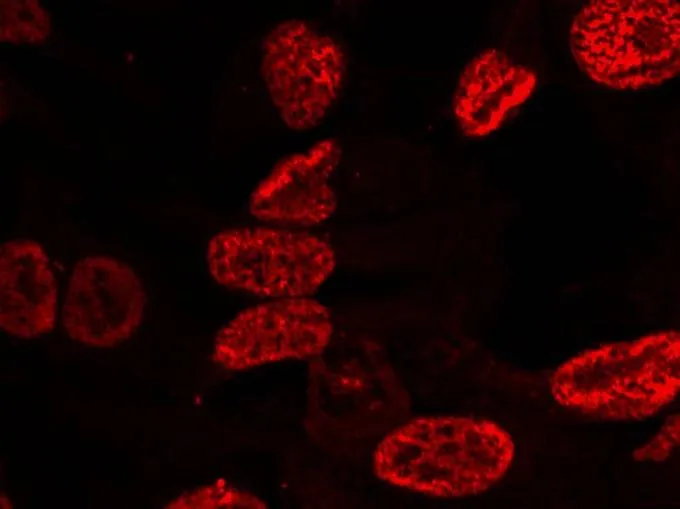
Product group Antibodies
p53 (phospho Ser15) antibodyGTX50158
ApplicationsImmunoFluorescence, Western Blot, ImmunoCytoChemistry, ImmunoHistoChemistry, ImmunoHistoChemistry Paraffin
ReactivityHuman
TargetTP53
- SizePrice
Product group Antibodies
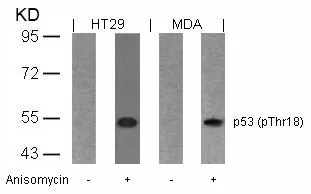
p53 (phospho Thr18) antibodyGTX50159
ApplicationsWestern Blot
ReactivityHuman
TargetTP53
- SizePrice
Product group Antibodies
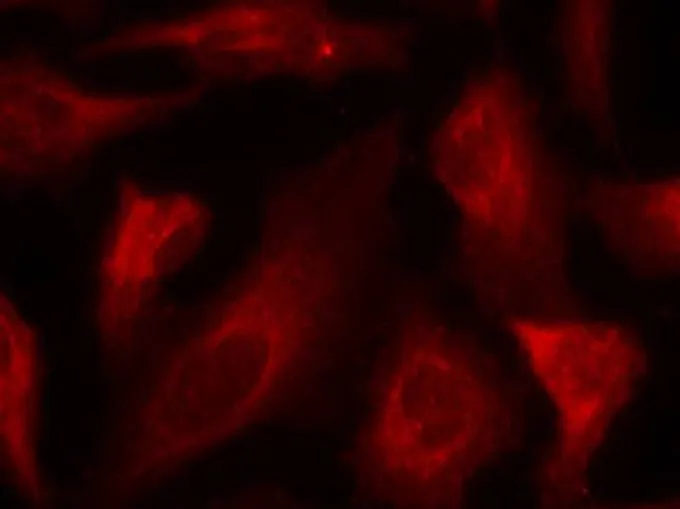
p53 (phospho Ser33) antibodyGTX50161
ApplicationsImmunoFluorescence, Western Blot, ImmunoCytoChemistry
ReactivityHuman
TargetTP53
- SizePrice
Product group Antibodies
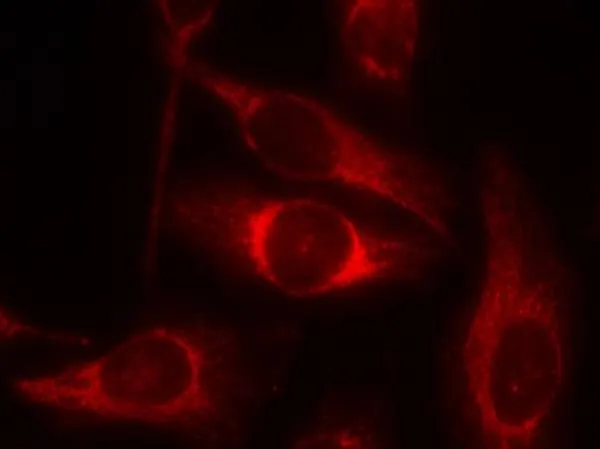
p53 (phospho Ser46) antibodyGTX50163
ApplicationsImmunoFluorescence, Western Blot, ImmunoCytoChemistry
ReactivityHuman
TargetTP53
- SizePrice
Product group Antibodies
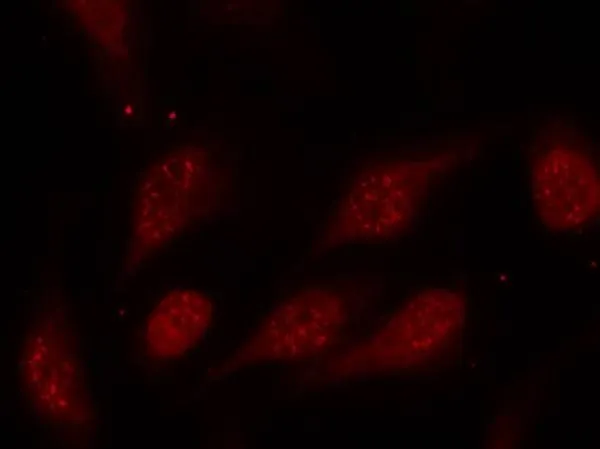
p53 (phospho Ser315) antibodyGTX50164
ApplicationsImmunoFluorescence, Western Blot, ImmunoCytoChemistry, ImmunoHistoChemistry, ImmunoHistoChemistry Paraffin
ReactivityHuman
TargetTP53
- SizePrice
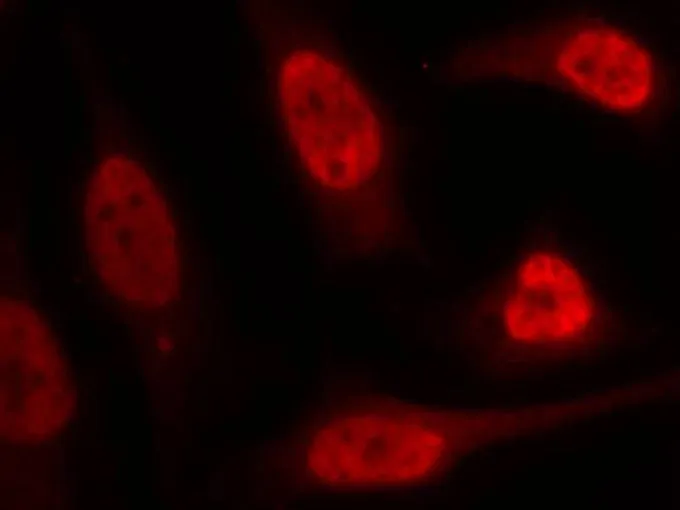
Product group Antibodies
References
p53 antibodyGTX50438
ApplicationsImmunoFluorescence, ImmunoPrecipitation, Western Blot, ImmunoCytoChemistry, ImmunoHistoChemistry, ImmunoHistoChemistry Paraffin
ReactivityHuman, Mouse, Rat
TargetTP53
- SizePrice