

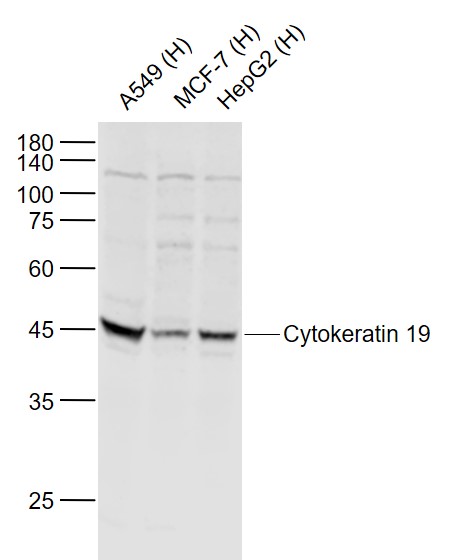
Lane 1: Human A549 cell lysates; Lane 2: Human MCF-7 cell lysates; Lane 3: Human HepG2 cell lysates probed with pan-Cytokeratin Polyclonal Antibody, Unconjugated (bs-2190R) at 1:1000 dilution and 4˚C overnight incubation. Followed by conjugated secondary antibody incubation at 1:20000 for 60 min at 37˚C.
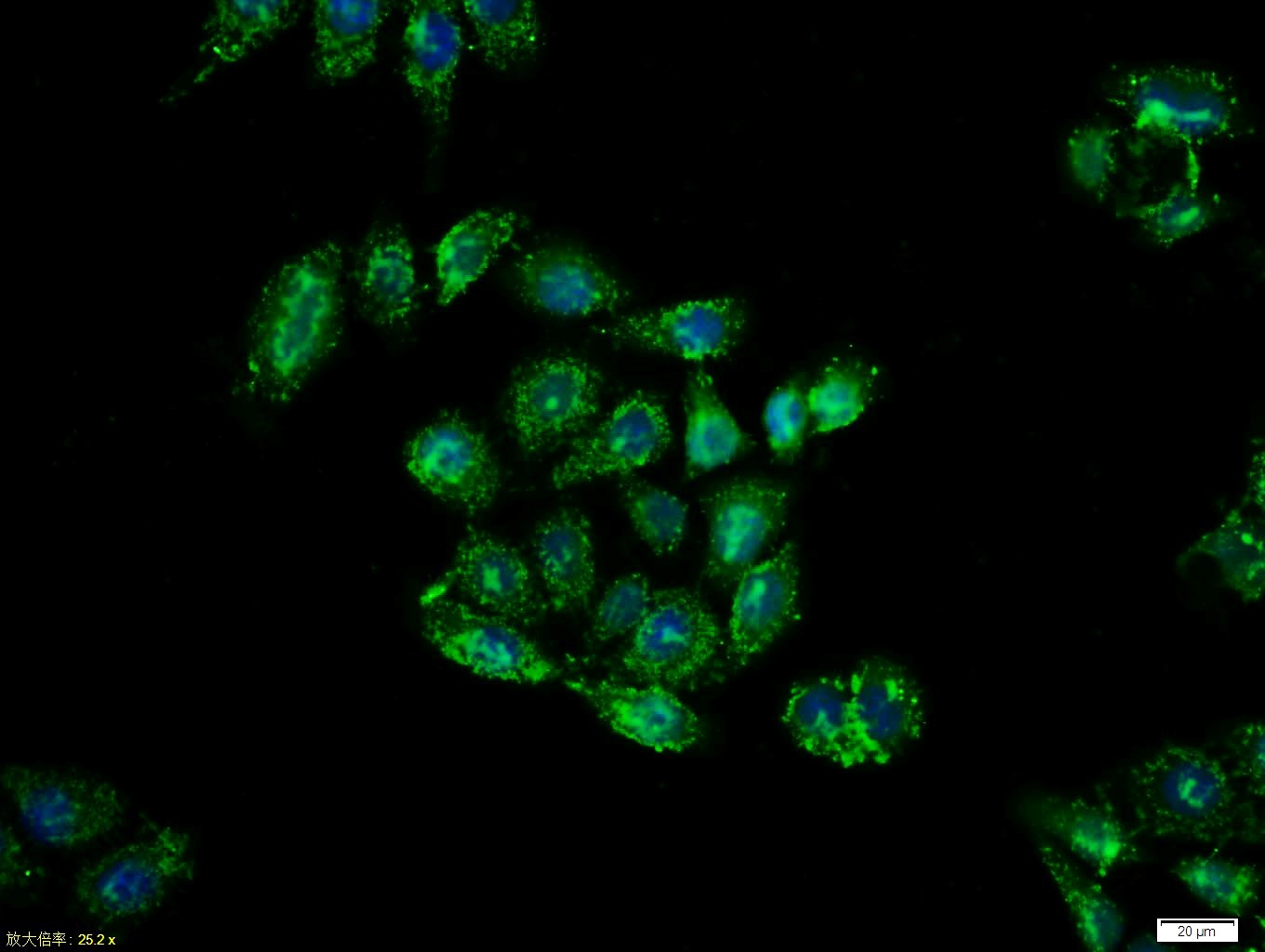
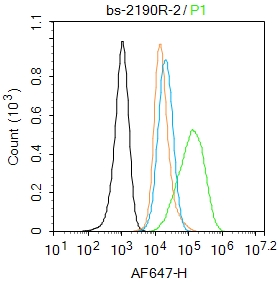
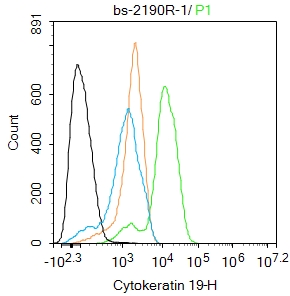
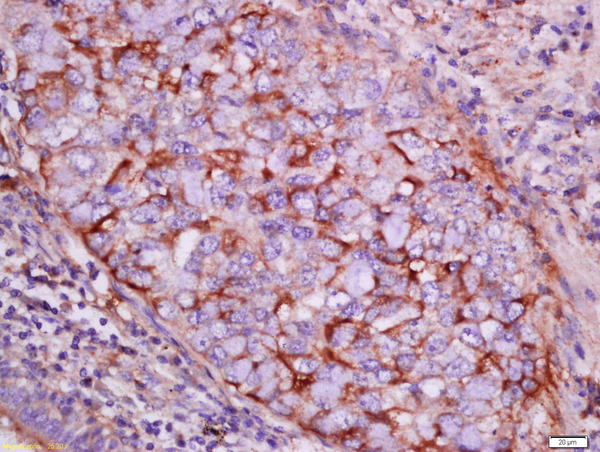
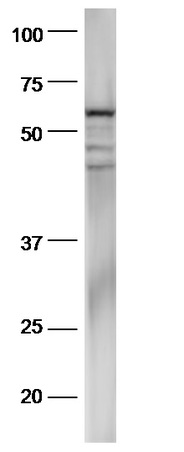
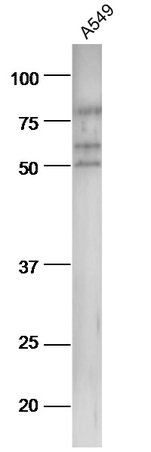
Lane 1: Human A549 cell lysates; Lane 2: Human MCF-7 cell lysates; Lane 3: Human HepG2 cell lysates probed with pan-Cytokeratin Polyclonal Antibody, Unconjugated (bs-2190R) at 1:1000 dilution and 4˚C overnight incubation. Followed by conjugated secondary antibody incubation at 1:20000 for 60 min at 37˚C.
Cytokeratin 19 Polyclonal Antibody
BS-2190R

ApplicationsFlow Cytometry, ImmunoFluorescence, Western Blot, ELISA, ImmunoCytoChemistry, ImmunoHistoChemistry, ImmunoHistoChemistry Frozen, ImmunoHistoChemistry Paraffin
Product group Antibodies
ReactivityBovine, Canine, Chicken, Equine, Human, Mouse, Porcine, Rabbit, Rat
TargetKrt19
Overview
- SupplierBioss
- Product NameCytokeratin 19 Polyclonal Antibody
- Delivery Days Customer16
- ApplicationsFlow Cytometry, ImmunoFluorescence, Western Blot, ELISA, ImmunoCytoChemistry, ImmunoHistoChemistry, ImmunoHistoChemistry Frozen, ImmunoHistoChemistry Paraffin
- Applications SupplierWB(1:300-5000), ELISA(1:500-1000), FCM(1:20-100), IHC-P(1:200-400), IHC-F(1:100-500), IF(IHC-P)(1:50-200), IF(IHC-F)(1:50-200), IF(ICC)(1:50-200)
- CertificationResearch Use Only
- ClonalityPolyclonal
- Concentration1 ug/ul
- ConjugateUnconjugated
- Gene ID16669
- Target nameKrt19
- Target descriptionkeratin 19
- Target synonymsCK-19, EndoC, K19, Krt-1.19, Krt1-19, keratin, type I cytoskeletal 19, cytokeratin 19, keratin complex 1, acidic, gene 19
- HostRabbit
- IsotypeIgG
- Protein IDP19001
- Protein NameKeratin, type I cytoskeletal 19
- ReactivityBovine, Canine, Chicken, Equine, Human, Mouse, Porcine, Rabbit, Rat
- Storage Instruction-20°C
- UNSPSC41116161
References
- Zinc oxide nanoparticles ameliorate collagen lattice contraction in human tenon fibroblasts. Yin X et al., 2019 Jul 15, Arch Biochem BiophysRead this paper
- Morphological and immunohistochemical characteristics of the equine corneal epithelium. Kammergruber E et al., 2019 Feb 14, Vet OphthalmolRead this paper
- Osteocytes serve as a progenitor cell of osteosarcoma. Sottnik JL et al., 2014 Aug, J Cell BiochemRead this paper
Datasheet
Related products
Product group Antibodies

ApplicationsImmunoPrecipitation, Western Blot, ImmunoCytoChemistry, ImmunoHistoChemistry
ReactivityMouse
TargetKrt19
- SizePrice