

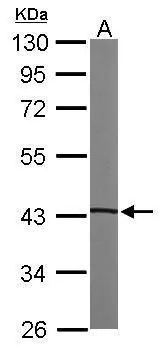
Sample (50 ug of whole cell lysate) A: Mouse brain 10% SDS PAGE GTX104934 diluted at 1:1000
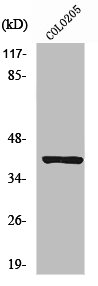
![Various whole cell extracts (30 μg) were separated by 10% SDS-PAGE, and the membrane was blotted with PKA C alpha antibody [N2C3] (GTX104934) diluted at 1:1000. The HRP-conjugated anti-rabbit IgG antibody (GTX213110-01) was used to detect the primary antibody.](https://www.genetex.com/upload/website/prouct_img/normal/GTX104934/GTX104934_43747_20191025_WB_w_23060120_372.webp "Various whole cell extracts (30 μg) were separated by 10% SDS-PAGE, and the membrane was blotted with PKA C alpha antibody [N2C3] (GTX104934) diluted at 1:1000. The HRP-conjugated anti-rabbit IgG antibody (GTX213110-01) was used to detect the primary antibody.")
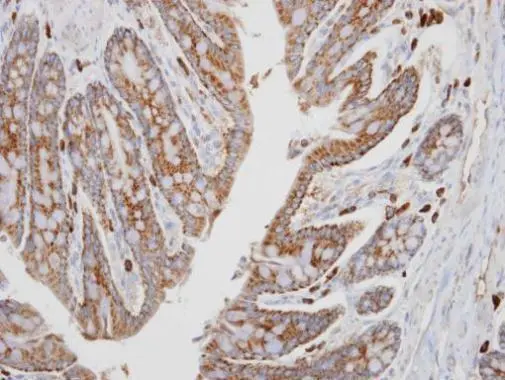
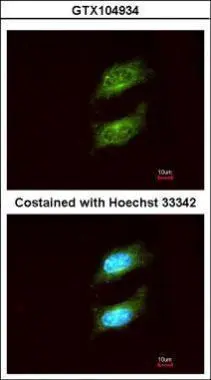
Sample (50 ug of whole cell lysate) A: Mouse brain 10% SDS PAGE GTX104934 diluted at 1:1000
PKA C alpha antibody [N2C3]
GTX104934

ApplicationsImmunoFluorescence, Western Blot, ImmunoCytoChemistry, ImmunoHistoChemistry, ImmunoHistoChemistry Paraffin
Product group Antibodies
ReactivityHuman, Mouse
TargetPRKACA
Overview
- SupplierGeneTex
- Product NamePKA C alpha antibody [N2C3]
- Delivery Days Customer9
- Application Supplier NoteWB: 1:500-1:3000. ICC/IF: 1:100-1:1000. IHC-P: 1:100-1:1000. *Optimal dilutions/concentrations should be determined by the researcher.Not tested in other applications.
- ApplicationsImmunoFluorescence, Western Blot, ImmunoCytoChemistry, ImmunoHistoChemistry, ImmunoHistoChemistry Paraffin
- CertificationResearch Use Only
- ClonalityPolyclonal
- Concentration0.8 mg/ml
- ConjugateUnconjugated
- Gene ID5566
- Target namePRKACA
- Target descriptionprotein kinase cAMP-activated catalytic subunit alpha
- Target synonymsCAFD1, PKACA, PPNAD4, cAMP-dependent protein kinase catalytic subunit alpha, PKA C-alpha, protein kinase A catalytic subunit, protein kinase, cAMP-dependent, alpha catalytic subunit, protein kinase, cAMP-dependent, catalytic, alpha
- HostRabbit
- IsotypeIgG
- Protein IDP17612
- Protein NamecAMP-dependent protein kinase catalytic subunit alpha
- Scientific DescriptioncAMP is a signaling molecule important for a variety of cellular functions. cAMP exerts its effects by activating the cAMP-dependent protein kinase, which transduces the signal through phosphorylation of different target proteins. The inactive kinase holoenzyme is a tetramer composed of two regulatory and two catalytic subunits. cAMP causes the dissociation of the inactive holoenzyme into a dimer of regulatory subunits bound to four cAMP and two free monomeric catalytic subunits. Four different regulatory subunits and three catalytic subunits have been identified in humans. The protein encoded by this gene is a member of the Ser/Thr protein kinase family and is a catalytic subunit of cAMP-dependent protein kinase. Alternatively spliced transcript variants encoding distinct isoforms have been observed. [provided by RefSeq]
- ReactivityHuman, Mouse
- Storage Instruction-20°C or -80°C,2°C to 8°C
- UNSPSC41116161
Datasheet
Related products
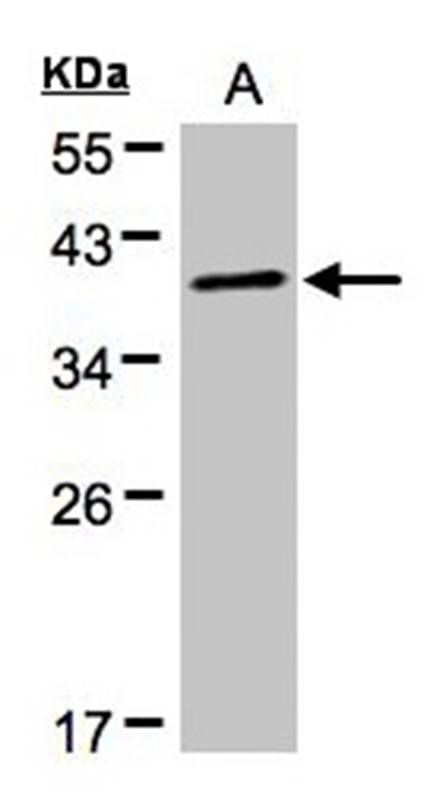
Product group Antibodies

Anti-PRKACA AntibodyA39494
ApplicationsImmunoFluorescence, Western Blot
ReactivityHuman, Mouse
- SizePrice
Product group Antibodies

Anti-Phospho-PRKACA-T197 Antibody144-50557
ApplicationsWestern Blot
ReactivityHuman, Mouse, Rat
TargetPRKACA
- SizePrice

Product group Antibodies

ApplicationsWestern Blot, ImmunoHistoChemistry
ReactivityHuman, Mouse, Rat
TargetPRKACA
- SizePrice
Product group Antibodies

ApplicationsFlow Cytometry, Western Blot, ImmunoCytoChemistry
ReactivityHuman, Mouse, Rat
TargetPRKACA
- SizePrice
Product group Antibodies

PRKACA/PRKACB AntibodyCSB-PA003798
ApplicationsImmunoFluorescence, Western Blot, ELISA, ImmunoHistoChemistry
ReactivityHuman, Mouse, Rat
TargetPRKACA
- SizePrice
Product group Antibodies

Goat anti-PRKACAEB12864
ApplicationsWestern Blot, ELISA
ReactivityHuman
TargetPRKACA
- SizePrice
Product group Antibodies

PRKACA Polyclonal AntibodyCAC15816
ApplicationsWestern Blot, ELISA, ImmunoHistoChemistry
TargetPRKACA
- SizePrice
![Dot blot analysis of GST and GST-fusion proteins using GTX80257 PKA C alpha antibody [6D2.1] and GTX79895 GST tag antibody [S-tag-05]. The total amount of material spotted on the nitrocellulose membrane is 5 ng/spot. Lane 1 : GST-Akt1 Lane 2 : GST-Akt2 Lane 3 : GST-Akt3 Lane 4 : GST-PKAc alpha Lane 5 : GST-PKAc beta Lane 6 : GST-PKAc gamma Lane 7 : GST-MEK 1 Lane 8 : GST](https://www.genetex.com/upload/website/prouct_img/normal/GTX80257/GTX80257_20191025_AP_008_430_w_23061322_813.webp)
Product group Antibodies
PKA C alpha antibody [6D2.1]GTX80257
ApplicationsDot Blot, Western Blot
ReactivityHuman
TargetPRKACA
- SizePrice

Product group Antibodies

Anti-PRKACA AntibodyHPA071185
ApplicationsWestern Blot, ImmunoCytoChemistry
ReactivityHuman
TargetPRKACA
- SizePrice
Product group Antibodies
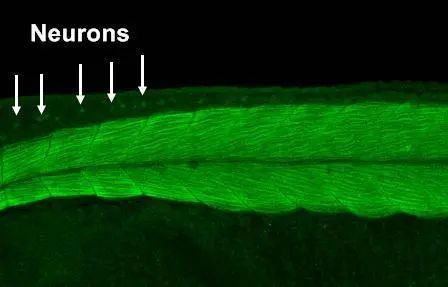
PKA C alpha antibodyGTX107567
ApplicationsImmunoFluorescence, Western Blot, ImmunoCytoChemistry, ImmunoHistoChemistry
ReactivityHuman, Mouse, Zebra Fish
TargetPRKACA
- SizePrice