

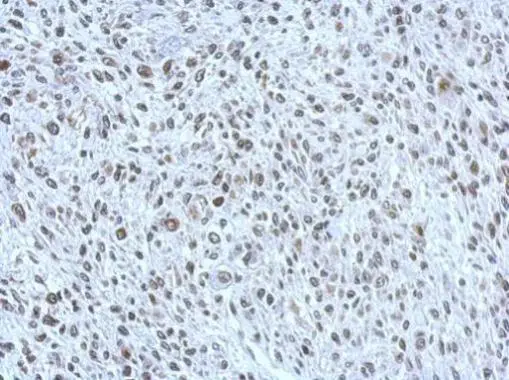
Immunohistochemical analysis of paraffin-embedded C2C12 xenograft, using POM121(GTX102128) antibody at 1:500 dilution.
Antigen Retrieval: Trilogy? (EDTA based, pH 8.0) buffer, 15min
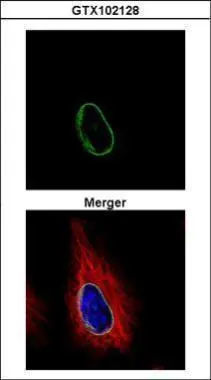
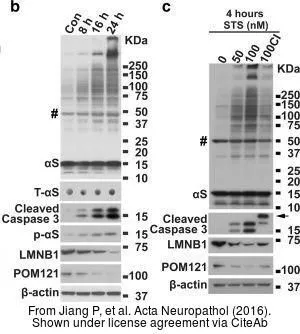
![Whole cell extract (30 μg) was separated by 5% SDS-PAGE, and the membrane was blotted with POM121 antibody [N2N3] (GTX102128) diluted at 1:2000. The HRP-conjugated anti-rabbit IgG antibody (GTX213110-01) was used to detect the primary antibody.](https://www.genetex.com/upload/website/prouct_img/normal/GTX102128/GTX102128_42515_20170525_WB_w_23060100_114.webp "Whole cell extract (30 μg) was separated by 5% SDS-PAGE, and the membrane was blotted with POM121 antibody [N2N3] (GTX102128) diluted at 1:2000. The HRP-conjugated anti-rabbit IgG antibody (GTX213110-01) was used to detect the primary antibody.")
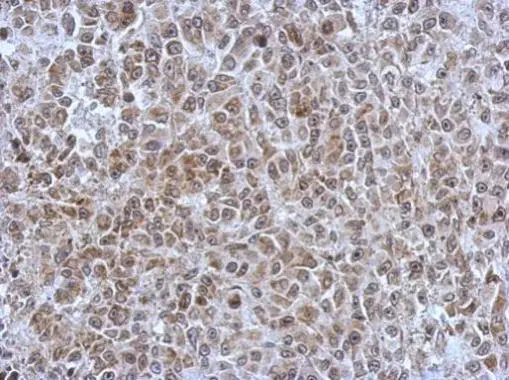
Immunohistochemical analysis of paraffin-embedded C2C12 xenograft, using POM121(GTX102128) antibody at 1:500 dilution.
Antigen Retrieval: Trilogy? (EDTA based, pH 8.0) buffer, 15min
POM121 antibody [N2N3]
GTX102128

ApplicationsImmunoFluorescence, Western Blot, ImmunoCytoChemistry, ImmunoHistoChemistry, ImmunoHistoChemistry Paraffin
Product group Antibodies
ReactivityHuman, Mouse
TargetPOM121
Overview
- SupplierGeneTex
- Product NamePOM121 antibody [N2N3]
- Delivery Days Customer9
- Application Supplier NoteWB: 1:500-1:3000. ICC/IF: 1:100-1:1000. IHC-P: 1:100-1:1000. *Optimal dilutions/concentrations should be determined by the researcher.Not tested in other applications.
- ApplicationsImmunoFluorescence, Western Blot, ImmunoCytoChemistry, ImmunoHistoChemistry, ImmunoHistoChemistry Paraffin
- CertificationResearch Use Only
- ClonalityPolyclonal
- Concentration0.16 mg/ml
- ConjugateUnconjugated
- Gene ID9883
- Target namePOM121
- Target descriptionPOM121 transmembrane nucleoporin
- Target synonymsP145, POM121A, nuclear envelope pore membrane protein POM 121, POM121 membrane glycoprotein, nuclear envelope pore membrane protein POM 121A, nuclear pore membrane protein 121 kDa, nucleoporin Nup121
- HostRabbit
- IsotypeIgG
- Protein IDQ96HA1
- Protein NameNuclear envelope pore membrane protein POM 121
- Scientific DescriptionThe nuclear envelope creates distinct nuclear and cytoplasmic compartments in eukaryotic cells. It consists of two concentric membranes perforated by nuclear pores, large protein complexes that form aqueous channels to regulate the flow of macromolecules between the nucleus and the cytoplasm. These complexes are composed of at least 100 different polypeptide subunits, many of which belong to the nucleoporin family. This gene encodes a member of the FG-repeat-containing nucleoporins. The protein encoded by this gene is an integral membrane protein that localizes to the central spoke ring complex and participates in anchoring the nuclear pore complex to the nuclear envelope. Alternatively spliced variants that encode different protein isoforms have been described but the full-length nature of only one has been determined. [provided by RefSeq]
- ReactivityHuman, Mouse
- Storage Instruction-20°C or -80°C,2°C to 8°C
- UNSPSC41116161
Datasheet
Related products
Product group Antibodies

POM121/POM121B/POM121C AntibodyCSB-PA080085
ApplicationsWestern Blot, ELISA, ImmunoHistoChemistry
ReactivityHuman, Mouse, Rat
TargetPOM121
- SizePrice

Product group Antibodies

Anti-POM121 AntibodyA96787
ApplicationsWestern Blot, ELISA
ReactivityHuman, Mouse, Rat
- SizePrice

Product group Antibodies

Anti-POM121 AntibodyA06856
ApplicationsImmunoFluorescence, Western Blot, ELISA, ImmunoCytoChemistry, ImmunoHistoChemistry
ReactivityHuman, Mouse, Rat
TargetPOM121
- SizePrice
Product group Antibodies

POM121 AntibodyLS-C830648
ApplicationsELISA, ImmunoHistoChemistry
ReactivityHuman
TargetPOM121
- SizePrice
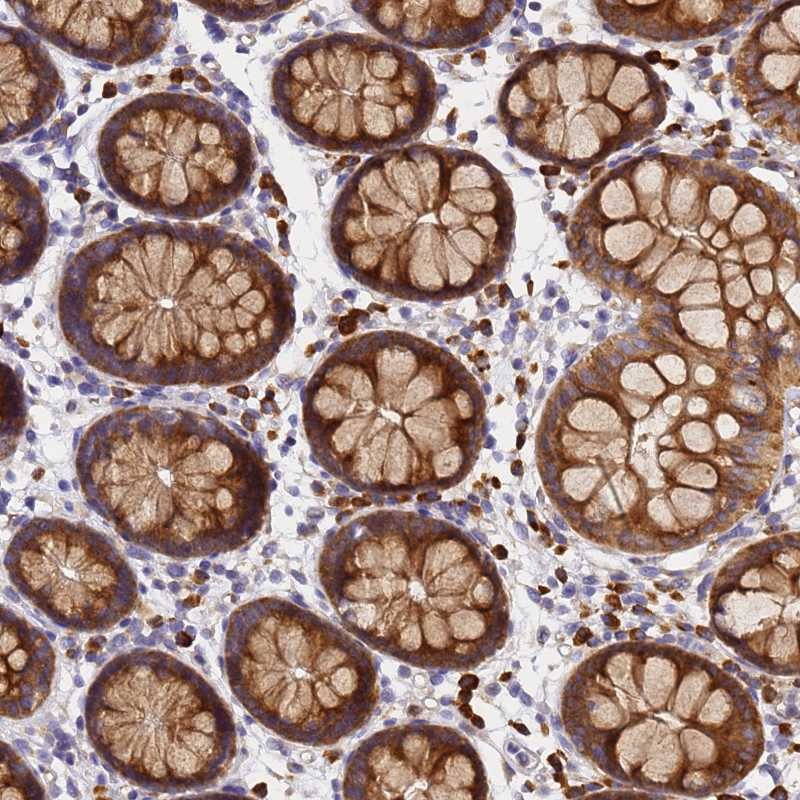
Product group Antibodies

Anti-POM121 AntibodyHPA043809
ApplicationsImmunoHistoChemistry
ReactivityHuman
TargetPOM121
- SizePrice
Product group Antibodies

POM121/POM121B/POM121C AntibodyPACO05836
ApplicationsWestern Blot, ELISA, ImmunoHistoChemistry
ReactivityHuman, Mouse, Rat
TargetPOM121
- SizePrice