

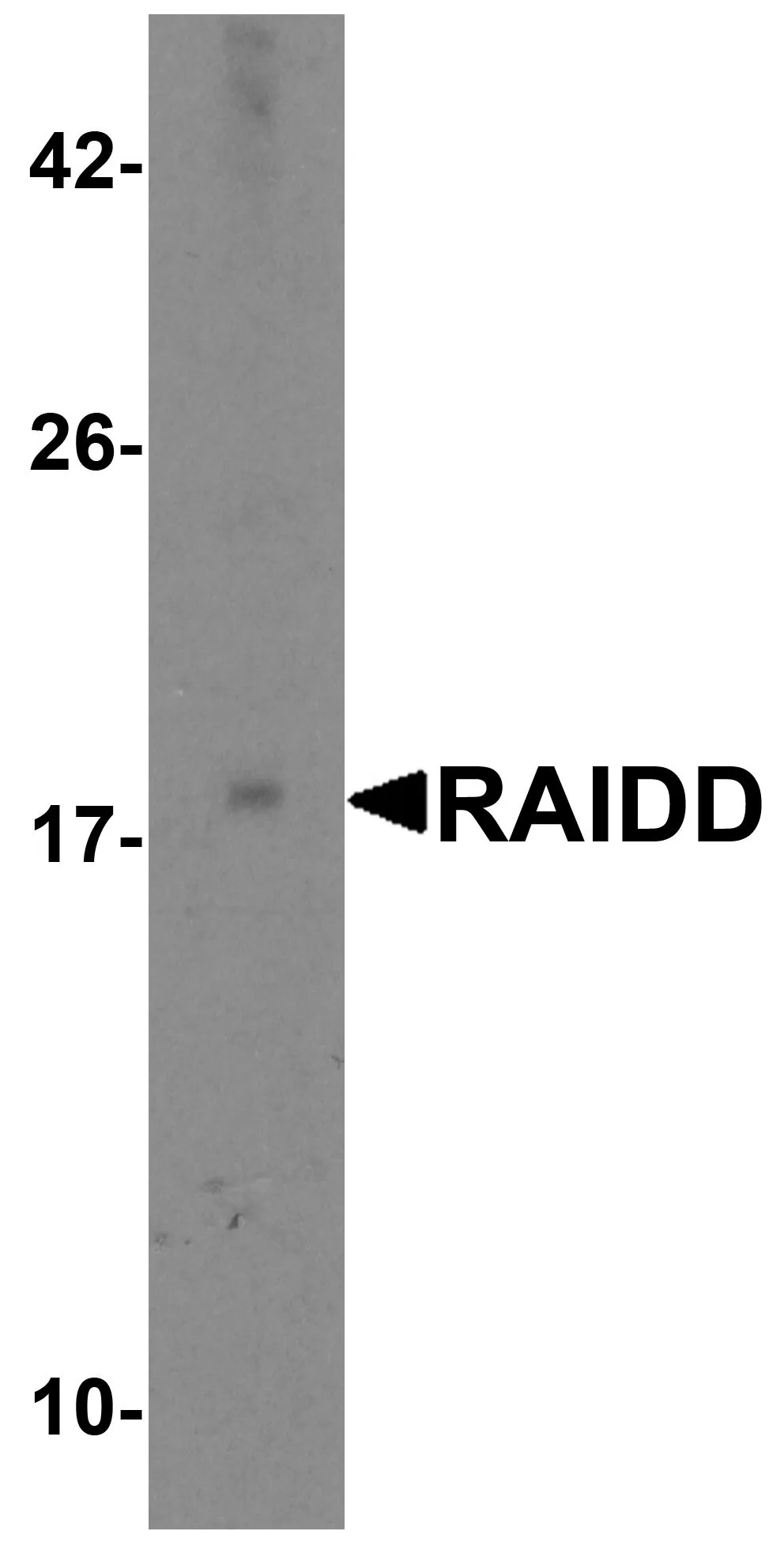
WB analysis of MCF7 total cell lysate using GTX28425 RAIDD antibody, C-term. Dilution : 2 μg/ml
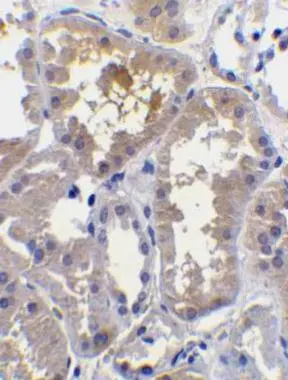
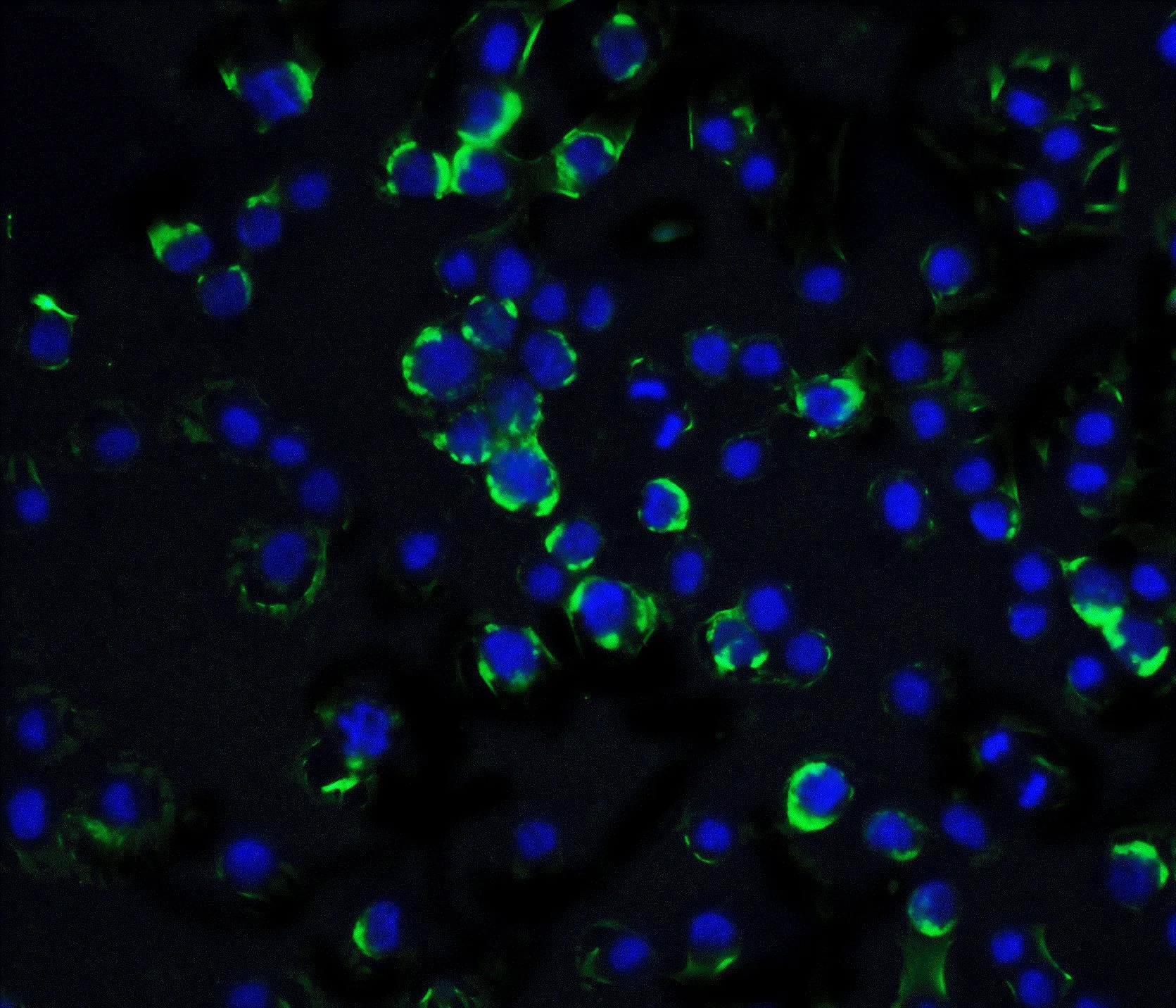
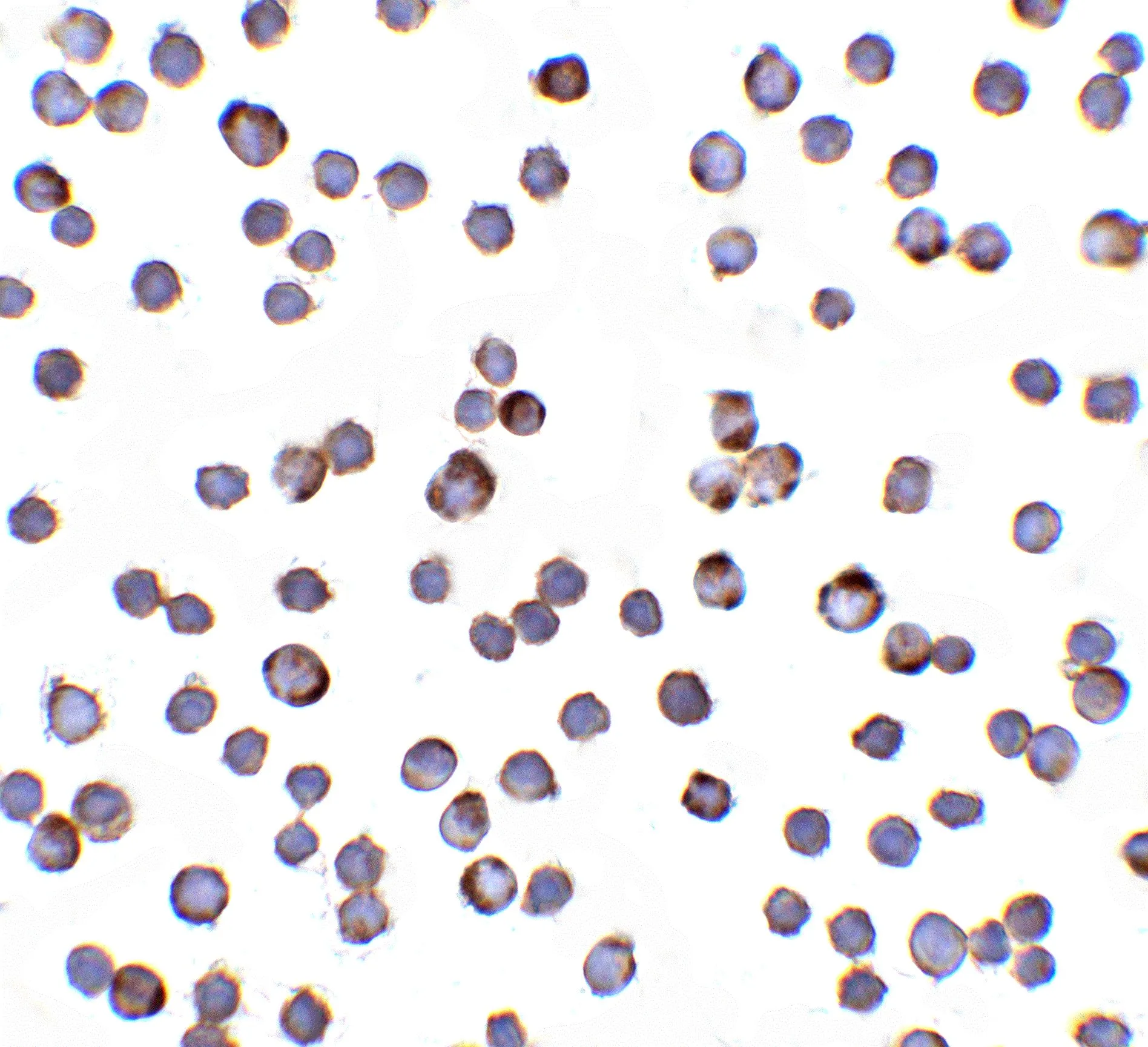
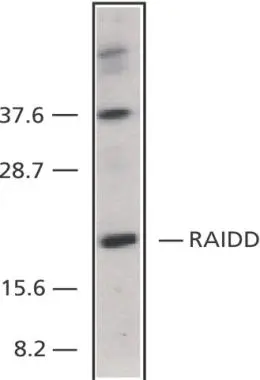
WB analysis of MCF7 total cell lysate using GTX28425 RAIDD antibody, C-term. Dilution : 2 μg/ml
RAIDD antibody, C-term
GTX28425

ApplicationsImmunoFluorescence, Western Blot, ELISA, ImmunoCytoChemistry, ImmunoHistoChemistry, ImmunoHistoChemistry Paraffin
Product group Antibodies
ReactivityHuman
TargetCRADD
Overview
- SupplierGeneTex
- Product NameRAIDD antibody, C-term
- Delivery Days Customer9
- Application Supplier NoteWB: 1microg/ml. *Optimal dilutions/concentrations should be determined by the researcher.Not tested in other applications.
- ApplicationsImmunoFluorescence, Western Blot, ELISA, ImmunoCytoChemistry, ImmunoHistoChemistry, ImmunoHistoChemistry Paraffin
- CertificationResearch Use Only
- ClonalityPolyclonal
- ConjugateUnconjugated
- Gene ID8738
- Target nameCRADD
- Target descriptionCARD and death domain containing adaptor protein
- Target synonymsMRT34, RAIDD, death domain-containing protein CRADD, CASP2 and RIPK1 domain containing adaptor with death domain, CRADD/LYZ fusion, RIP-associated ICH1/CED3-homologous protein with death domain, caspase and RIP adaptor with death domain, death adaptor molecule RAIDD, death domain containing protein CRADD
- HostRabbit
- IsotypeIgG
- Protein IDP78560
- Protein NameDeath domain-containing protein CRADD
- Scientific DescriptionThis gene encodes a protein containing a death domain (DD) motif. This protein recruits caspase 2/ICH1 to the cell death signal transduction complex, which includes tumor necrosis factor receptor 1 (TNFR1A) and RIPK1/RIP kinase, and acts in promoting apoptosis. A mutation in this gene was associated with cognitive disability. A related pseudogene is found on chromosome 3. Alternative splicing results in multiple transcript variants. [provided by RefSeq, Feb 2016]
- ReactivityHuman
- Storage Instruction-20°C or -80°C,2°C to 8°C
- UNSPSC41116161
Datasheet
Related products
Product group Antibodies

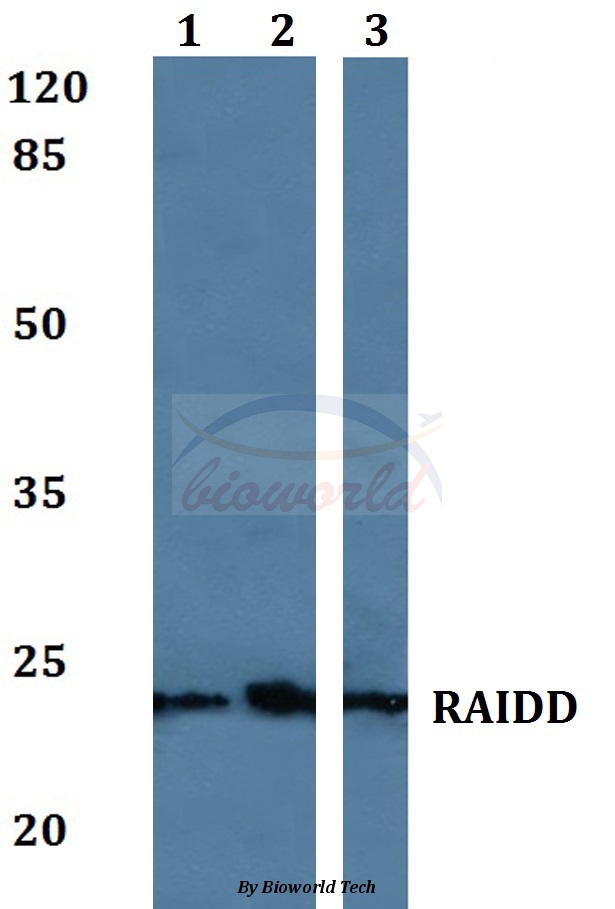
Anti-RAIDD AntibodyA28269
ApplicationsWestern Blot
ReactivityHuman, Mouse, Rat
- SizePrice
Product group Antibodies

Anti-CRADD Antibody144-01124
ApplicationsWestern Blot
ReactivityHuman, Mouse, Rat
TargetCRADD
- SizePrice

Product group Antibodies

ApplicationsFlow Cytometry, ImmunoFluorescence, ImmunoPrecipitation, Western Blot, ImmunoCytoChemistry, ImmunoHistoChemistry
ReactivityHuman
TargetCRADD
- SizePrice
Product group Antibodies

RAIDD Recombinant AntibodyBSM-61003R
ApplicationsWestern Blot
ReactivityHuman
TargetCRADD
- SizePrice
Product group Antibodies

Cradd Polyclonal AntibodyCAC08332
ApplicationsImmunoFluorescence, ELISA
TargetCRADD
- SizePrice
Product group Antibodies

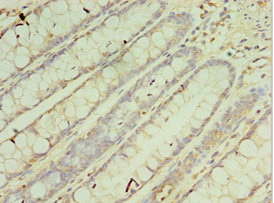
CRADD AntibodyCSB-PA005938ESR1HU
ApplicationsELISA, ImmunoHistoChemistry
ReactivityHuman
TargetCRADD
- SizePrice
Product group Antibodies
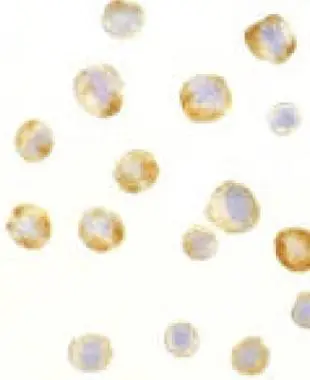
RAIDD antibodyGTX28426
ApplicationsImmunoFluorescence, Western Blot, ELISA, ImmunoCytoChemistry
ReactivityHuman
TargetCRADD
- SizePrice
Product group Antibodies

CRADD / RAIDD AntibodyLS-C331279
ApplicationsWestern Blot, ImmunoHistoChemistry
ReactivityHuman, Mouse, Rat
TargetCRADD
- SizePrice
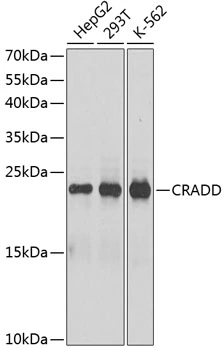
Product group Antibodies
RAIDD antibodyGTX64784
ApplicationsWestern Blot
ReactivityHuman
TargetCRADD
- SizePrice
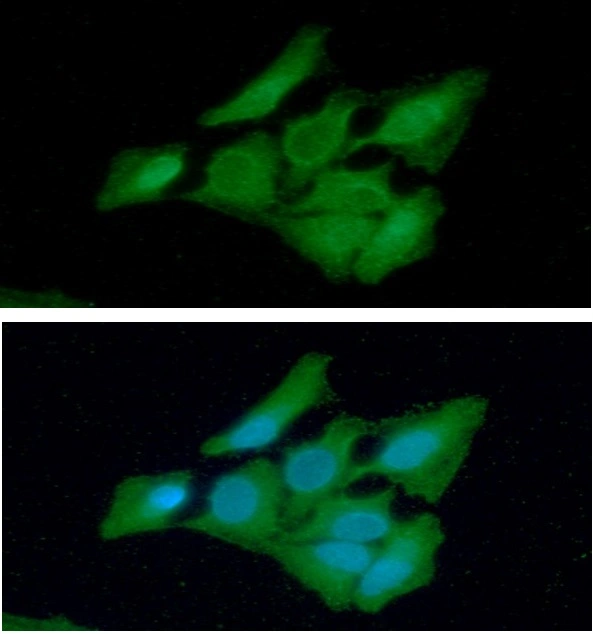
Product group Antibodies
RAIDD antibody [AT14G8]GTX57605
ApplicationsImmunoFluorescence, Western Blot, ImmunoCytoChemistry
ReactivityHuman
TargetCRADD
- SizePrice